Ballot Blitz

The man tasked with overseeing a massive junta security operation for an election engineered to entrench military rule in Myanmar visited Nawnghkio in northern Shan State on Thursday.
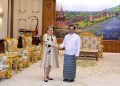
Junta Home Affairs Minister Lieutenant-General Tun Tun Naung, who has been tasked with protecting the December-January poll amid a raging civil war that has left much of country outside junta control, urged locals to vote.

Tun Tun Naung—who chairs the so-called “Central Committee on Security Supervision during the Multiparty Democracy General Election”—also called for cooperation to prevent unlawful elements from disrupting voting.
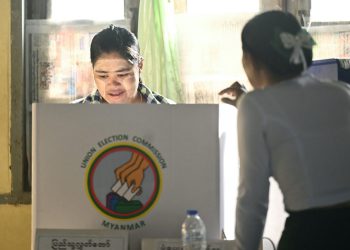
Having ceded dozens of towns across ethnic states and the Bamar heartlands, the regime has announced elections in phases from December 28.
Global democracies and rights groups have joined Myanmar’s parallel civilian government in denouncing the poll as a charade designed to lend legitimacy to military rule.
Tun Tun Naung’s security-focused tour followed closely on the heels of trips to Nawnghkio by junta No. 2 Soe Win and Khin Yi—head of the military’s proxy Union Solidarity and Development Party (USDP). The flurry of visits came after the junta recaptured the strategically important town from the Ta’ang National Liberation Army last month.
The regime says the first phase of elections will take place in 12 of the 55 townships in Shan State, the country’s largest administrative division. First-phase voting is planned in three key Shan towns along the vital China-Myanmar border trade route—Nawnghkio, Lashio and Muse—explaining why Tun Tun Naung arrived wielding the threat of the junta’s new and draconian Election Protection Law, which carries the death penalty for disrupting the vote.
His Home Affairs Ministry recently made its first arrest under the law, detaining a Taunggyi resident for a social media post deemed critical of the proposed poll.
Junta boss Min Aung Hlaing has vowed to press ahead with the election despite the ongoing civil war, ordering swift trials for anyone who disrupts the process.
Courting Dictators
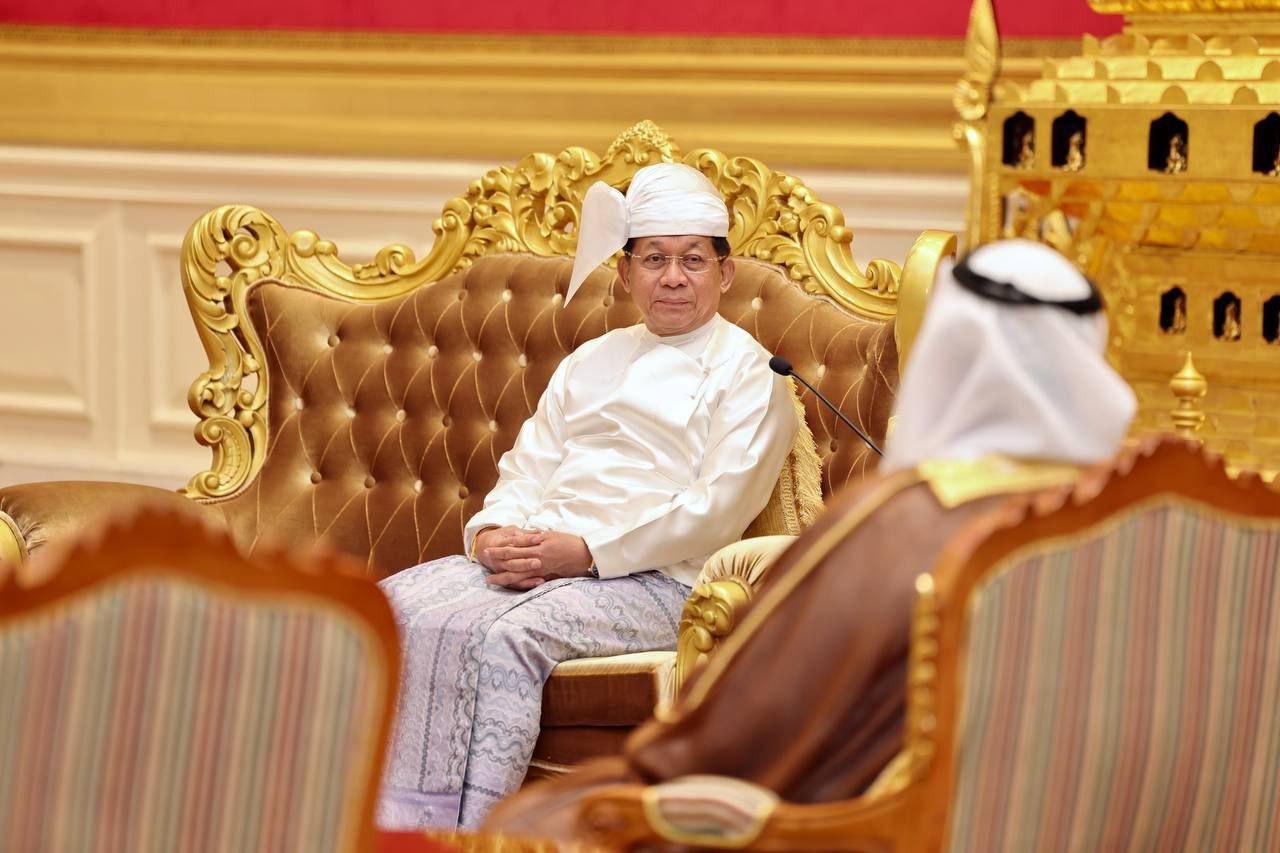
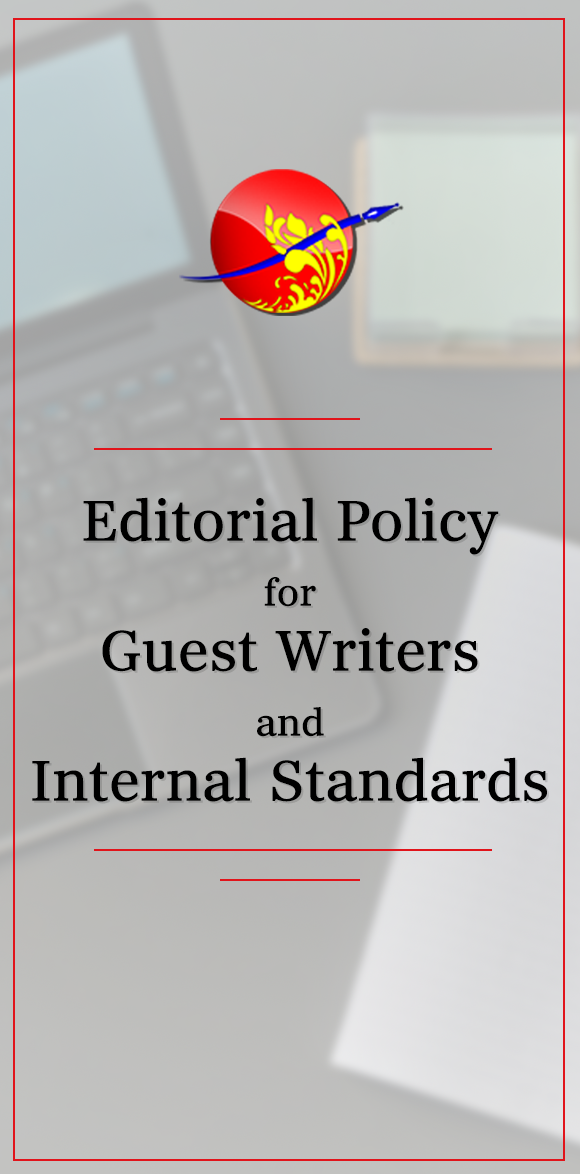
Min Aung Hlaing is set to visit China next week for a diplomatic spectacle hosted by the neighboring one-party regime. He will join leaders and fellow dictators from over 20 countries at two events: the Shanghai Cooperation Organization (SCO) Summit and Victory Day Parade marking 80 years since Japan’s World War II defeat.
Among the headliners are Russia’s Vladimir Putin, Belarus’s Alexander Lukashenko, North Korea’s Kim Jong Un, Iran’s Ebrahim Raisi, with Min Aung Hlaing a junior on the list.
The junta calls it “a working visit”—though the work will mainly involve handshakes, photo ops, and strategic elbow-rubbing with fellow autocrats.
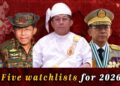
The regime boss is expected to meet Chinese President Xi Jinping for the second time since seizing power, as he makes his second pilgrimage to Beijing in search of legitimacy and, perhaps, a few flattering snapshots. He’ll also reconnect with old friends Putin and Lukashenko, while meeting Raisi and Kim for the first time.
The junta continues to deepen ties with China, Russia, and Belarus through weapons sales and other cooperation—including nuclear technology development. Meanwhile, diplomatic relations with North Korea are warming and military-to-military collaboration with Iran is reportedly on the rise.
The guest list reads like a who’s who of global autocrats, and the gatherings are less about economics or commemorating history than showcasing authoritarian control.
But with UN officials, ASEAN leaders, and SCO member states in attendance, Min Aung Hlaing may be hoping to score some international legitimacy—or at least a few glossy photos to dress up his December election campaign.
After the summit in Tianjin, he will travel to Beijing to attend the Sept. 3 Victory Day Parade.
The SCO is a ragbag of 10 regimes founded in Shanghai in 2001 by China, Russia, Kazakhstan, Kyrgyzstan, Tajikistan, and Uzbekistan. The junta is a “dialogue partner” but will be eager to upgrade that status, seeking international recognition to mask its 2021 power grab and the four years of brutal war it has waged against its own people.
Shan Clashes Intensify Despite China Talks
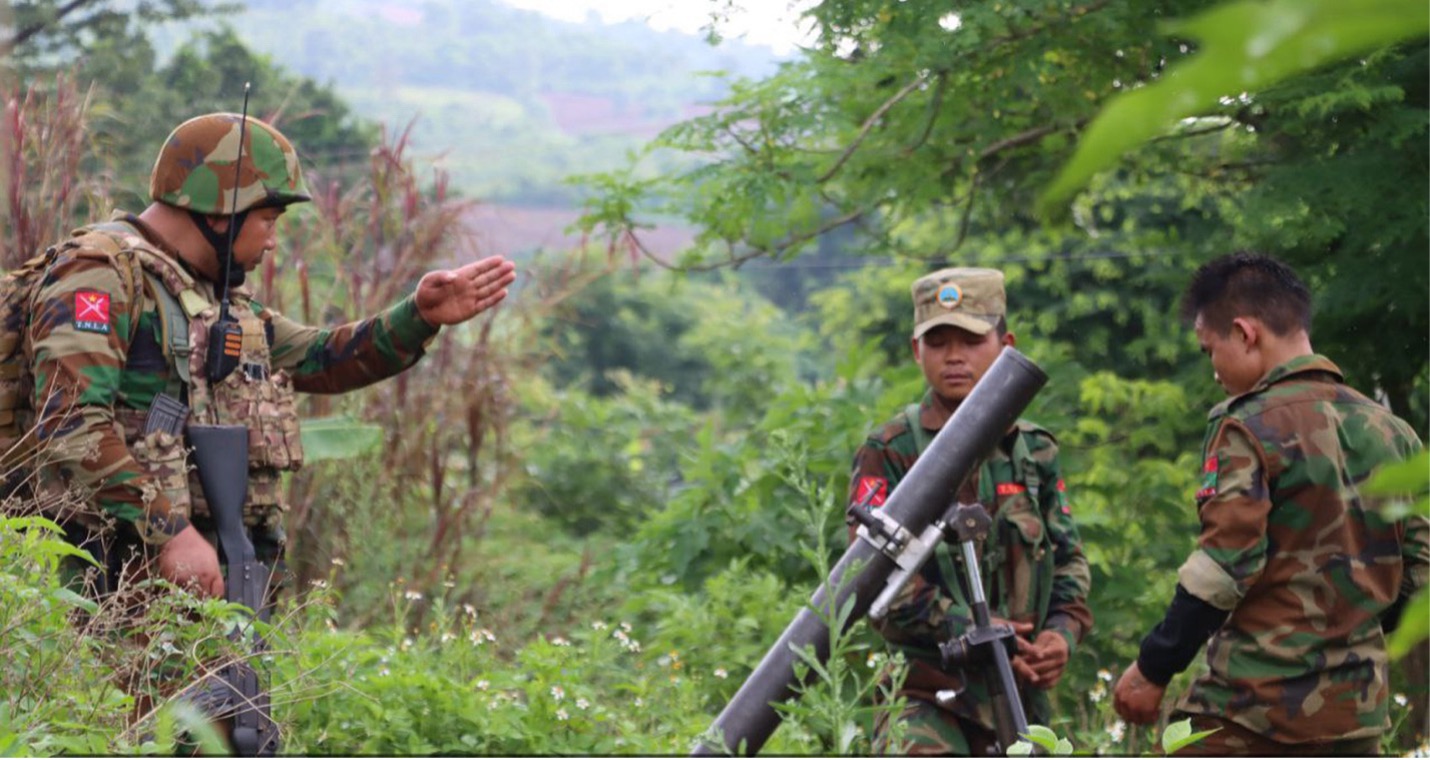
Clashes have intensified in northern Shan State’s Kyaukme Township despite Beijing-brokered talks between the Myanmar military regime and the ethnic Ta’ang National Liberation Army (TNLA) held in China’s Kunming on Wednesday.
Junta troops on Wednesday took control of the Naungpein area, 24 km from Kyaukme town, and continue to advance on Kyaukme along National Highway 2, prompting heavy resistance from the TNLA, a frontline resistance source told The Irrawaddy.
Min Aung Hlaing’s Sham Poll Roadshow
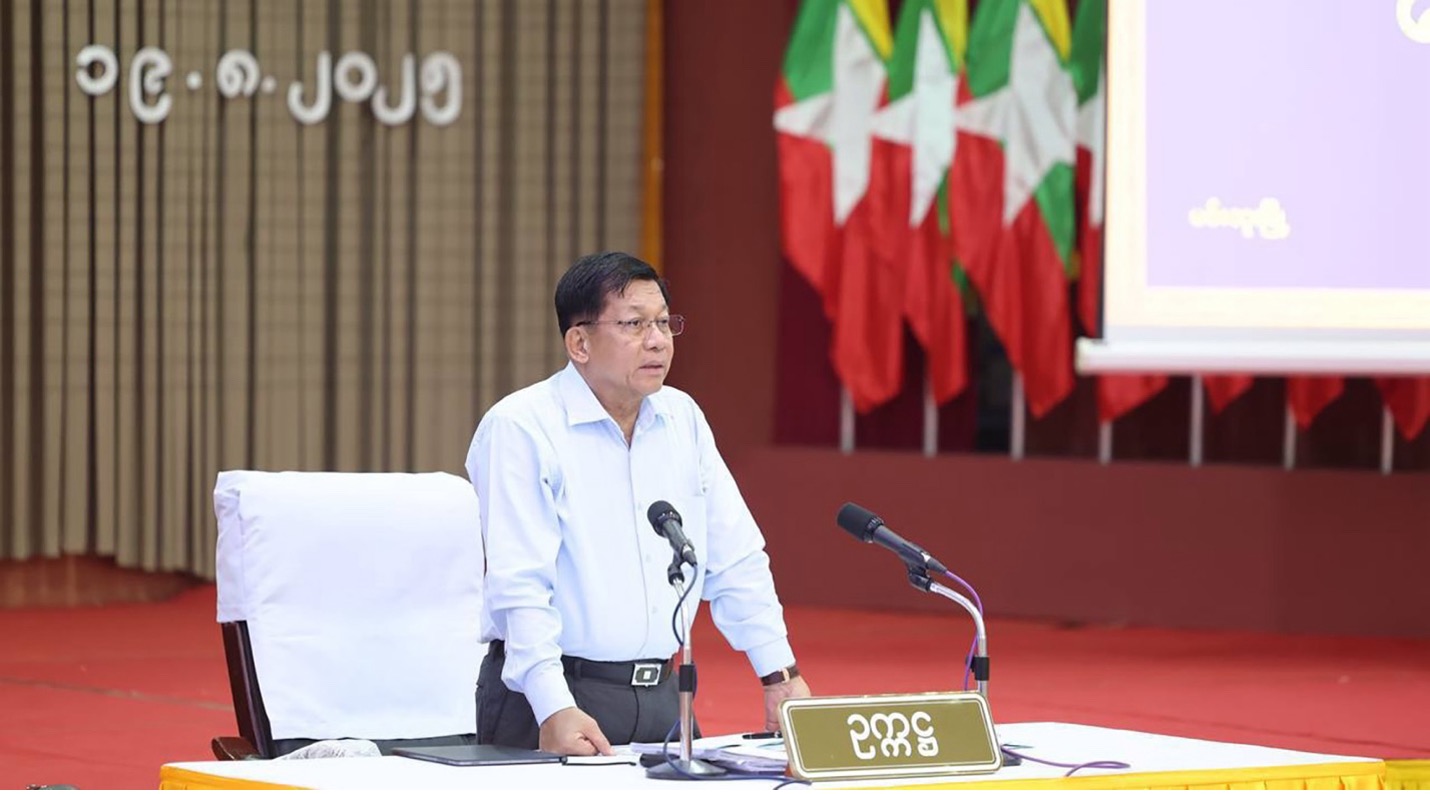
Junta boss Min Aung Hlaing has toured seven towns and one city across three regions since rebranding his regime in late July as part of preparations for an election widely viewed as a tool to lend the regime a veneer of legitimacy.
His itinerary took him to Taungoo and Bago in Bago Region, followed by Yangon, Myanmar’s largest city, and then to Magwe Region, where he visited the regional capital Magwe, his native Minbu, as well as Chauk, Yenangyaung and Aunglan. The seven towns and Yangon are slated to host voting in the first phase of elections on Dec. 28.
Unlike his previous tours, which focused heavily on development rhetoric and narratives about military-led governance, Min Aung Hlaing emphasized the election in his latest round of visits. In Taungoo on Aug. 2, he urged military personnel to contribute to national development and support the electoral process.
Read more
Regime Mouthpiece Partners with Xinhua
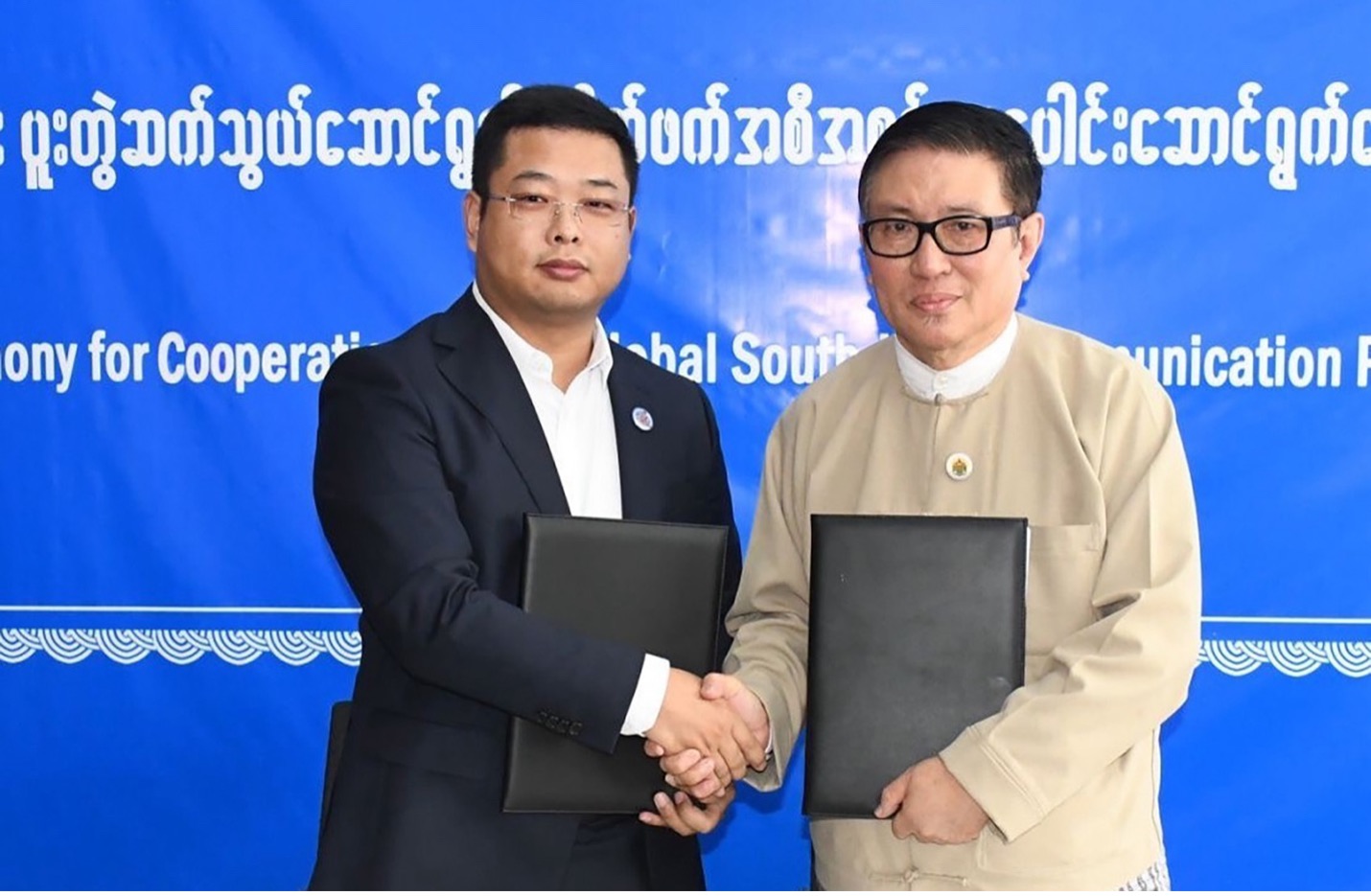
The junta-aligned Myanmar Narrative Think Tank has joined the China-led Global South Joint Communication Partnership Program in a move to “enhance the image of Myanmar internationally”, junta media said.
The junta-backed think tank and China’s state-owned Xinhua News Agency signed a cooperation agreement in Yangon on Friday, attended by Myanmar Narrative Think Tank chair Ko Ko and Xinhua’s Yangon Bureau chief Zhang Dongqiang.
The cooperation aims to contribute to Myanmar’s development and enhance its image on the international stage, according to junta media.
This article is supported by the Transition Promotion Programme, the Ministry of Foreign Affairs of the Czech Republic.