Let’s be honest about 2026 as it begins. We are not standing at a joyful turning point. We are standing at a juncture—a cold, transitional space—in which the regime will try to call a costume change a transformation. Throughout 2025, the people have learned again what the generals want the world to forget: that not every election leads to democracy, and not every “transition” is a step forward. What we feel about what lies ahead is not hope. It is numbness.
In 2026, Myanmar will not face a transformation—it will face a rebranding of military authoritarianism.
This year, what can we expect for Myanmar—moving forward, or backward, or stagnation? My answer is numbness, after reflecting on 2025 and the years before it. This reflects both the collective feeling of the people of Myanmar and a realpolitik assessment of the country’s situation.
Looking back at 2025, it has been another difficult year for our country—and for the world as well. For the people of Myanmar, this year was neither a year of victory nor a year of defeat. They endured and overcame the hardships and brutalities of natural disasters, war and man-made calamities. Our people suffered greatly.


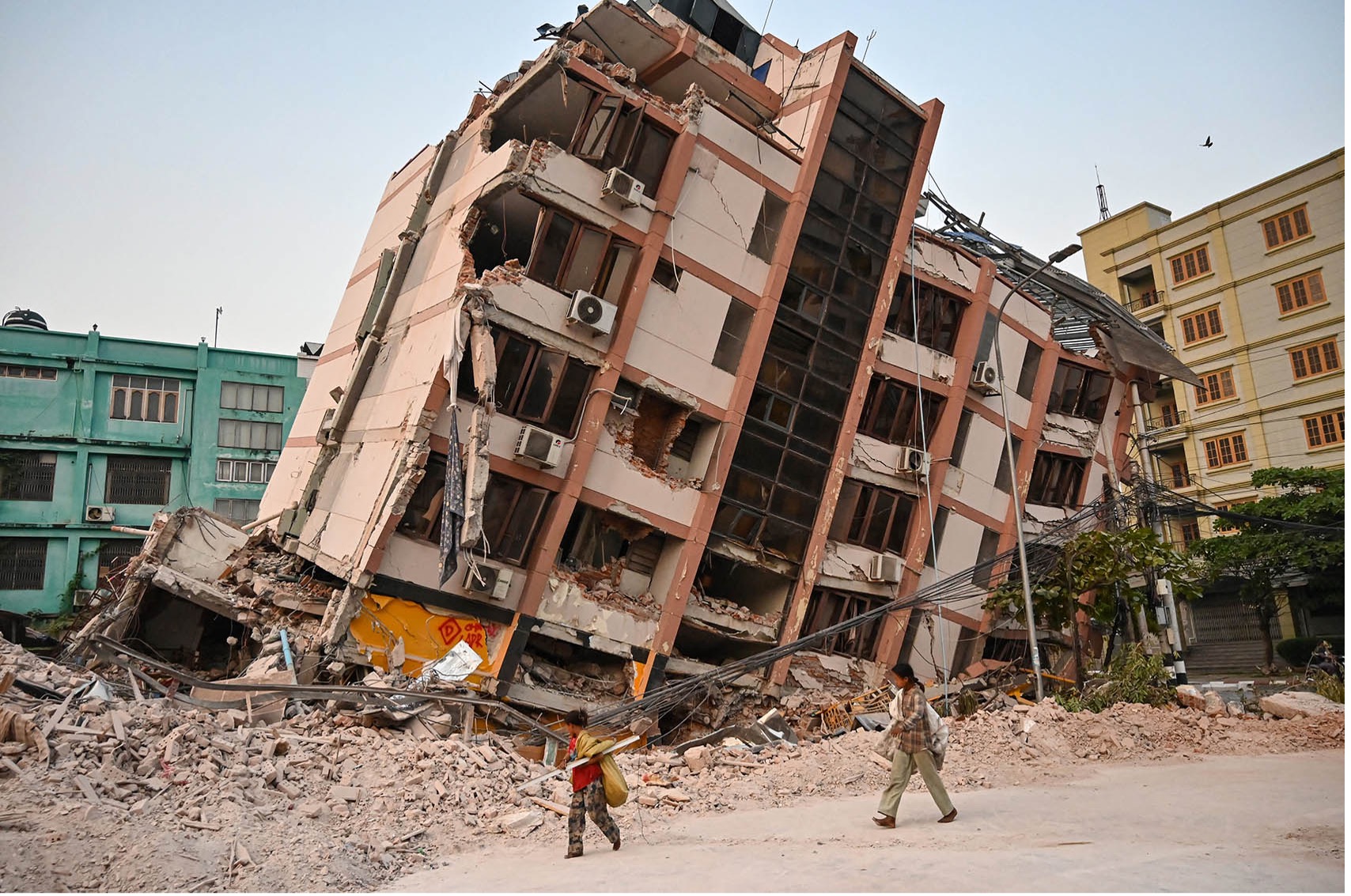
But they have not forgotten the injustices, the inhumane cruelty of the military, and the democracy and peaceful society they long for.
The current moment must be seen as a juncture for our country and our people. It’s a transitional period. But it’s definitely not exciting. Is it frightening? Not that either. It’s a period in which a feeling of numbness is about to set in.
The times we felt excited were after the 2015 and 2020 elections, just before the people’s elected government took office—periods filled with hope and anticipation of positive change.
But things that should have happened didn’t happen, and when the military staged a coup in 2021 and brutalized the whole country, our hearts trembled with rage. We had to endure the worst periods in our country’s history.
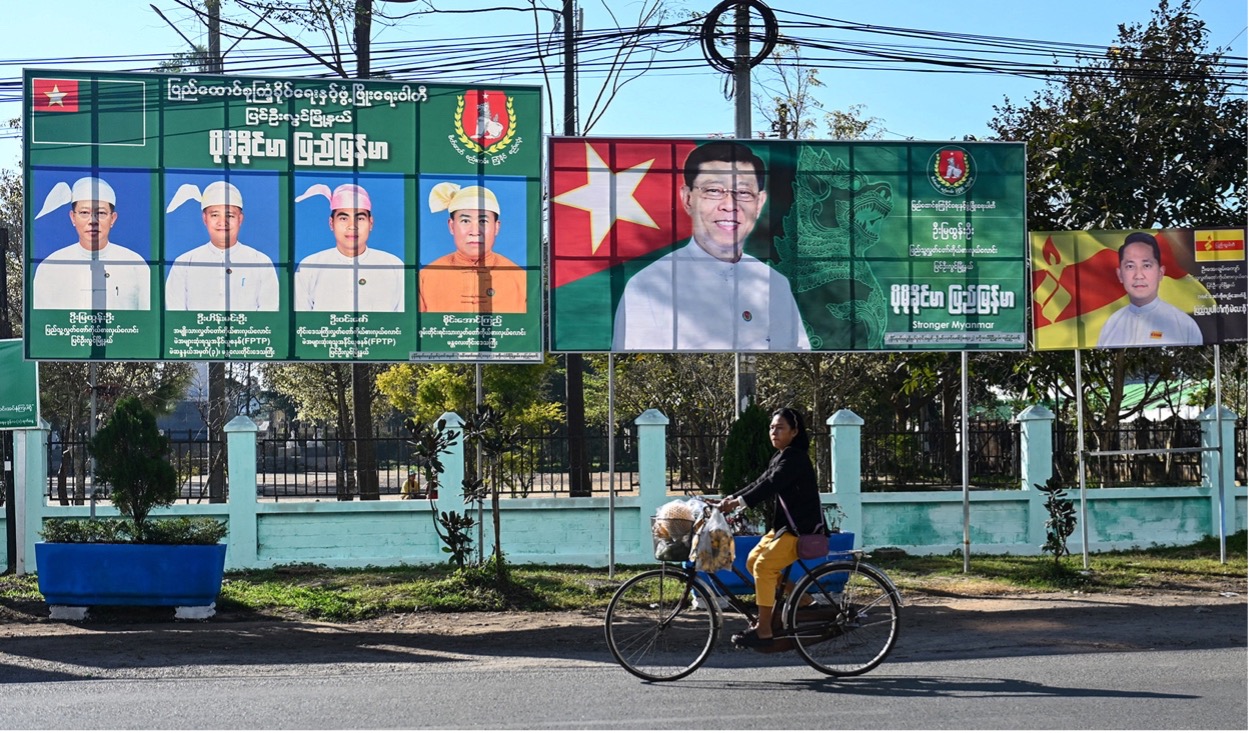
The very generals who turned the country into a battlefield and waged war on the people are now preparing to take off their uniforms in this election period and will masquerade as an elected civilian government after the vote. This is a time when we must swallow our feelings—pain and suffering, apprehension and discomfort.
If there is a silver lining, it is that this coming fake “elected” government is not new or unfamiliar. It is simply a return to a political system we and our grandparents have experienced and endured before. That is why I say this is a period of numbness.
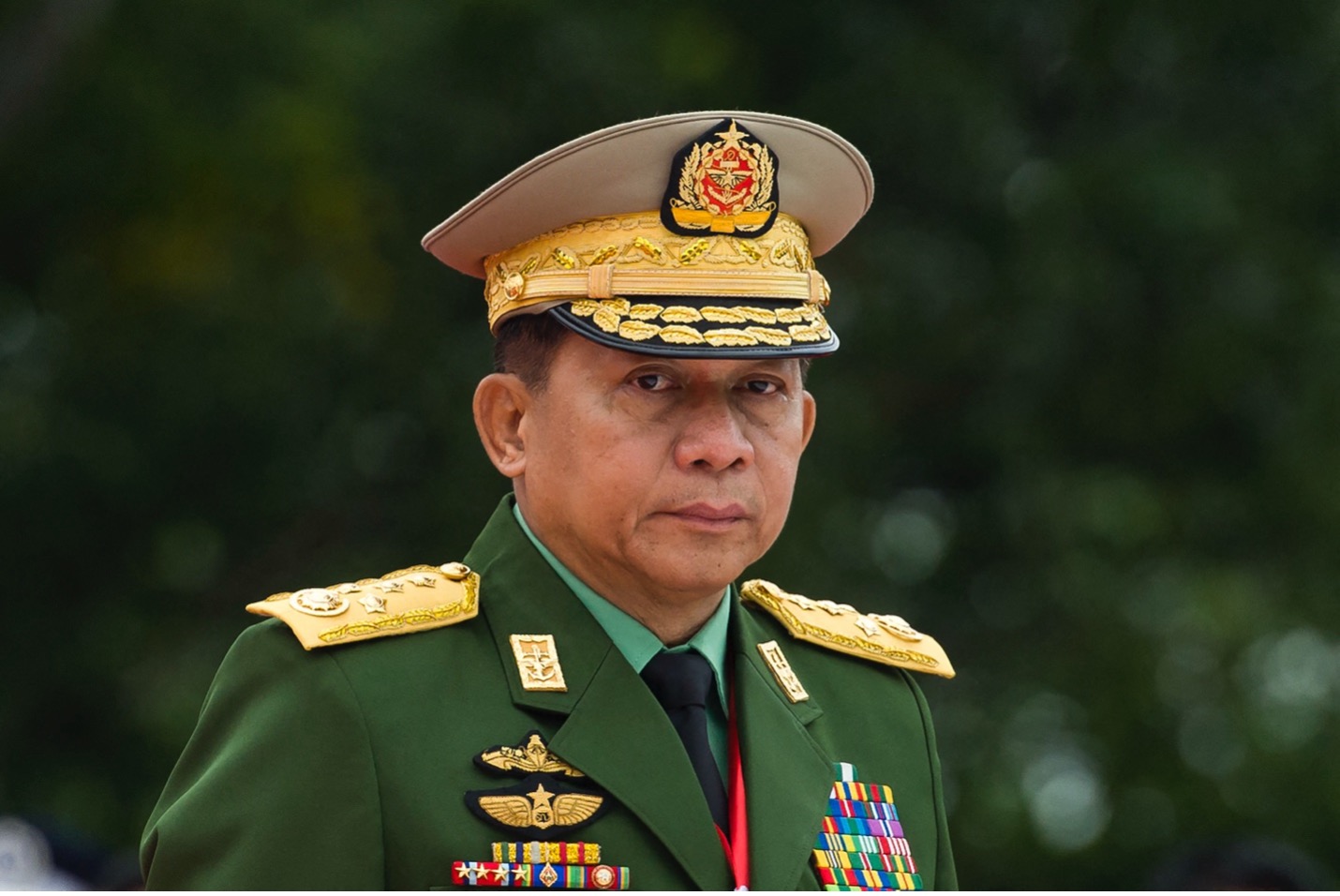
By any standard or principle, this fake elected government about to take power has no legitimacy. But the situation we face is an old system, an old pattern. In other words, it is history repeating itself. Not good history—bad history repeating. In Myanmar, military coups, military rule, and military-party rule keep cycling endlessly.
That’s the pattern the people of Myanmar will be coerced into experiencing again in 2026 and beyond.
When I say the coming changes will be cosmetic, I don’t mean harmless. Cosmetic changes can still tighten the cage. In 2026, we should expect more restrictive laws, more lies, more surveillance, more hardship—more of the state peering into daily life.
We should expect more manipulative—and harsher—“law and order,” sold as the making of a “disciplined” country. We should expect heavier pressure on young people: more conscription, more coercion, more forced compliance, but less opportunity. We should also expect stronger pressure on ethnic armed groups—through manipulative and coercive “ceasefires,” divide-and-rule tactics, and carrot-and-stick deals. And we should expect wider surveillance of citizens, especially online—more monitoring, more prosecutions, and tighter control over freedom of expression on social media. The list goes on.
‘Military dictatorship in traditional Burmese jackets’
Reflecting on “Myanmar at a juncture,” our country is now shifting from direct military dictatorship to an era of “proxy military dictatorship”—I call it “military dictatorship in traditional Burmese jackets” (တိုက်ပုံဝတ် စစ်အာဏာရှင်ခေတ်) in which generals will rule the country by trading their military uniforms for civilian outfits. The changes we will see in 2026 will be cosmetic, surface-level transformations, not substantial reforms.
Will things improve? Since everything is built on a fake election, we can’t expect any genuine transformation. Will the fighting decline? Maybe, maybe not. But one thing is certain: Any so-called “transformation” will be fragile—any positive change could collapse at any time.
These numbness-inducing, unexciting changes—cosmetic changes—have happened two times before in our country.
Once in 1974, when Myanmar transitioned from a military government to the Burma Socialist Programme Party ruled under the same generals. And again in 2011 (nearly four decades later), with the transition from the State Peace and Development Council military regime to a civilian government run by the Union Solidarity and Development military party steered by the same generals.
Now, looking ahead to March 2026, we will see another, similar transition—from the military regime to military-party rule once again. That is why I said earlier: Our people have experienced this before. We already know how to survive and endure such an era.
But when exactly will this vicious cycle stop? No one can say for certain.
The current era, and the world we live in, are not stable or predictable—it is characterized by volatile, hard-to-calculate political developments. We’ve just seen another political drama in early January: a US raid in Caracas that captured Venezuela’s leader Nicolás Maduro and his wife. In today’s world, politics can turn overnight—sometimes violently, sometimes without warning.
Today’s world is heading toward increased hostility and wars, as power and self-interest are prioritized over democracy, human rights and the value of human life.
Russia’s invasion of Ukraine, wars in Gaza and Sudan. And fears are not unfounded that World War III could erupt anytime and anywhere, even in Asia over the Taiwan issue.
As global standards erode, dictators grow emboldened. Myanmar’s generals have gained political recognition and diplomatic advantages by aligning with dictatorial regimes like China, Russia and Belarus.
Another turning point in recent years came with China’s intervention in Myanmar’s conflict, which slowed the armed uprising against the military dictatorship. This interference halted the successes enjoyed by anti-regime Operation 1027 in 2023 and 2024, even rescuing the military regime from defeat.
Successive Myanmar military regimes have long manipulated the international community, global leaders and their diplomats with their political maneuvers, buying time to shape the system they want.
Now in 2026, the new “elected” arrangement will also come with an international campaign. The generals will try to sell a story: that Myanmar has “returned” to democracy. They will offer optics—parliaments, cabinets, ceremonies, speeches—while keeping the machinery of authoritarianism intact.
They will attempt to divide the public, to split not only the opposition but also the world, to lure some actors into cooperation, and to push others into silence.
This is the political purpose of the military’s transformation: not to change the country, but to change the world’s language about the country—from condemnation to recognition.
Not every election is democratic
Another point that must be analyzed is that the military’s ongoing phased elections are neither inclusive nor fair—that much is obvious. Yet it is precisely through such elections that generals, who have committed countless crimes, often seek their political survival.
So, the lesson we must learn is this: not every election is democratic. The equation “election = democracy” is not always correct. And this isn’t just in Myanmar. The same holds true for many countries around the world.
In Myanmar, looking back at the five elections from 1990 to now (including the ongoing one in 2025-26), we can see how the generals rigged votes to maintain their grip on power.
Yet the story of 2026 is not only about the generals’ plans. It is also about what the resistance can become. The people’s revolution has shown endurance, creativity and sacrifice. In many places, it has shown the ability to govern, to defend communities, to adapt. But it also carries weaknesses—fragmentation, weak leadership, a lack of unity, and the heavy cost of a long war.
The biggest question for 2026 is whether the pro-democracy movement and resistance can turn endurance into leverage: political unity, clearer strategy, stronger coordination and a narrative that defeats the junta’s biggest weapon—fatigue.
Whatever happens, we’re never wrong to hope for the best while preparing for the worst.
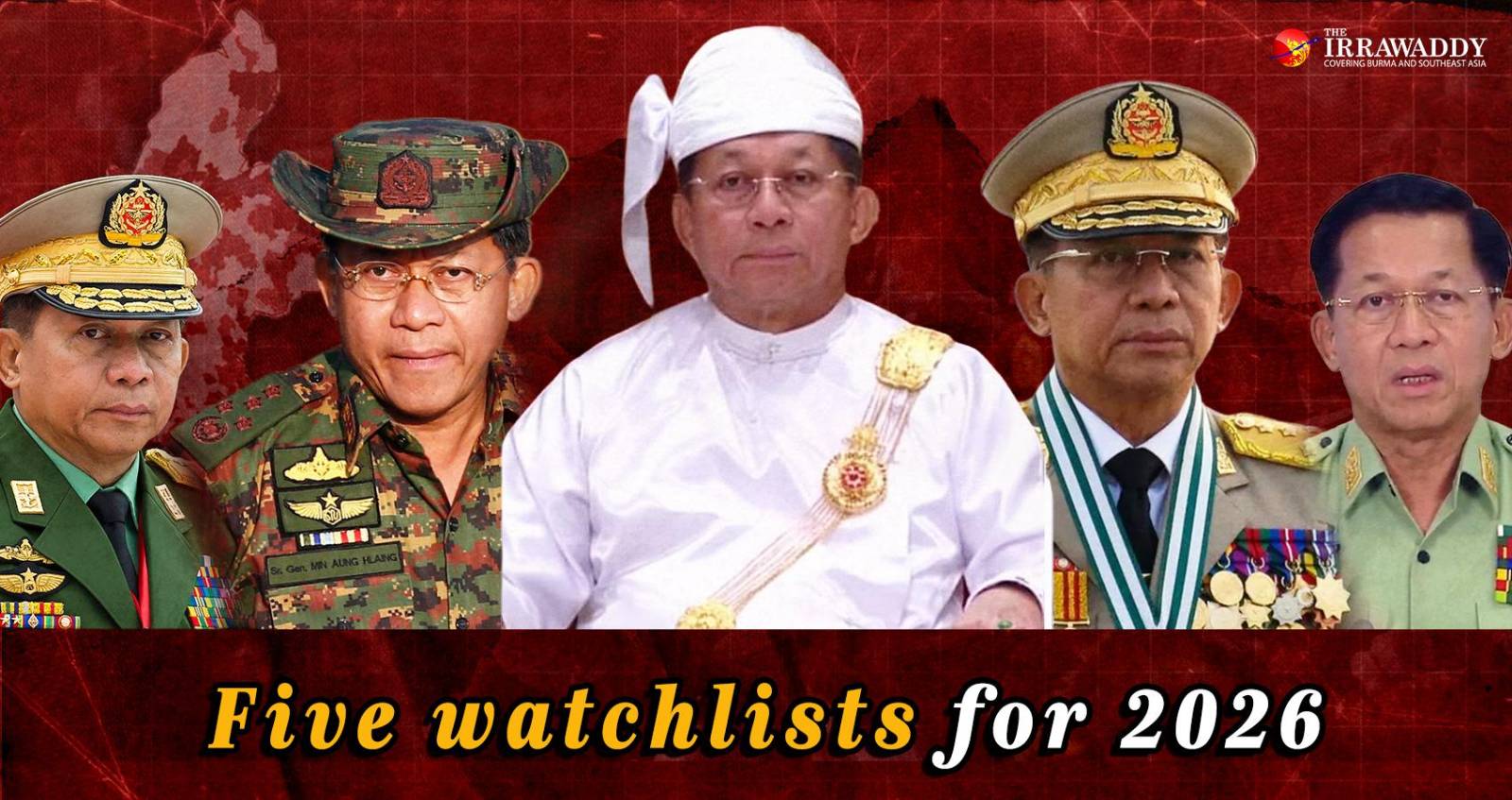
Five watchlists for 2026
If we want to read 2026 realistically, we should keep our eyes on a few simple but revealing indicators:
First, will the junta’s “transition” unify the military establishment, or will it deepen internal cracks and rivalries?
Second, will the resistance become more coordinated—or more fragmented—under new political and diplomatic pressures?
Third, will China’s interference grow, shaping outcomes in the name of “stability”—or will the opposite scenario develop? In other words: Will China keep interfering in Myanmar’s politics, favoring the new military-turned-civilian government and pressuring the resistance?
Fourth, will the economy and livelihoods stabilize enough to reduce despair—or will hardship worsen the current terrible situation?
And finally, will the world treat the junta’s new arrangement as “good enough,” rewarding cosmetic changes over legitimacy?
So what should our resolutions be for 2026?
Today’s world is full of misinformation and propaganda that make falsehoods appear true. To shield ourselves, we must uphold truth and justice within.
At the same time, we must reject deception, cruelty, oppression and exploitation for self-interest.
I believe we must take as our foundation the qualities of humanity and decency, empathy and compassion, and an unwavering commitment to truth.
And to make that commitment real in 2026, we need practical discipline. We must refuse to normalize cruelty. We must refuse to repeat propaganda, even when it comes wrapped as “news.” We must protect our communities—share verified information, support those under pressure, and keep political memory alive so that exhaustion does not erase injustice.
If control is the regime’s hope, then clarity is our resistance.
Watch a video presentation of this commentary on The Irrawaddy’s Opinion Talk.