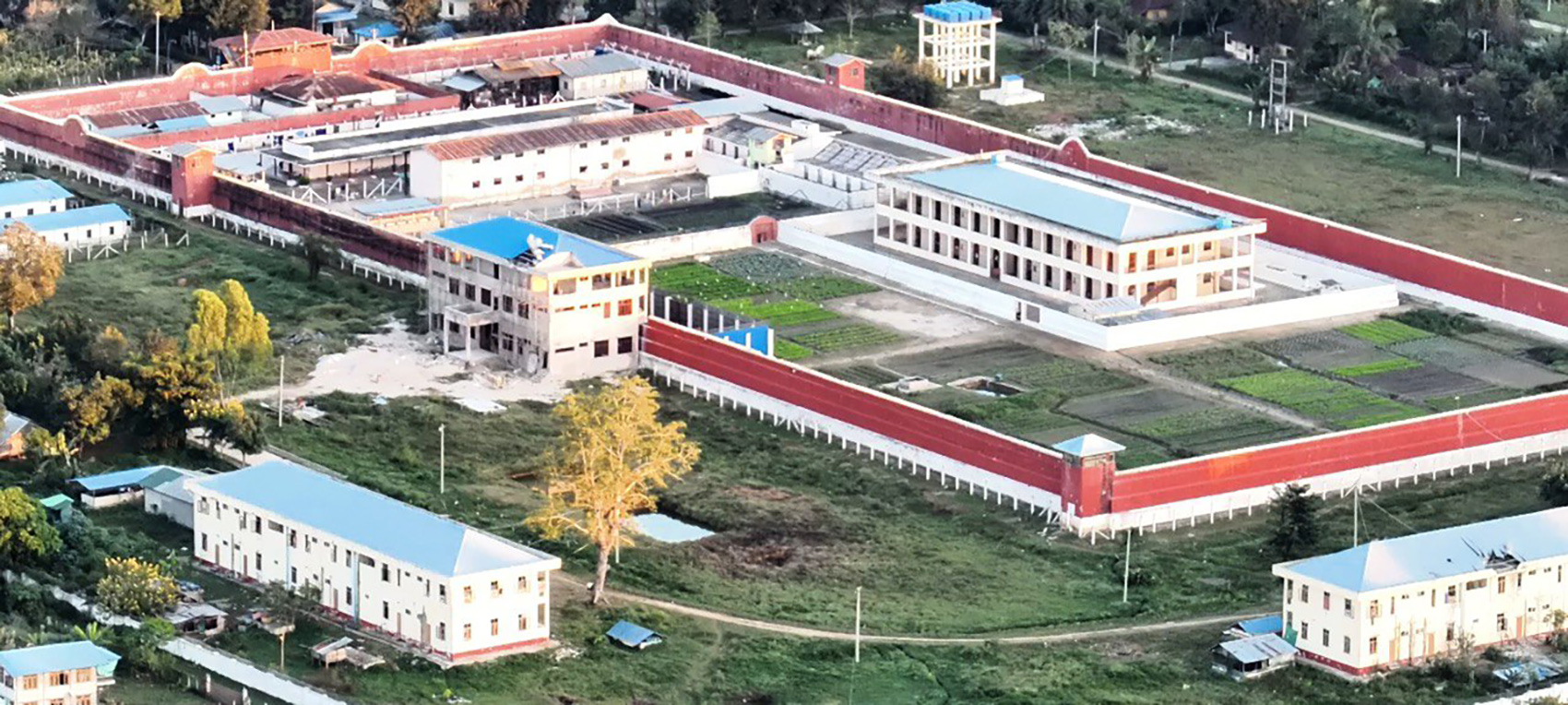
The Karenni Political Prisoners Association (KPPA), a prisoners’ rights group, on Sunday called for adequate medical care and supplies for inmates at the junta-run prison in Loikaw, the capital of Karenni State.
Loikaw Prison has barred meetings with family members and the delivery of outside medical supplies to its over 500 inmates, including 140 political prisoners, since the launch of Operation 1111 in Karenni State on Nov. 11, 2023. The offensive, launched by the Karenni Nationalities Defense Force (KNDF), the Karenni Army (KA) and their allies, saw resistance groups occupy most of Loikaw for eight months until the middle of last year.
“When inmates request medical treatment, the doctor scolds them and refuses to provide treatment. They don’t allow family members to provide medical supplies [to prisoners], on security grounds,” said Ma Nandar Oo Khin, who heads the KPPA.


Loikaw Prison currently houses 118 male political prisoners and 22 female political prisoners, according to the KPPA.
Because the prison has been locked down since the offensive began, many prisoners have seen their lower body mobility greatly restricted, causing some inmates’ health ailments to worsen significantly.
The military regime pushed Karenni resistance forces out of Loikaw in June last year, but the prison administration continues to prohibit inmates from leaving their cell blocks to take walks or engage in other activities, also for vague security reasons.
Normally, the prison provides inmates with four meat-based dishes every week, but since Operation 1111 this has been reduced to twice a week: once with one egg and once with dried fish. On the remaining days, they eat fish paste.
Fifteen inmates are crammed into 15-square-foot cell blocks, and each is allowed only 11 scoops of water for bathing. As a result, skin irritations and rashes are common.
Within the past six months, a 35-year-old male prisoner died due to the lack of healthcare in the prison.
According to the Political Prisoners Network of Myanmar (PPNM), 14 political prisoners died in the first seven months of this year due to the lack of adequate medical care in prisons.