The junta’s abrupt crackdown on border trade with Thailand and China on the pretext of preventing smuggling has added to the suffering of ordinary Myanmar people trying to make a living.
Last week, the regime abruptly closed the Thai-Myanmar Friendship Bridge No. 2 between Mae Sot and Karen State’s Myawaddy—one of the country’s busiest trade gateways with Thailand—bringing imports to a complete stop.
The regime has also intensified inspections along other border trade routes with China and Thailand, forcing many traders to halt operations and store shipments in warehouses.

In Myawaddy, the regime no longer issues import licenses, a border trader said.
Goods imported from Thailand are now stranded in warehouses due to ongoing inspections along the Myawaddy–Yangon route. Storage costs have surged, with warehouse rental fees doubling in recent weeks.
But the operation feels mysterious and arbitrary, like a random show of force by the junta rather than a planned strategy.
“Even though the No. 2 bridge is closed, there are still 54 border gates with the Thai side. Goods can still enter legally from Thailand—but the authorities here treat them all as illegal once they cross,” the trader said.
“For fear of arrest, traders are being forced to keep their imports in warehouses inside Karen State. The warehouse rent has doubled and some landlords now charge in baht,” he added.
Authorities are allowing holders of existing licenses to reroute shipments through alternative gates such as Kawthoung in Tanintharyi Region and Tachilek in Shan State, with a 21-day extension granted for licenses nearing expiration.

“The regime no longer issues new import licenses,” said another trader. “But those holding licenses can bring in their imports through alternative gates. If you’ve exported 100 million kyats worth of goods, you can only import that exact amount—no excess is allowed.”
The same rules apply for imports through the coastal town of Kawthoung, opposite Thailand’s Ranong. If cargo manifests do not align with license details, traders must reapply. Only those who can prove export earnings are granted import clearance. Authorities have also begun inspecting vessels for undeclared goods.
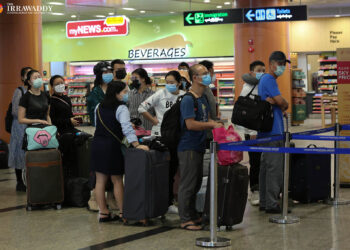
The Customs Department is now also limiting imports via air freight, prompting temporary suspensions. Traders report increased inspections at airports, especially for bulk commercial items.
“When truck transportation was blocked, many turned to air cargo. But in response to a sudden surge in air cargo, the Customs Department started restricting shipments. They haven’t officially banned air cargo, but enforcement has become much stricter,” said one air cargo operator.
This has forced operators to ship in smaller quantities, raising the transport costs, she said.
The junta has justified the crackdown by citing concerns that armed resistance groups are profiting from smuggling and using the revenue to strengthen their forces. Junta chief Min Aung Hlaing issued fresh directives earlier this month to crack down illegal trade and smuggled goods.