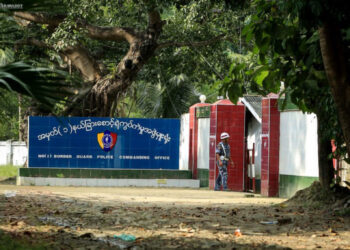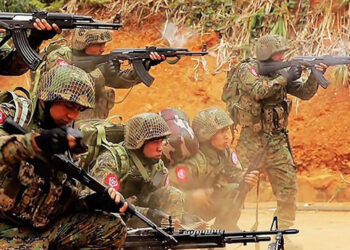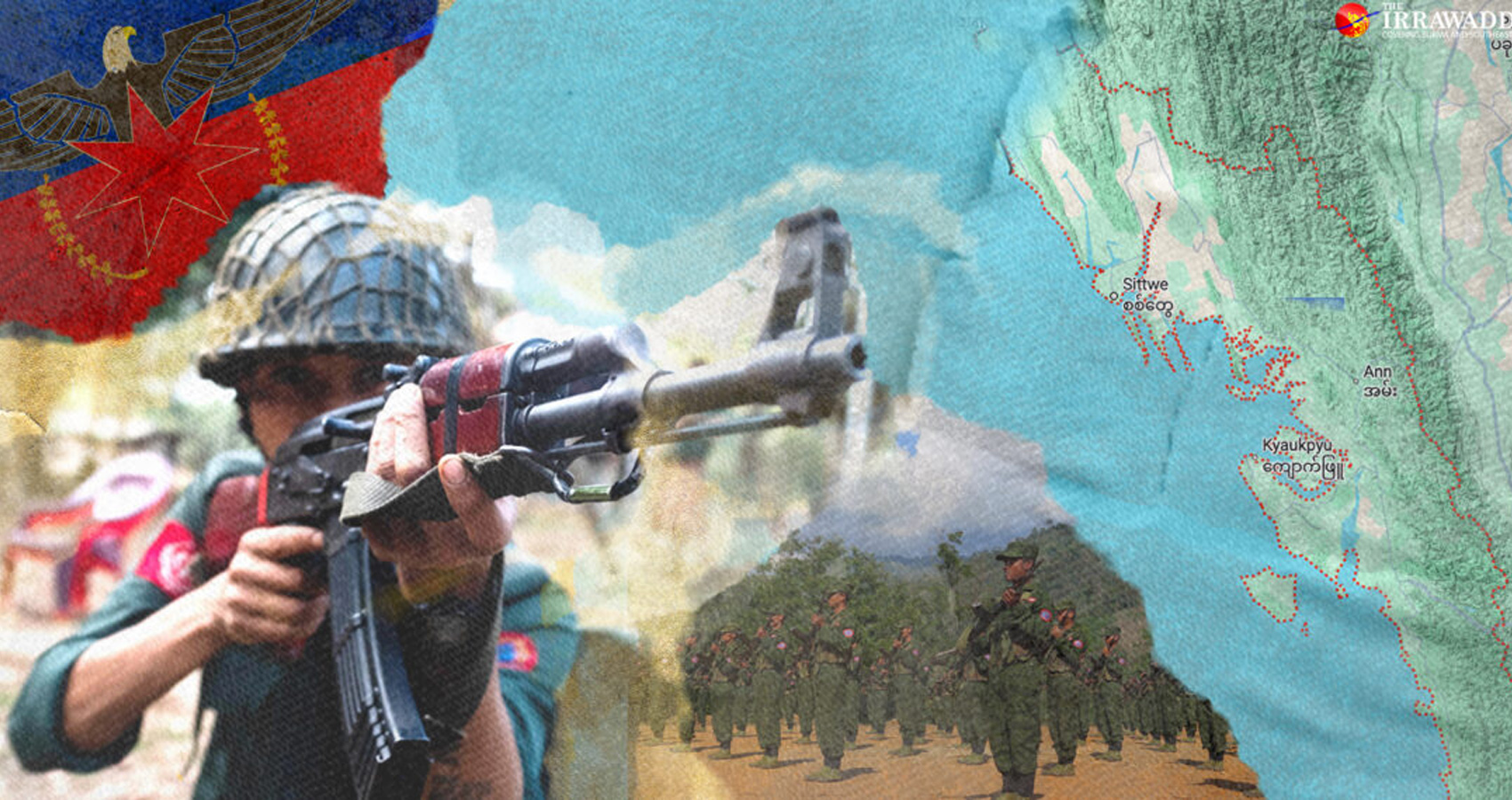
Fresh clashes have erupted in Rakhine State’s capital Sittwe and coastal Kyaukphyu since the Dec. 28 election amid a nationwide resurgence of anti-regime attacks.
Local sources said the Arakan Army (AA) has shifted from defensive to offensive operations in Kyaukphyu, which is home to major Chinese investment projects. AA troops are pushing closer to the town and targeting surrounding military posts.
“The clashes are more intense now,” a source close to the AA said.


Clashes have been reported near No. 32 Police Battalion and other military posts, where residents said the AA has cut off army sorties and inflicted casualties. The port is home to several military units, including Danyawaddy Naval Headquarters, Infantry Battalion 34, Light Infantry battalions 542 and 543, and two naval bases.
The ethnic Rakhine armed group launched an offensive in Kyaukphyu in February 2024, capturing much of the countryside and advancing within 8 km of the town. Junta counteroffensives in November forced the AA to withdraw from several positions, but it struck back in December and has since escalated attacks.
More than 50,000 people have been displaced in Kyaukphyu since the start of the fighting, according to local media.
In the Sittwe area, meanwhile, clashes broke out near three villages on Sunday as the AA resumed its attacks. “We’ been hearing gunshots since the morning of Jan. 4,” a resident told The Irrawaddy on Tuesday.
The city is difficult to seize since it is surrounded by water on three sides. The military has reinforced frontline posts outside the town, deploying machine-gun mounted vehicles and conducting daily patrols. Sources close to the AA said “dozens” of junta soldiers were killed in recent attacks on those patrols with drones and heavy weapons.
At the same time, defensive junta fire and airstrikes have hit villages as far afield as Pauktaw and Ponnagyun townships.
Inside the fortified city, junta troops and members of the co-opted Arakan Liberation Party (ALP) have been conducting house searches and arrests, according to locals.
Sittwe is the seat of the regime’s nominal state administration and therefore houses a dozen military units including the Regional Operations Command, naval headquarters and combat support units. Junta troops from the Western Command in Ann Township who fled after the AA’s capture of Ann have also regrouped in Sittwe.
The escalation follows the Dec. 28 election, which was held across 102 townships under junta control, and has also given rise to fresh resistance attacks in central Myanmar.
In Rakhine, ballot boxes were set up in only three of the state’s 17 townships—Sittwe, Kyaukphyu and the sparsely populated island of Manaung—chiefly in military garrisons. But the regime’s ingenious mixed electoral system ensures that it can form a state-wide legislature.
The junta’s proxy USDP duly won nine of the 17 seats in the Rakhine State Assembly, with the two co-opted ethnic parties equally sharing the remaining eight. The same method was applied for the upper house, with the USDP gained three of six seats up for grabs in Rakhine.
Veteran Rakhine politician U Pe Than said the election outcome ensures a military-dominated legislature. “In Rakhine Parliament, there is no representation for the Rakhine people. The parliament will simply rubber-stamp the military’s agenda. Ultimately, the conflict will be resolved by force,” he told The Irrawaddy.
The AA has set its sights on full control of Sittwe and Kyaukphyu. “The AA cannot leave these towns under junta control, so a decisive battle is likely,” said one Rakhine military observer.