Dignity Deficit

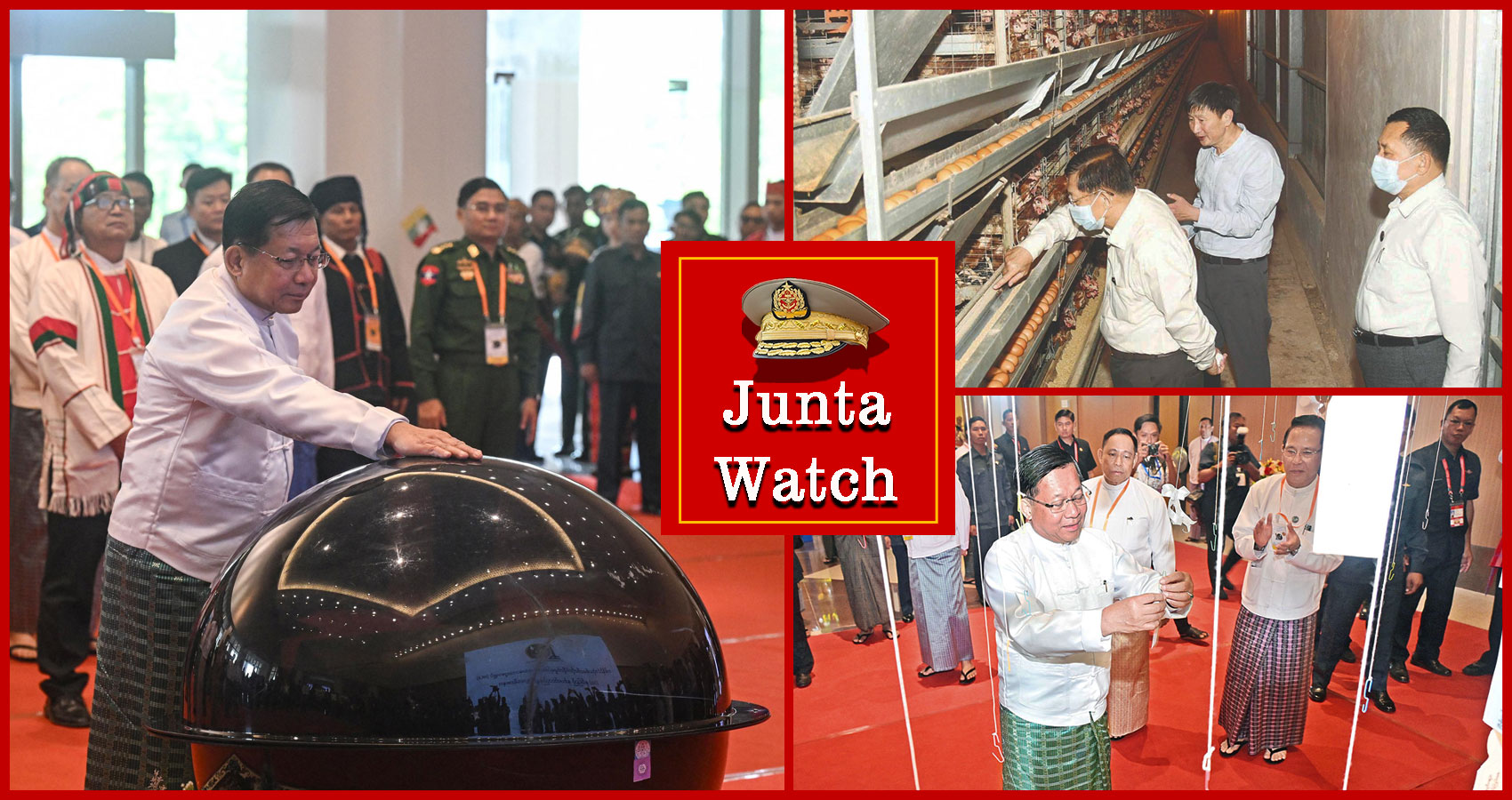
Junta boss Min Aung Hlaing this week instructed his ministers to uphold Myanmar’s “dignity and respect” on the world stage. The directive came during Thursday’s cabinet meeting, which the regime described as a session to “prepare for the next government.”
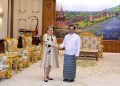
The problem is that respect has been in short supply. Nearly five years after the coup, the junta remains barred from ASEAN summits, sanctioned by the West, and diplomatically downgraded across much of the globe. Min Aung Hlaing has only Moscow and Beijing to rely on for friendly handshakes—and even those are carefully staged.
In response, the junta boss has declared China’s Lunar New Year a national holiday, and praised Putin as a “great world leader”—gestures that underline just how far the regime will go to flatter its patrons.

Meanwhile, China openly meddles in Myanmar’s internal affairs, treating the country less as a partner and more as a client state. Indian politicians have also provocatively suggested that parts of Myanmar’s Kabaw Valley fall under Delhi’s sovereignty.
ASEAN continues to keep the junta out in the cold, while the United States and Europe maintain sanctions and downgraded ties.
The irony is hard to miss. Min Aung Hlaing tells his ministers to project dignity abroad, yet his regime has left Myanmar more isolated than at any time in its recent history. Under the ousted civilian government, the country managed to stand with some measure of credibility in both regional and global arenas. Today, its leader is reduced to chasing side meetings in China’s Tianjin and photo-ops in Moscow—while insisting that the world show him respect.
Peace Talk vs. Brutal Reality
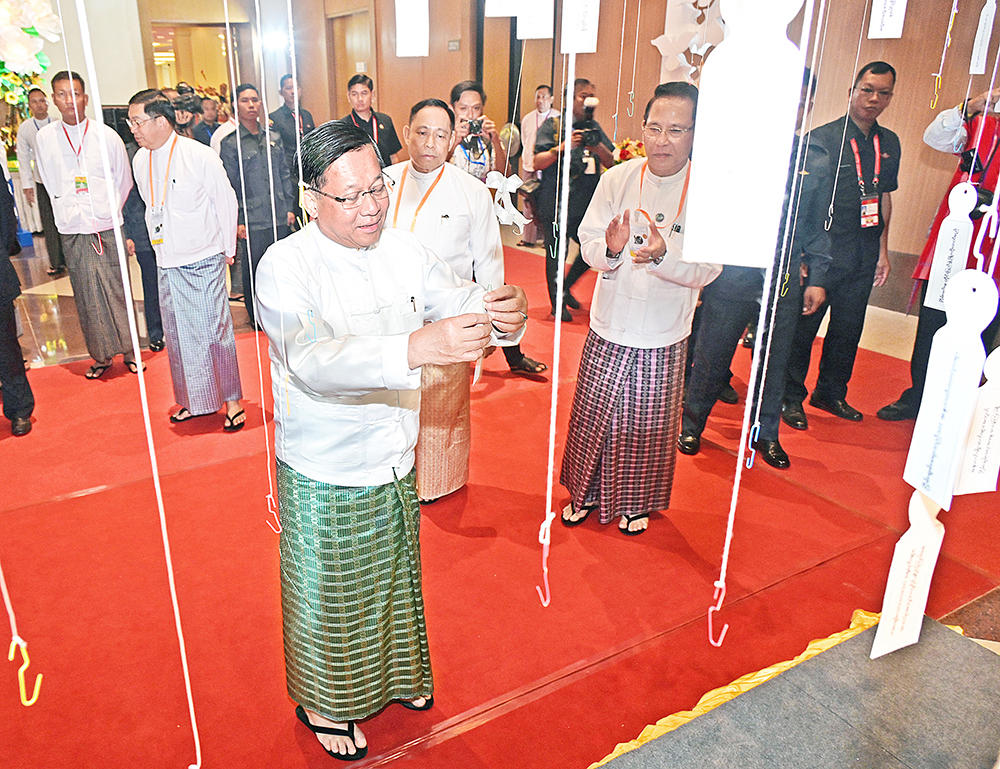
Just days after telling Malaysia’s foreign minister that he had “repeatedly invited [opponents] to peace talks” and “announced ceasefires many times,” junta chief Min Aung Hlaing struck a very different tone at the 10th anniversary of the Nationwide Ceasefire Agreement (NCA) on Wednesday.
From the stage in Naypyitaw, he barked at ethnic leaders and stakeholders to “only talk about what is possible” and stop making “impossible demands.” A willingness for genuine dialogue was notably missing from his speech, however.
Ethnic armed organizations and resistance forces have long called for an end to military dictatorship, pushing for genuine democracy and federalism. The junta, however, continues to insist that they disarm and follow its election road map—an ultimatum dressed up as dialogue.
The election is widely dismissed as a ploy to cement military rule.
Inside the NCA venue in Naypyitaw, Min Aung Hlaing’s address was drenched in the language of reconciliation. Outside, however, his troops were busy bombing civilian areas in Kachin and northern Shan as the regime attempts to reclaim the lost territory.
For the junta, “peace” is nothing more than a stage prop—wheeled out to deceive international audiences. Behind the scenes, relentless airstrikes, ground offensives, and scorched-earth campaigns continue in resistance strongholds.
This is not the first time Min Aung Hlaing has dressed up war as dialogue. When he returned from Belarus in March, he declared that if resistance groups “truly want multi-party democracy,” they should surrender and simply fall in line.
Let Them Eat Eggs
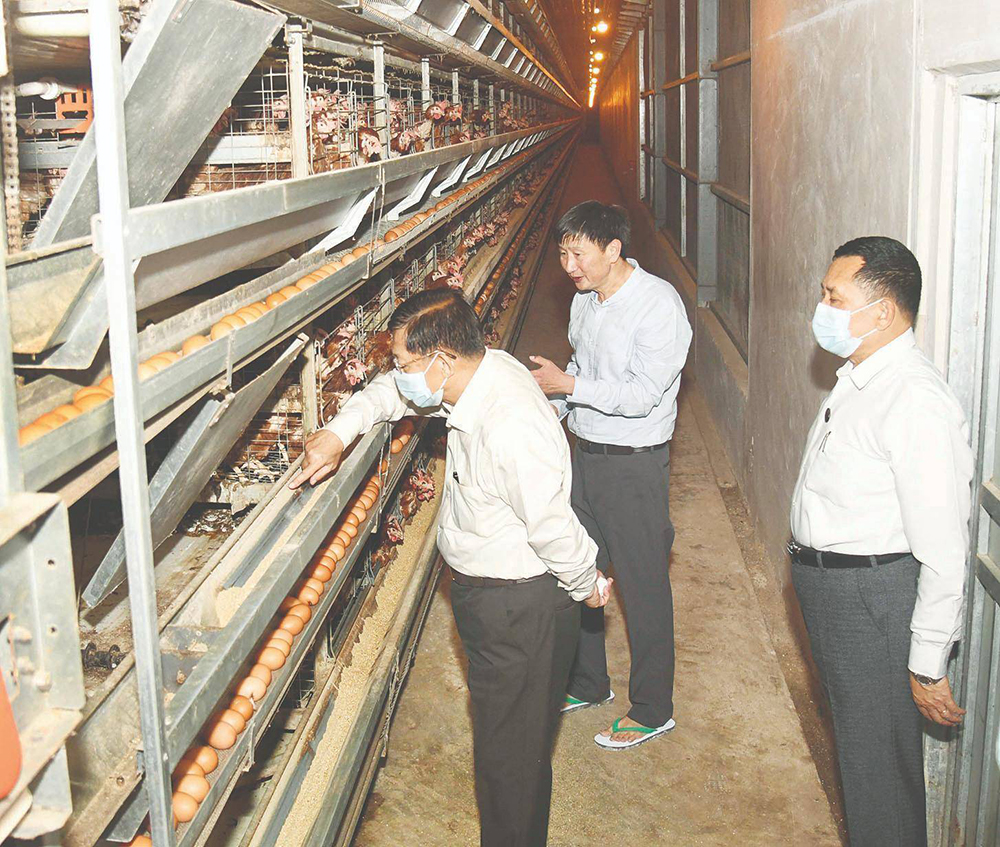
Min Aung Hlaing’s solution for Myanmar’s escalating food crisis? More chickens, more eggs!
That was the junta leader’s prescription this week, following September’s grim report by the United Nations World Food Program. The WFP ranked Myanmar as the fifth most food-insecure country in the world, with 16.7 million people—nearly one in three citizens—now acutely food insecure.
At Thursday’s cabinet meeting, Min Aung Hlaing insisted the regime was prioritizing food security and proceeded to do the math: If half of Yangon’s 7 million residents ate one egg a day, the city would need 3.5 million eggs daily—which in turn would mean raising about 4 million chickens.
He seemed to be suggesting that families who could no longer afford nutritious meals of meat and fish could instead survive on eggs.
Since his military seized power in 2021, the price of basic foods has nearly quadrupled, leaving millions without access to proper meals.
The junta chief also urged officials to boost yields from existing farmland rather than expanding acreage, even as his troops torch houses and farms in the agricultural heartlands, leaving thousands of acres of idle.
The undignified scramble for food security contrasts sharply with the first few months of his regime, when Min Aung Hlaing boasted of plans to introduce a metro and electric public buses. Nearly five years later, the coup leader has been forced to return to basics.
Military Reclaims Mandalay-Shan Crossroads
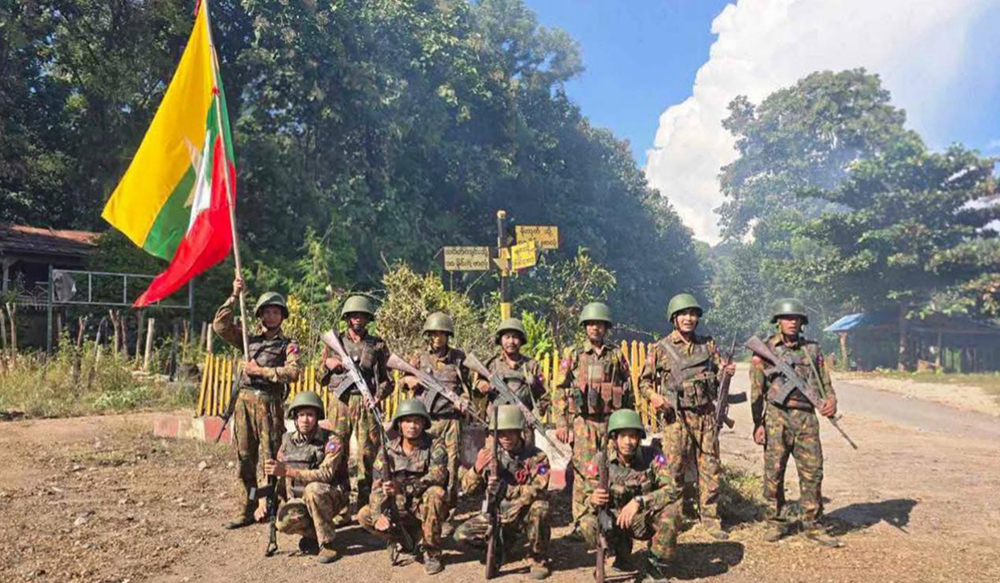
The Myanmar military recaptured Phawtaw Junction on Tuesday, a key crossroads linking Mandalay with northern Shan State and Kachin State, following a major offensive involving airstrikes, drones, heavy artillery, and newly deployed troops, according to local resistance sources.
The junction lies just over 80 km from Mogoke, the ruby-mining hub controlled by the Ta’ang National Liberation Army (TNLA), and connects routes to Mongmit, Bhamo, Myitkyina, and northern Shan State. Resistance forces had used the area to link operations across Thabeikyin, Singu, Madaya, Mogoke in Mandalay and into northern Shan State. Read more
Min Aung Hlaing Takes on Wife’s Protégé
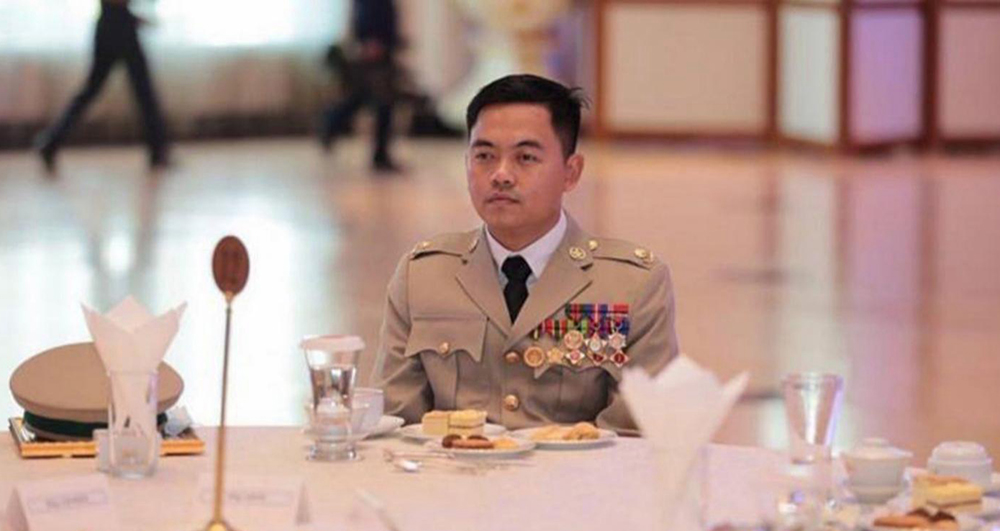
Junta leader Min Aung Hlaing has appointed a favorite of his wife Kyu Kyu Hla’s as his new aide-de-camp, according to military sources.
The move follows the recent reassignment of Colonel Sein Maung Lin, who previously held the post, to head the military’s Directorate of Anti-Terrorism.
Lieutenant Colonel Kyaw Zaw Ye, a native of Kachin State’s Bhamo, is one of the most prominent members of the Defense Service Academy’s 47th intake, whose training was overseen by Min Aung Hlaing when he was DSA commandant. Read more
Bullets to Ballots for Yangon Crackdown Chief
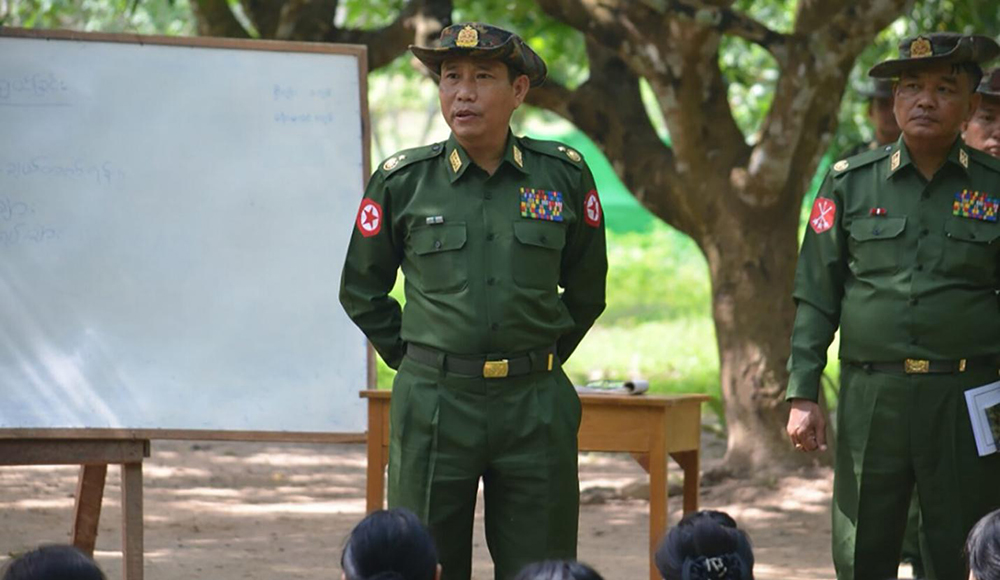
Former Lieutenant General Thet Pon, who led the bloody crackdown on anti-coup protesters in Yangon, looks set to be rewarded with the post of Sagaing Chief Minister after being named as a Union Solidarity and Development Party (USDP) election candidate.
Thet Pon was adopted as a candidate by the military’s proxy party in Sagaing City following his transfer to the civilian sector last month. The Defense Services Academy Intake 29 graduate recently opened Facebook and TikTok accounts to share content on his military service, Sagaing City, and his time as a commander in the North West Military Command.
As commander of Bureau of Special Operations (BSO) No. 5, responsible for security in Yangon, Thet Pon played a leading role in the violent suppression of peaceful protests following the 2021 military coup. He was sanctioned by the European Union in 2022. He also oversaw the arrest, torture, and execution of resistance members across Yangon Region. Read more