Myanmar generals feeling ASEAN’s love
The Association of Southeast Asian Nations (ASEAN) may have officially barred Myanmar’s military leaders from attending top-level summits due to their refusal to follow the bloc’s Five-Point Consensus, and repeatedly expressed “deep concern” over the “situation in Myanmar”—a diplomatic phrase referring to war atrocities committed daily by the Myanmar military against its own civilians—but Myanmar generals still manage to rub shoulders with their counterparts at the bloc’s meetings.
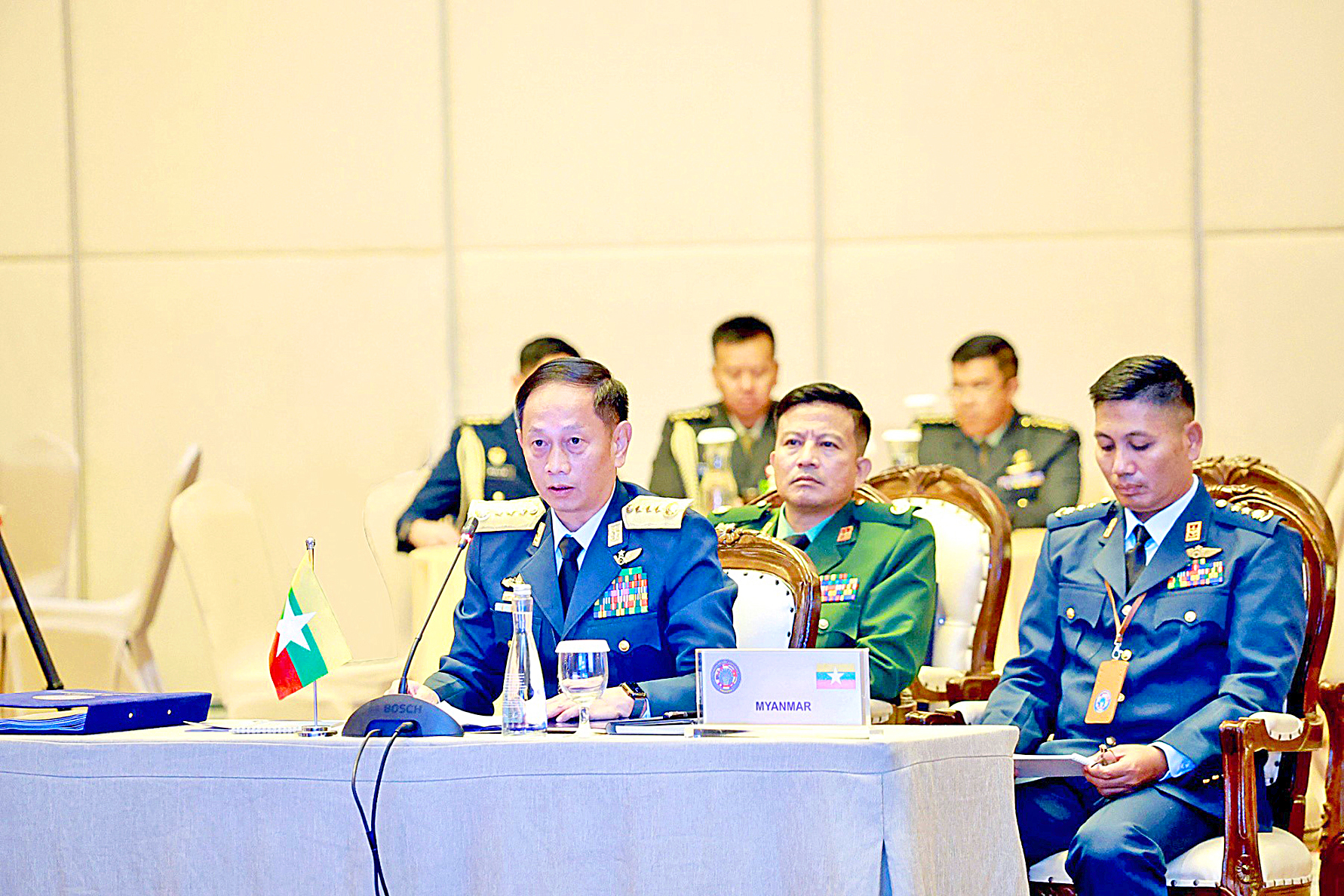
This week, Lieutenant General Than Htike—on behalf of military chief and coup leader Min Aung Hlaing—attended the 22nd ASEAN Chiefs of Defense Forces Meeting (ACDFM) in Malaysia. Not to be left out, Air Force chief General Tun Aung, who’s been internationally sanctioned for his role in airstrikes on civilian targets, showed up at the 22nd ASEAN Air Chiefs Conference (AACC) in Indonesia.
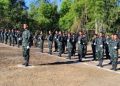
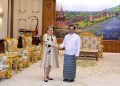

Than Htike, known for leading brutal military campaigns in Sagaing Region—where entire villages have been torched, civilians massacred and beheadings reported—held one-on-one meetings with defense leaders from Malaysia, Thailand, Laos and Cambodia. According to junta newspapers, they discussed “strengthening friendship and cooperation.”

Meanwhile, Gen. Tun Aung, whose air force has been busy bombing villages, schools, hospitals, and religious sites, held separate talks with air chiefs from Laos, Brunei and Indonesia. The meetings reportedly focused on military aviation cooperation.
ASEAN has been urging the junta to stop the violence and comply with the Five-Point Consensus since 2021, but Min Aung Hlaing has turned a deaf ear.
And just two days after these friendly gatherings, on Sept. 12 the regime bombed a private high school in Rakhine State’s Kyauktaw Township, which is under the Arakan Army’s control. The attack killed 18 people, including schoolchildren, and injured more than 20. A grim reminder that while Myanmar’s generals are busy shaking hands abroad, they’re still dropping bombs at home.
Junta prepares its ballot boxes—and its prisons
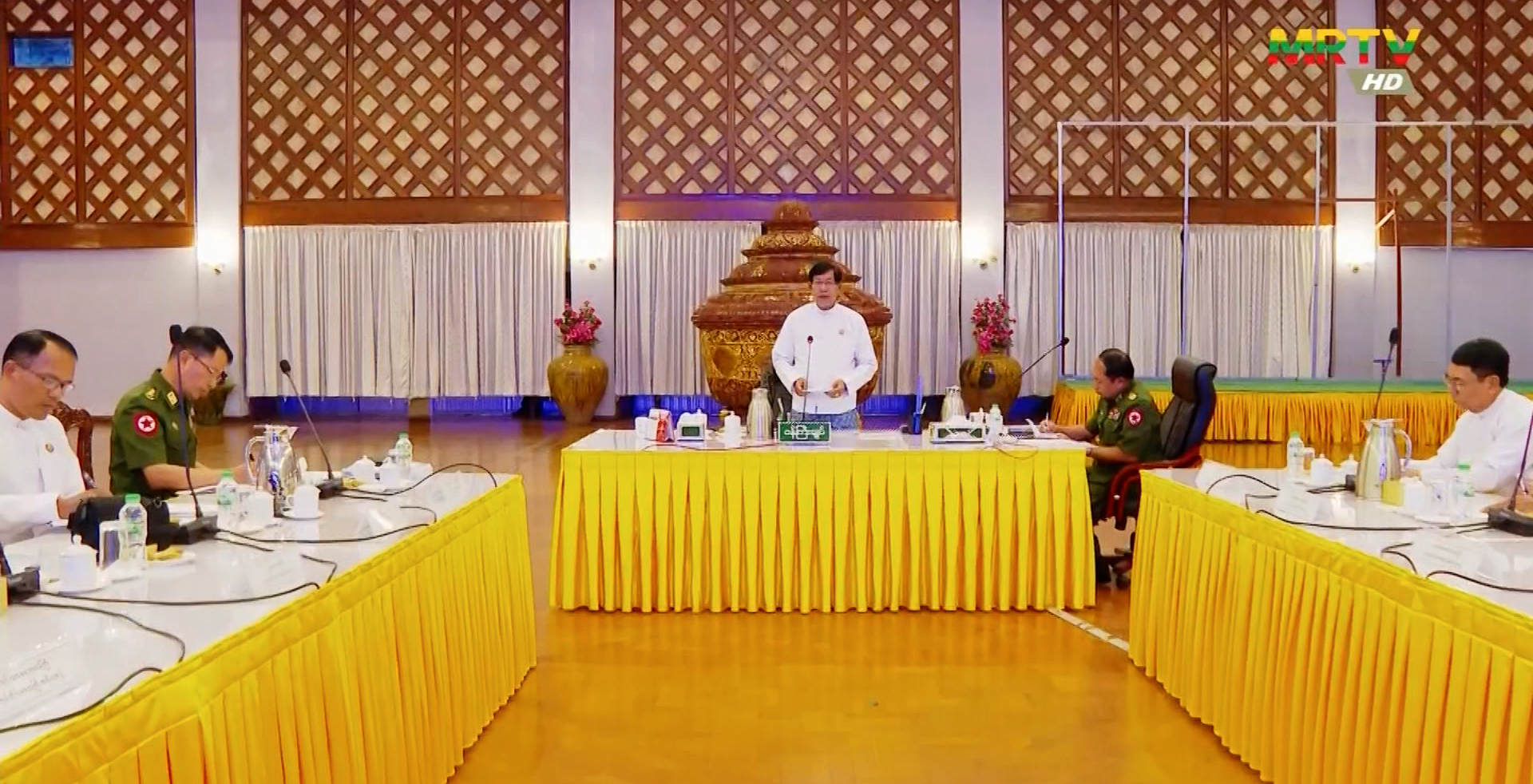
General Pyae Sone Lin, and other officials meet on Sept. 9, 2025 to discuss security measures for Yangon during the election period.
The junta’s Union Election Commission has begun laying the groundwork for the elections scheduled for December-January, starting with discussions on security plans and public awareness campaigns. One of the highlights was disseminating the Election Protection Law, which includes penalties ranging from a few years in crowded and filthy prisons to execution for any action or statement deemed critical or disruptive to the electoral process. The election has been denounced by junta opponents and most people in the country as a sham.
On Sept. 9, Yangon Region Chief Minister Soe Thein, Yangon military commander Major General Pyae Sone Lin, and other officials gathered to discuss how best to secure the commercial capital during the election period. Voting is planned for just 12 of Yangon’s 45 townships in the first phase of the poll on Dec. 28.
Following the meeting, Yangon residents reported junta patrols in downtown areas in military vehicles, while junta-appointed local administrators and vigilantes joined hands to patrol neighborhoods in traditional style—in cycle-rickshaws—on the outskirts.
In neighboring Bago Region, the chief minister hosted a similar meeting on Sept. 11 “to ensure the election runs smoothly”, said the junta media. Officials were instructed to widely publicize the Election Protection Law—or in other words, to explain the penalties to members of the public should they ever think of criticizing the vote—and security plans were also presented.
Recently, the regime arrested a man in Shan State’s Taunggyi and sentenced him to seven years in prison—for the offense of criticizing the election. Authorities say more cases are pending, shedding light on the attitude of the “government in waiting” towards free speech and what we can expect of the post-election environment.
But even as the regime busies itself with issuing threats and locking up critics, it’s managed to find time to extend an open invitation to armed groups—including People’s Defense Forces—to join its “political process” to establish a “genuine democracy.”
Regime’s Karen allies kept on a short leash
The military regime seems to be trying to rein in ethnic Karen armed groups with liaison offices in Karen State’s Myawaddy as it pushes for full control of the strategic township on the Thai border.
Restrictions seem to be targeting minor armed militias like the Karen National Liberation Army–Peace Council (KNLA–PC) and the Democratic Karen Benevolent Army (DKBA).
Junta troops have been tightening security since they recaptured the section of Asian Highway 1 between Kawkareik and Myawaddy and the Thingannyinaung route last week.
Seven years for a Facebook post
The military regime has sentenced a man to seven years in prison for criticizing the upcoming election, it said Tuesday.
It said Ko Nay Thway, 36, from Taunggyi, Shan State, criticized the election that is slated for the end of the year on Facebook, thereby violating the new Election Protection Law promulgated on July 29 July.
Ko Nay Thway, who operates the “Lashio Baegyi” account, shared a CCTV clip of a daylight robbery of two men assaulting a woman driver in Lashio, the capital of northern Shan State, on Aug. 25. The woman was shot in the legs by one of the robbers.
Junta DMs the resistance
The military regime keeps urging armed resistance groups to cooperate with phased general elections that start in December.
For months, the regime has been sending out SMS messages inviting People’s Defense Forces (PDF) and other armed groups to join the political process.
The groups “were invited in the interests of the Union to return to the legal fold, with the expectation of building a Union based on democracy and federalism,” according to a statement carried in the propaganda New Light of Myanmar.
‘Daw Aung San Suu Kyi is fine: Trust us’
Junta spokesman Lieutenant General Zaw Min Tun, head of the regime’s National Defense and Security Council information team, talks to pro-junta media on Saturday.
The Myanmar military regime has dismissed reports about the deteriorating health of detained civilian leader Daw Aung San Suu Kyi, claiming the news was deliberately timed to distract from junta chief Min Aung Hlaing’s official visit to China last week.
Junta spokesman Lieutenant General Zaw Min Tun, head of the regime’s National Defense and Security Council information team, told pro-junta media on Saturday the reports were “fabricated” and aimed at overshadowing Myanmar’s participation in high-level events in China, including the Shanghai Cooperation Organization Summit 2025 and commemorations marking the 80th anniversary of China’s victory over fascism in World War II.
“Daw Aung San Suu Kyi is in good health,” Zaw Min Tun claimed.