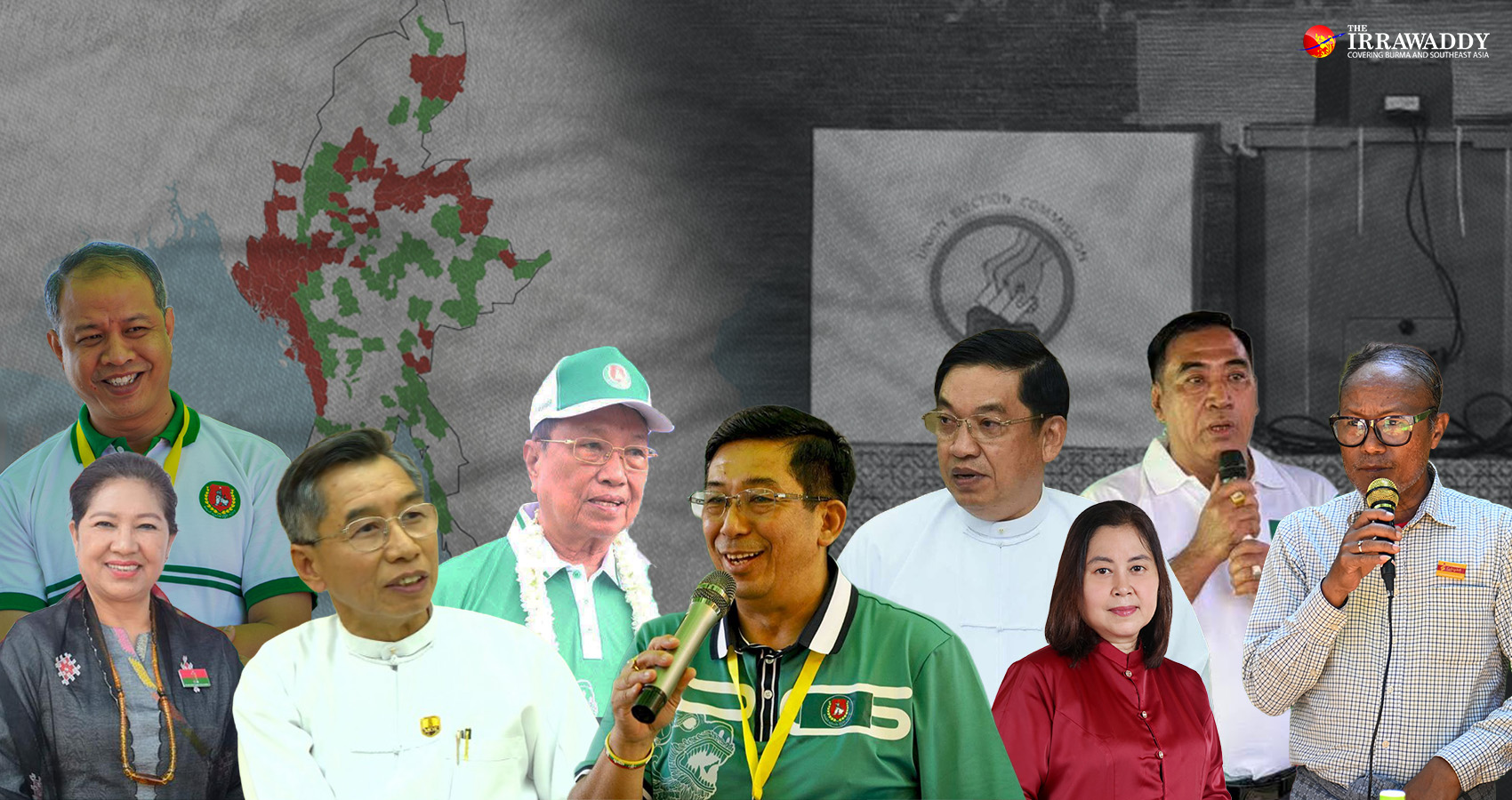
The second phase of the controversial election organized by the military regime is set to take place on Sunday, Jan. 11, covering 100 townships across 12 states and regions. Senior junta officials, leaders of the military-backed Union Solidarity and Development Party (USDP) and several well-known political figures are among the candidates.
With its administration having collapsed in much of the country, especially in ethnic states and central Myanmar, the regime has split the polls into three phases. The first round was held on Dec. 28 in 102 townships, where the USDP claimed nearly 90 percent of the seats. The third phase is scheduled for Jan. 25.
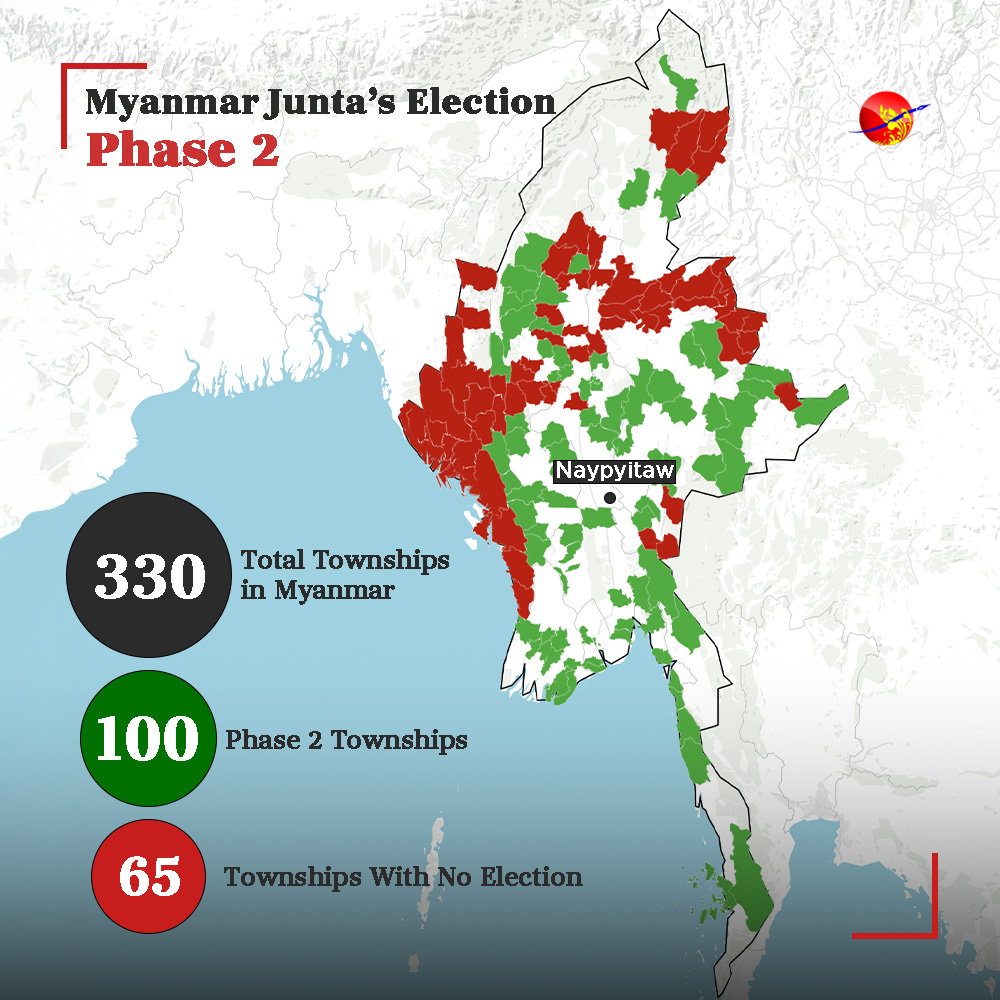
Where voting will take place
According to the junta-appointed Union Election Commission, the second phase will be conducted in the following areas under junta control in northern, southern, central and eastern Myanmar:
- Kachin (3 townships)
- Karenni (2)
- Karen (2)
- Sagaing (11)
- Tanintharyi (3)
- Bago (12)
- Magwe (11)
- Mandalay (9)
- Mon (5)
- Yangon (16)
- Shan (17)
- Ayeyarwady (9)
Parties and candidates
The USDP will contest most constituencies in the second phase of the election. Other parties include the National Unity Party, Shan and Nationalities Democratic Party, Myanmar Farmers Development Party, People’s Pioneer Party, People’s Party, Kachin State People’s Party, Tai-Leng Nationalities Development Party, New Democracy Party (Kachin), Lisu National Development Party, Kayah State People’s Party. Independent candidates are also running.
Prominent figures running under the USDP banner in the second phase include:
Nyo Saw: The junta’s prime minister and member of the military-dominated National Defense and Security Council. A former lieutenant general, Nyo Saw is running in Yangon’s Cocokyun Township.
A trusted advisor to Min Aung Hlaing, Nyo Saw also chairs military conglomerate Myanmar Economic Holdings Ltd. In other words, he is the supremo of the Myanmar military’s business empire, playing a key role in financing the military regime. He is also a key figure in family businesses run by Min Aung Hlaing’s son and daughter.
Nyo Saw also chairs a number of junta committees including those overseeing foreign policy and economic affairs, prompting speculation that he will be entrusted with a key position in the new “elected” government.
Cocokyun, dominated by military families and civil servants, has long been a safe seat for the USDP. Min Aung Hlaing himself visited the township in October, urging voters to support candidates with “defense-minded” views.
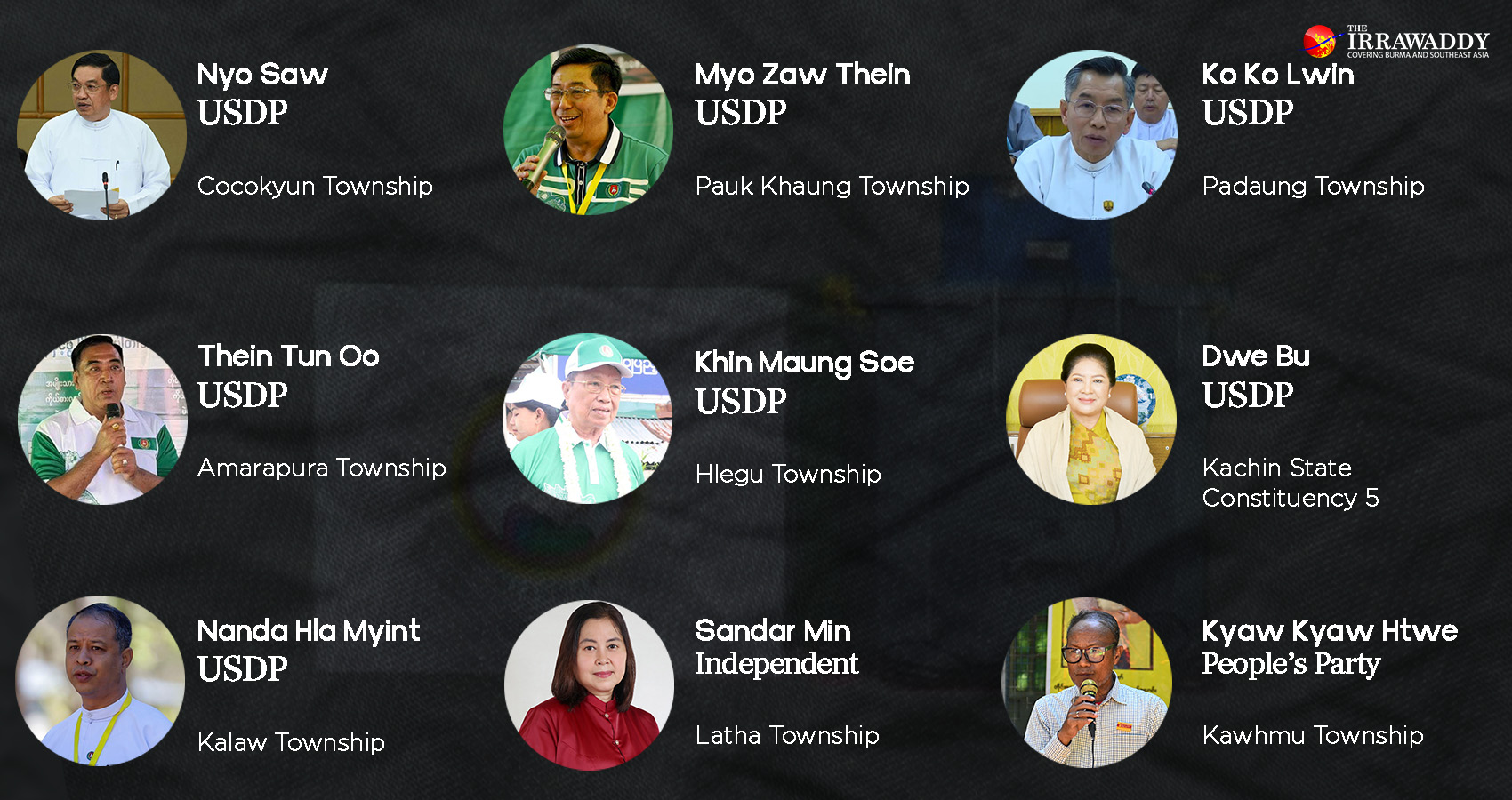
Khin Maung Soe: The party’s chair in Yangon, who served as electricity minister under Thein Sein’s quasi-civilian government, is contesting a Lower House seat in Yangon’s Hlegu, where he lost to a National League for Democracy (NLD) candidate in the 2020 general election. The hardliner is known for organizing pro-military rallies before and after the 2021 military coup.
Ko Ko Lwin: The junta’s energy minister is running for a Lower House seat in Bago Region’s Padaung Township, where the ethnic Arakan Army and junta troops are engaged in fierce clashes.
Ye Yint Soe Nyunt: A former military officer, Ye Yint Soe Nyunt is running in Hlegu for an Upper House seat under the proportional representation system. He is a son of hardline propagandist Soe Nyunt, better known by his pen name Poet Htilar Sithu, who served as deputy information minister under Than Shwe’s regime.
Dwe Bu: A member of the junta’s central advisory body, the ethnic Kachin politician is contesting an Upper House seat in Kachin State Constituency 5 under the first-past-the-post system.
A former attorney at the Supreme Court and an MP during Thein Sein’s administration, Dwe Bu also participated in the National Convention organized by the previous military regime to draft the 2008 Constitution.
Myo Zaw Thein: The former adjutant-general whom Min Aung Hlaing has transferred to the USDP as its vice chair. Known as a close ally of the junta boss, the former lieutenant general is contesting in his hometown of Pauk Khaung, Bago Region for a Lower House seat, and has been actively campaigning on social media. He is seen as a potential successor to party chair Khin Yi once the latter assumes a key post in the new cabinet.
Thein Tun Oo, current party spokesperson, is running in Amarapura Township, Mandalay Region for the Lower House.
Nanda Hla Myint, former party spokesperson, is contesting a Lower House seat in Kalaw Township, southern Shan State.
Some prominent figures among non-USDP candidates include Kyaw Kyaw Htwe, aka Ko Marki, and Sandar Min.
Kyaw Kyaw Htwe: The 88 Generation student activist is running under the banner of the People’s Party led by fellow student activist Ko Ko Gyi. He is running in Yangon’s Kawhmu Township—the former constituency of jailed civilian leader Daw Aung San Suu Kyi.
Sandar Min: The former NLD lawmaker is viewed by many as a turncoat. She is contesting as an independent in Yangon’s Latha Township, home to the city’s bustling Chinatown. She had initially planned to run under the National Democratic Force (NDF) led by Khin Maung Swe, who sits on the junta’s central advisory body.
The junta’s election commission however dissolved the party for failing to field enough candidates, forcing her to stand alone.
USDP advantage
In several constituencies including in Sagaing and Tanintharyi regions, the USDP will automatically win seats due to a lack of rivals.
With the NLD barred and other pro-democracy parties sidelined, the USDP, backed by the military, is positioned as the strongest force in the upcoming parliament.
Analysts say the regime is using the election to consolidate power and present a façade of legitimacy, despite widespread public opposition and ongoing armed resistance across the country.
With Myanmar military appointees constitutionally holding 25 percent of seats in the legislature, the USDP will be able to a form a government, which will still be dominated by generals. Junta chief Min Aung Hlaing has openly urged civil servants and families of military personnel to support candidates who are aligned with the Myanmar military.
Min Aung Hlaing has not ruled out serving as president. Talking to the press after casting his ballot in the first phase of the voting on Dec. 28, the junta boss said the matter should be discussed only after parliament convenes.