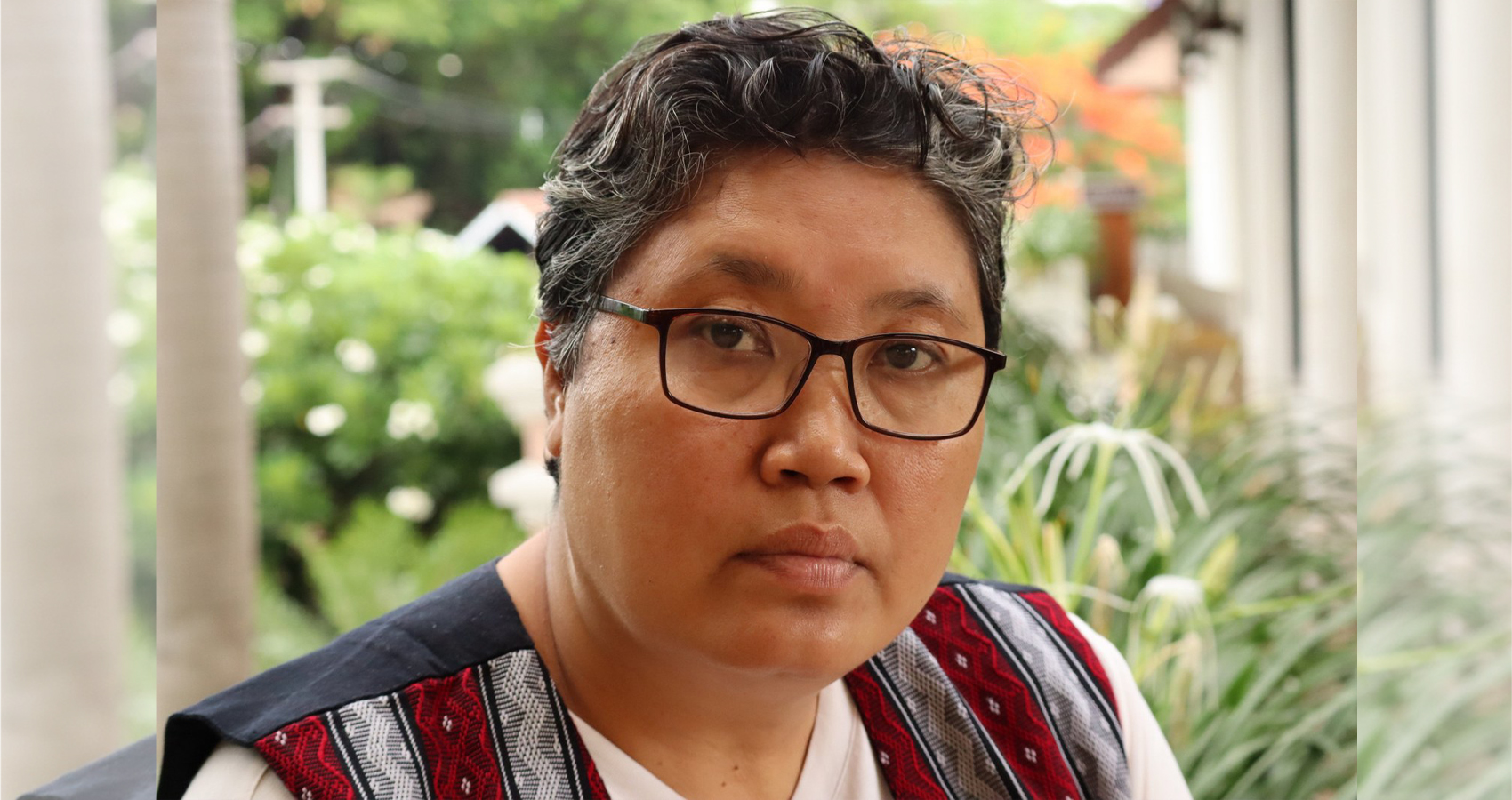
Daw Myo Myo Aye, head of the Solidarity Trade Union of Myanmar (STUM), was arrested along with her daughter at her Yangon home in July. Regime officials then raided the trade union’s Shwepyithar Township office, detaining eight members of the union.
Daw Myo Myo Aye was charged with repeat offending but freed on October 20 after posting bail of 6 million kyats (about US$ 2,850). Nine of her colleagues, including her daughter, remain behind bars.
She paid another 60 million kyats to reclaim mobile phones and IT equipment seized under the 2022 Organization Registration Law, which the regime introduced to clamp down on civil society after the 2021 coup.

Founded by Daw Myo Myo Aye in 2016, STUM is dedicated to protecting the workers’ rights, including the right of association and free expression.
Daw Myo Myo Aye was previously prosecuted for protesting the 2021 coup and spent six months in Insein Prison in April of that year.
She recently spoke to The Irrawaddy about her arrest, interrogation, and ongoing legal battles.
Why were you and other STUM members arrested?
They said it was because factory owners complained. I believe it was linked to our demands for higher wages.
I was informed that I was being sued by Wanxinda, a Chinese‑owned bag factory. They had dismissed three workers, whose cases we took up. We reported the dispute on the STUM page, which they claimed damaged their reputation. They sued me under Article 66(d) of the Telecommunications Law, after which regime officials raided my home and office, seized documents and equipment, and arrested us.
What happened during your interrogation?
A: They questioned us about everything—union activities, donations we made after the March earthquake, disputes we are handling, our projects, my work history, even details about my parents and husband. Sometimes, three people interrogated me at the same time. They repeated questions endlessly, day and night, leaving no time to rest and sleep. It was meant to exhaust and confuse me. I spent two weeks under interrogation, suffering both mentally and physically.
Were you physically abused?
There was physical abuse too. Everyone who goes through interrogation suffers. No one escapes that process unharmed.
What conditions were attached to your release?
Police and prison officials said the case against me had been withdrawn, but the court still summoned me. I face charges of unlawful association and repeat offending. I was released on bail after two guarantors paid three million each. The bail period lasts for six months. I also had to pay 60 million kyats to retrieve my confiscated items. The court barred me from selling or disposing of these items. I have appealed that decision to a higher court.
Nine of my colleagues remain imprisoned on the same charges, while I was granted bail with restrictions on my movement and property.
When labor rights activists are prosecuted simply for forming associations, what challenges do you face in speaking up for workers?
A: We have never operated as an organization because we are not yet officially registered. Only unions registered with the Ministry of Labor are permitted to operate. We only assist labor unions. The Ministry of Labor has declared to the world that it complies with ILO [International Labor Organization] Article 33—that workers have the right to freely form associations, to establish unions, and to make demands. Yet in practice, they arrested and charged every official in our organization. That contradiction speaks for itself.
Following our arrest, members of unions we had helped to establish were also arrested for no apparent reason, and some were conscripted. The township labor department chief personally visited factories, seeking out people and pressuring them. So, I ask: does the right to freely form labor associations exist in Myanmar, or is it only a paper declaration?
Why is the regime targeting labor rights activists?
The intention is to silence them. When workers cannot speak directly, unions speak on their behalf. But then the authorities target the unions and labor activists, shutting our mouths too. Once inside [prison], we cannot act, we cannot speak.
My advice is that workers consult with labor rights activists before they strike, to achieve better outcomes all round.