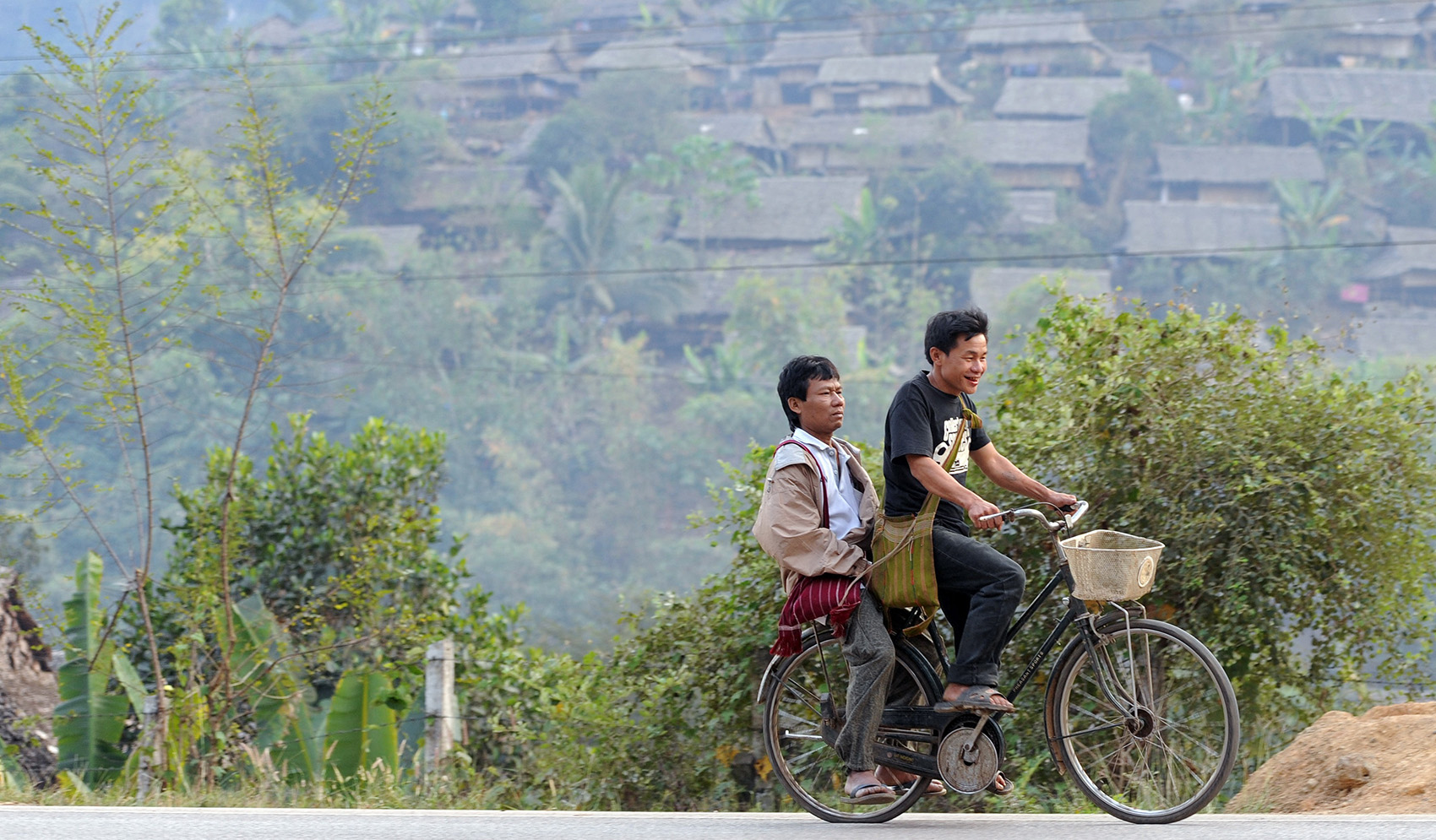
The Thai cabinet on Tuesday allowed long-staying refugees from Myanmar to work in Thailand, a move hailed by The Border Consortium (TBC), the main provider of food and shelter to the refugees, as “a historic and vital step” toward achieving self-reliance and greater dignity for refugees living in camps.
Thailand hosts nine refugee camps along its border with Myanmar; they are home to more than 107,000 refugees who have fled Myanmar military abuses since the 1980s, according to the TBC.
For decades, the Thai government banned refugee camp residents from working, moving freely, or accessing public services, forcing them to depend mostly on foreign aid.


Following an aid cut early this year by the camps’ main donor, the US government, the situation in the camps has deteriorated. TBC executive director Leon de Riedmatten told The Irrawaddy that the consortium’s overall budget was cut by two-thirds, making it impossible to continue to feed the people inside the camps.
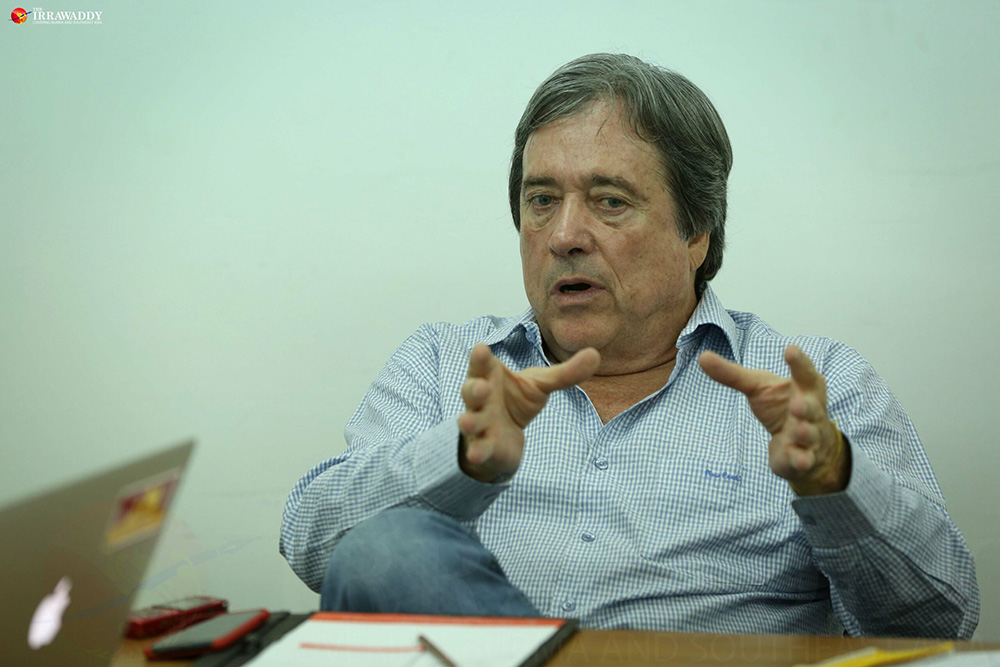
“I have for months told the Thai authorities that you have no choice. If you want to prevent a crisis, you have to let those people [work] outside,” he said in the following exclusive interview with The Irrawaddy.
De Riedmatten has been urging the Thai government to allow Myanmar refugees residing in the camps to work outside them since 2017, when he was a TBC board member. During his visits to the camps, he saw that things would have to change, he said.
Until the last few months, however, his recommendation was always rejected out of hand.
“And now they have agreed. So it’s a big, big, big change,” he said.
“I’m so pleased at the end. It’s a big, big, big plus for the future for these refugees,” said de Riedmatten.
Irrawaddy: Why is the Thai government’s decision to permit long-staying Myanmar refugees to work in Thailand good news?
Leon de Riedmatten: The good news is that for the first time the Thai government considered that those people could maybe stay in this country and they should be able to work outside, because this is the only way for them to be one day self-reliant, self-supported and independent and maybe not having to stay for many more years in camps.
Before, the Thai government was only thinking that either these people, refugees, should go to a third country or should go back to Myanmar.
Now they changed their mind and their policy because partly it’s related to the American cut of assistance because we, the TBC, we don’t have the means anymore to feed all of them there.
I have told the Thai authorities, you have no choice. If you want to prevent a crisis, you have to let those people [work] outside.
Because in one week, a guy can earn exactly even more than what we can give to the whole family for one month. [I told them:] Please think twice, think: Prevent a crisis instead of having to face a crisis and then to react.
And then, they have decided [to allow it]. I think it’s very, very positive.
Practically speaking, given the number of displaced people in the camps, will there be difficulties implementing the new policy?
Then the modality—how it’s going to be and so on—is still a little bit unknown, but it needs a lot of pragmatism. It has to be very simple and, step by step, the integration should move on.
Can you believe that people are there for even more than 40 years being just temporary illegal migrants, and now if they can get a new status and if they can be on their own, it will change completely their life and their future?
Today I had a meeting with [the] current refugees committee and the responsible people of the management of the camps. I think they understand that resettlement to America is not going to happen soon. So what is the alternative? Almost no one, or very few, are thinking of going back to Myanmar today because there is no security.
So the only way is to stay here and have a decent life. And this is why this decision is very positive because it opens a door which has been closed for more than 40 years. So the modalities, as I have said, have to be very practical.
I think you need a legal document that you can go outside and work on it. It needs a kind of, let’s say, monitoring or reporting mechanism that you can follow those people where they are, what they face, if they create problems or if they face problems, and then try to help them.
So these kind of modalities, I think, are quite important but still have to be very pragmatic.
And for this, so far no decision has been really taken. This is why, for instance, [at] TBC, we have to be fully involved in all of this. It’s not because we don’t provide them with food, because we don’t have the capacity to do so, except for the most vulnerable… So the ones we can continue to feed is 15 percent of the population.
Working outside is the best part of the alternative. The second is, even in the camps, we have now to promote much more income-generating activities, livelihood and so on. It looks to be easier to get funds from donors than just to replace the Americans.
You mentioned that you met some refugees today. What was their reaction to the news of the new policy?
They were very positive and enthusiastic with this. Even if still there are many who thought that resettlement for them was the best, going to America and so on.
But I think they now understand that it will not happen, at least soon. So this opportunity, they will grab it. And their only concern is modality, how it’s going to be.
For instance, a good example, I am the head of the family. I can work outside, maybe a little bit far away from the camp. Should I take my family with me or not? So my advice was, at the beginning, don’t do it. Go alone. And when you feel comfortable, if you think the family can join you, okay, do it.
It’s a big, big, big plus for the future for these refugees. I told the refugees we’ll do our best to continue to support you, to be with you and to help both you and the government to make the best outcome of this new situation.
All in all, it’s very good news.