In Myanmar, who are the people who can knock on your door in the middle of the night, arrest anyone they wish, torture with impunity and return lifeless bodies at dawn?
Who are those who release political prisoners only when they are dying, denying them even basic medical care behind bars?
They are the most crucial pillar of the dictatorship—Myanmar’s Military Intelligence (MI).



All dictators across the world, from all eras, have shared one common weakness: fear. They fear their own people because they know they have no legitimate right to rule. Having seized power illegally by force, they maintain it through oppression, manipulation and lies. Since they can never win a free and fair election, they build their survival on five main pillars at least:
- The military and armed security forces;
- The intelligence apparatus—the secret police;
- A network of informers, known by Myanmar people these days as dalan;
- Thugs—organized gangs such as the Swan Arr Shin in Myanmar; and
- The elite class, from scholars and politicians to crony businessmen—educated yet morally blind individuals who serve the dictators’ interests.
Of these, the most ruthless and indispensable pillar in Myanmar is the MI. An institution built on fear, surveillance and cruelty, it is Myanmar’s version of Nazi Germany’s Gestapo or the Soviet Union’s KGB.
‘Big Brother is Watching You’
The phrase “Big Brother is watching you” from George Orwell’s 1984 has become a global symbol of totalitarian surveillance. In Myanmar, “Big Brother” has long meant MI—the military’s intelligence network that spies, arrests and silences.
At independence in 1948, the system began modestly, with just three units. By 1991, more than four decades later, it had ballooned to 23 units and eventually to about 26, employing around 10,000 personnel at its peak. Its reign of terror reached its height under General Khin Nyunt, who served as Myanmar’s MI chief for decades and came to be known as the “Prince of Evil.”
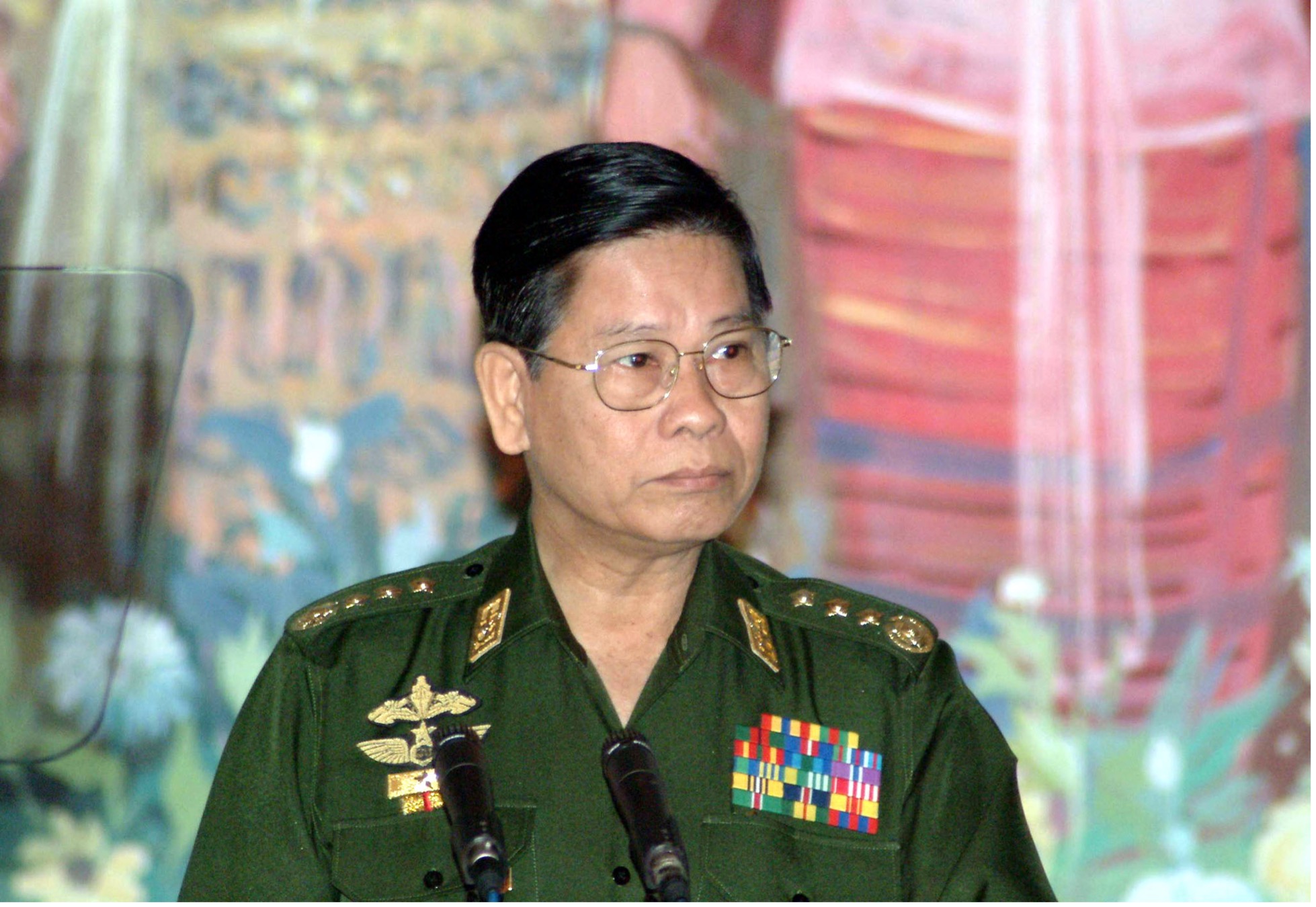
On Oct. 19, 2004, 21 years ago this month, Khin Nyunt was purged and arrested by Senior General Than Shwe, supremo of the then military regime, who feared his growing influence. Over 3,000 intelligence officers were detained, and the entire network was dismantled. MI had grown so powerful that it became an “invisible government”—a state within a state rivaling even the junta itself.
Some foreign observers, scholars and diplomats once labeled Khin Nyunt a “moderate.” They were wrong. Though more educated than typical infantry officers, MI officers were not moderates; they were hardliners who perfected the machinery of surveillance, torture and political annihilation. If Khin Nyunt was the “Prince of Evil,” his MI and subordinates were his legion—“the forces of evil”.
After the purge, the agency was restructured under a new name: the Office of the Chief of Military Security Affairs (MSA). But its purpose remained unchanged—to protect the generals and destroy their opponents.
Dictators and their Spies: Hand in glove
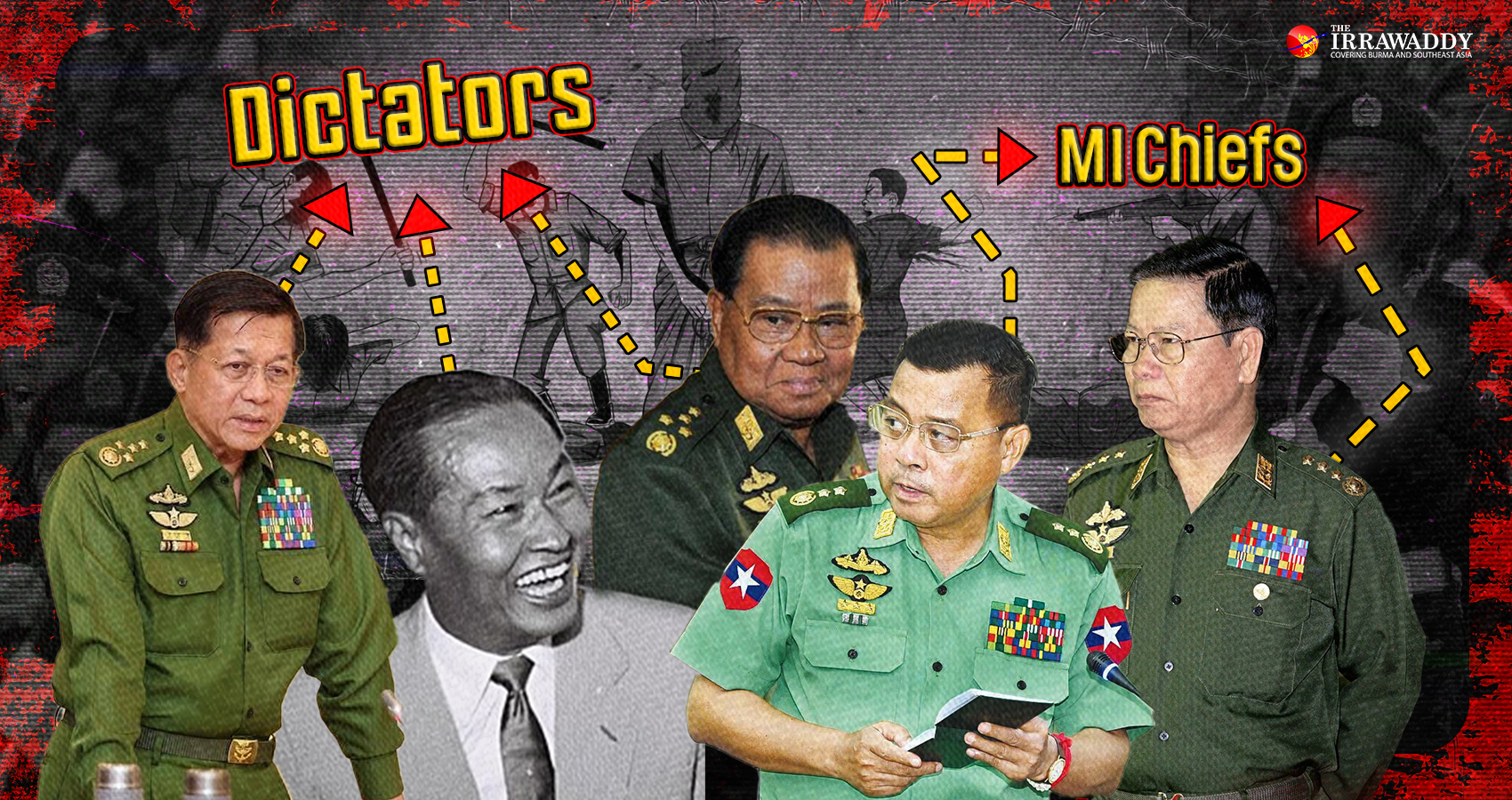
Dictators and their intelligence chiefs are bound together like master and disciple. One cannot survive without the other. In Myanmar’s history, two such deadly duos have brought immeasurable suffering:
- General Ne Win and his MI chief Khin Nyunt, and
- Junta chief Min Aung Hlaing and his MSA chief Lieutenant General Ye Win Oo.
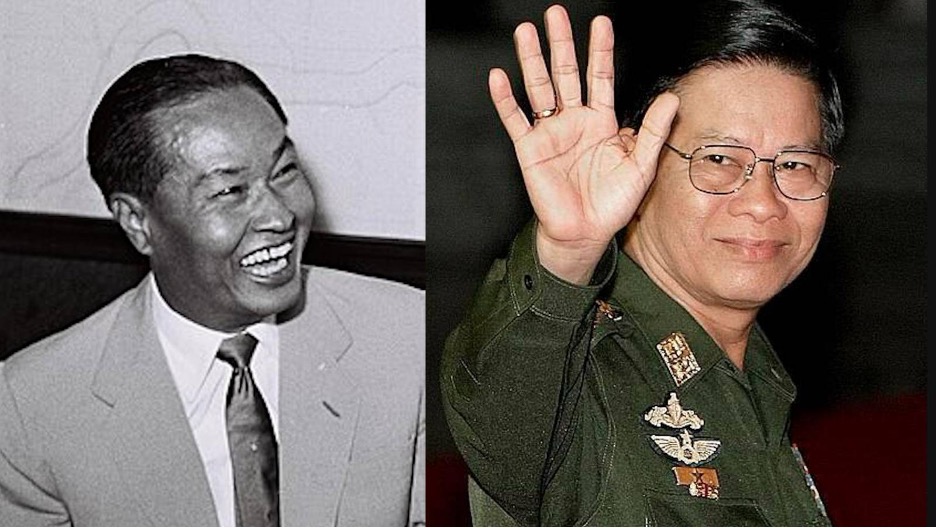
Every dictator relies on his most loyal and most brutal subordinate to run the intelligence apparatus. But when that apparatus grows too powerful, it must be purged. Ne Win eliminated his MI chief, Brigadier General Tin Oo, known as “Myat Mhan Tin Oo” (Bespectacled Tin Oo) in 1983. Than Shwe purged Khin Nyunt in 2004. History repeats: paranoia devours its own creators.
Genocide against political generations
The main mission of a military intelligence service is to hunt and destroy anyone who dares oppose the military. But its ambition goes beyond individuals—it aims to eradicate entire generations of political opposition or pro-democracy movements.
From 1962 to 1988, and again in 2021, the intelligence network has worked to exterminate each generation that rose up for democracy. It is, in essence, a political genocide, not based on ethnicity, but on political belief and moral courage.
On Feb. 1, 2021, when the coup unfolded, it was the MSA that led the arrests of President U Win Myint and State Counselor Daw Aung San Suu Kyi. During his later testimony, U Win Myint confirmed that MSA officers monitored him constantly during his house arrest.
Since that day, they have been the regime’s sharpest instrument of terror—arresting, torturing and killing activists and citizens across the country.
The deaths of NLD members such as U Khin Maung Latt, U Zaw Myat Linn and democracy activist Ko Soe Moe Hlaing are among the countless examples.
Human rights groups estimate that since the coup, more than 30,000 people have been arrested, and over 2,200 have died in custody—some from torture, others from deliberate medical neglect.
Not even foreign nationals have been spared. In his prison memoir, “An Unlikely Prisoner”, Australian economist Sean Turnell, a former adviser to Daw Aung San Suu Kyi, described being slapped, burned with a lighter and threatened by intelligence officers during his interrogation when he was arrested following the 2021 coup—a glimpse of what Myanmar citizens endure daily.
The machinery of oppression
Today, the MSA, led by Ye Win Oo and his deputy Major General Min Thu, operates a nationwide web of surveillance and repression. Through networks of dalans (informants) and digital monitoring systems like the National Service Information Management System (NSIMS) and the Person Scrutinizing and Monitoring System (PSMS), the MSA tracks social media, intercepts communications and targets critics for arrest.

Its core operations include:
- Intelligence gathering and digital surveillance;
- Counter-intelligence and internal security;
- Protection of military leaders; and
- Psychological warfare, such as propaganda dissemination through media like the Myanmar Times—founded under MI control during Khin Nyunt’s era to “fight media with media.”
From Ne Win’s Burma Socialist Programme Party to Min Aung Hlaing’s junta, the purpose remains the same: reign through fear.
Inside the hell chambers
The name Ye Kyi Ai still sends chills down the spine of anyone familiar with Myanmar’s political history. Along with MI 6 and MI 7, these interrogation centers were hell chambers.
I know this firsthand. I was tortured for 10 days in MI 6 and MI 7. Deprived of food and sleep, beaten, interrogated endlessly, my verdict was written not by judges but by MI officers themselves.
From the 1960s through the 1990s, hundreds of political prisoners died in these interrogation centers or later in prison.
Among them were parliamentarians like U Hla Than and U Tin Maung Win, writers like Maung Thaw Ka, and activists like U Maung Ko, whose battered body was returned to his family with visible torture wounds. Daw Aung San Suu Kyi herself chronicled many such cases in her book Letters from Burma.
In every case, prison medical treatment—even a visit to the hospital—required MI approval. Many died because that permission never came.
These crimes continue today. Filmmaker Pe Maung Same, tortured during interrogation and released only when near death, died three days after leaving prison. Leading politicians and ministers like Dr. Zaw Myint Maung and U Win Khaing of the National League for Democracy were also released on their death beds. This deliberate cruelty—releasing prisoners at the edge of death—remains a signature of the MI system.
Even now, the junta continues to rely on former MI officers. Former Brigadier General Thein Swe and Colonel Hla Min are once again active, fronting “think tanks” such as the Paragon Institute. They shape narratives abroad and serve as intermediaries with China and other countries, proving that Myanmar’s MI never truly vanished; it simply changed its disguise.
Justice must replace fear
In 2013, I discussed with veteran journalist U Win Tin whether forgiveness or revenge was possible for the crimes committed by MI. He said the MI owed apologies to many political prisoners and their families for their arrests, torture and killings.
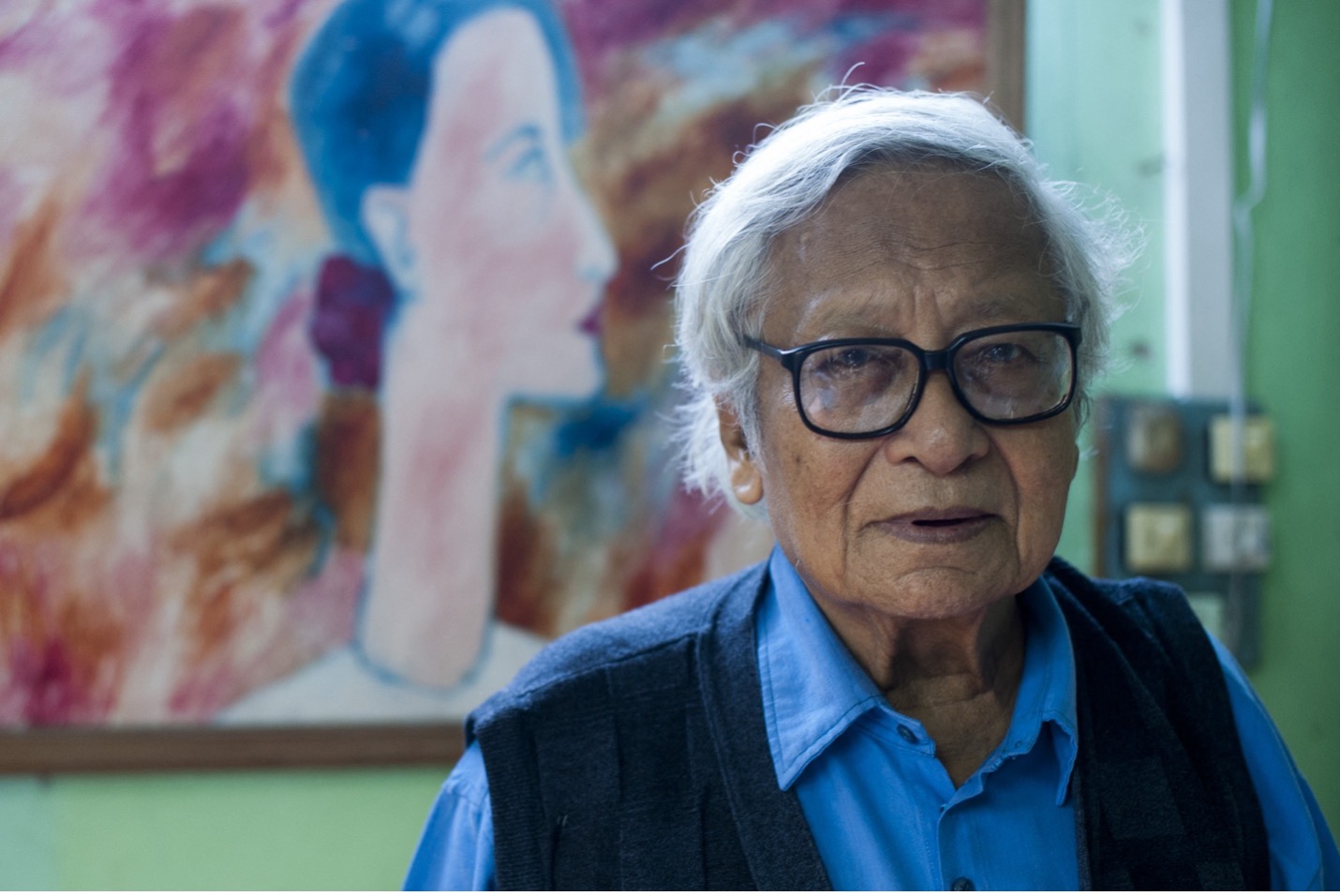
U Win Tin, a founding member of the NLD, was brutally tortured—most of his teeth were broken when MI officers punched and beat him—and he spent 20 years in prison under the previous military regime. He didn’t live to witness the even greater horrors after 2021.
He once said that the MI and all accountable military generals must apologize to the people. But for now, especially after the 2021 coup, apologies are no longer enough.
These generals and intelligence officers are criminals at large. They have never faced justice.
There is nothing to forget and forgive because they have shown no remorse for their crimes against the entire society. What is needed is truth and justice—not revenge, but accountability. Only by exposing their crimes and punishing those responsible can Myanmar begin to heal.
One day, this country will need a commission to document and expose truth and justice to prosecute the crimes of the military intelligence services—from Ne Win’s era to Min Aung Hlaing’s.
Until that day comes, the MI and its dalan networks will continue to operate—not only inside Myanmar but abroad, infiltrating diaspora circles under false covers: scholars, researchers, media, businesspeople and even activists.
So, beware.
Because as long as the dictators breathe, MI will still be watching you.
Read this story in Burmese အာဏာရှင်တွေရဲ့ အဓိကဒေါက်တိုင် MI
Watch this story on The Irrawaddy’s Opinion Talk Part 1 and Part 2