The US Congress on Thursday urged the Trump administration to publicly denounce the Myanmar junta’s planned election as a sham, and to appoint a Special Representative and Policy Coordinator to lead US efforts in addressing the country’s escalating crisis.
In a joint statement, lawmakers from two subcommittees of the House Committee on Foreign Affairs stressed that the US “must continue to stand with the people of Burma as they pursue freedom, dignity, and a democratic future.” The US government refers to Myanmar as Burma.
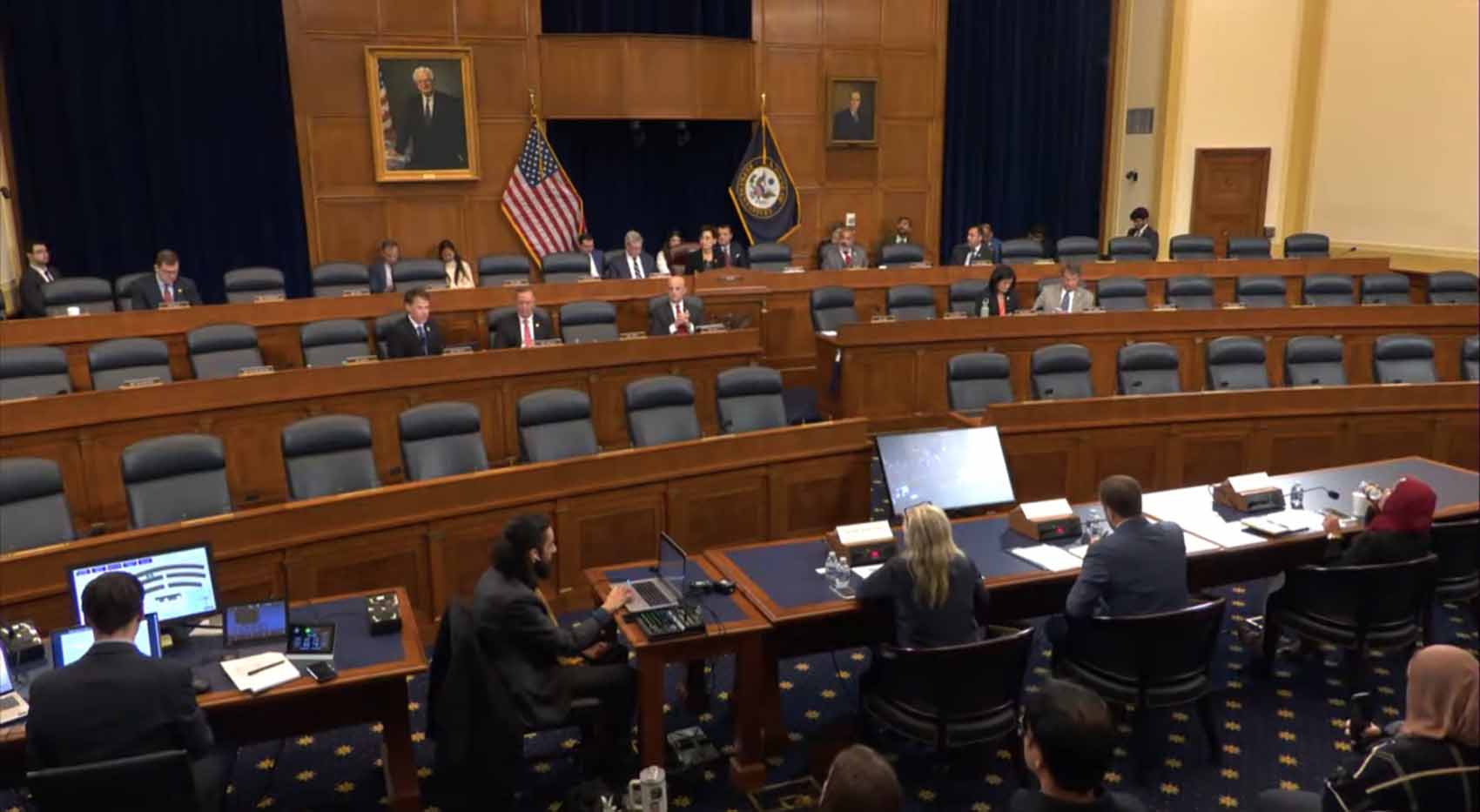
The bipartisan statement followed Wednesday’s congressional hearing titled “Burma’s Ongoing Military and Humanitarian Crisis and America’s Limited Options.” The hearing was hosted by the Committee on Foreign Affairs and involved its subcommittees for East Asia and Pacific; and South and Central Asia.


At the hearing, international experts warned that Myanmar has become a global hub of organized crime, posing a direct national security threat to the US. They cautioned that any regime emerging from the upcoming junta-controlled elections would further destabilize Myanmar, the region and US interests in the Indo-Pacific and at home.
They urged Congress to reject the junta’s planned election and to take stronger action to protect Americans from Myanmar-based scam operations run by Chinese transnational criminal networks operating under the protection of the military regime and its affiliated armed groups.
“[The regime’s] elections are designed to create an illusion of legitimacy while allowing the junta to continue serving as a proxy for China and Russia,” Young Kim, chairwoman of the East Asia and the Pacific Subcommittee, said during the hearing.
She added that China and Russia have abetted numerous war crimes committed by the Myanmar military by propping up the regime with weapons and surveillance technology.
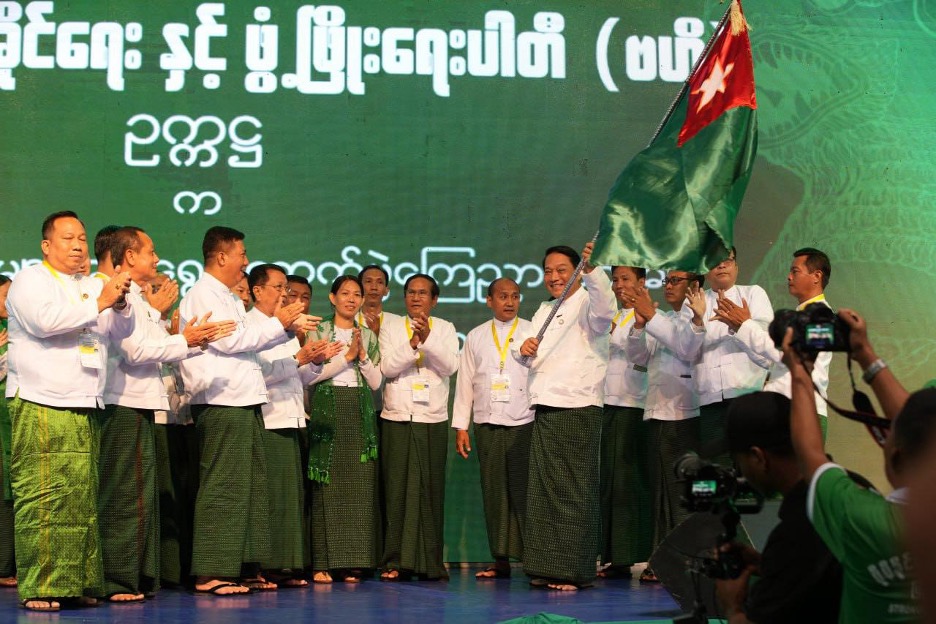
Myanmar’s junta-affiliated scamming networks have targeted Americans, stealing billions of dollars a year from US taxpayers, and those funds are enriching transnational criminal networks while also lining the pockets of the Myanmar junta, Kim said.
“Congress must act immediately to protect our citizens’ hard-earned savings,” she added.
At the hearing, Kelley Currie, a non-resident senior fellow of the Atlantic Council’s Indo-Pacific Security Initiative, said that due to “disaggregated sovereignty” and “lawlessness,” Myanmar has become the “perfect breeding ground” for transnational organized crime, adding that the scamming business is a US$35 billion a year global industry.
She added that scam centers could not exist without “the support of the regime and Beijing.”
“This is a national security threat to the United States, and we have tools to respond—whether through our ally Thailand or our adversary Beijing—to increase pressure on these operations. We must stop lifting sanctions on Burma’s arms dealers and make clear that we will not recognize the junta’s illegal election,” Currie said of the growing scam business in Myanmar.
Steve Ross, a senior fellow at the Stimson Center, told the hearing the junta’s “so-called elections” will not be free, fair or inclusive and do not represent the will of the Myanmar people.
The planned elections do not offer a path to democracy “or a peaceful, sustainable resolution to Myanmar’s conflict,” he said. Instead, they are designed to secure international recognition for the regime in hopes of gaining the political, financial and military support it needs to tighten its grip on power, Ross said.
If the election succeeds, the Myanmar military will continue to pose a threat to regional stability “and US interests in the Indo-Pacific and at home,” Ross said.
Ross noted that scam centers have proliferated since the coup, with Chinese crime syndicates, the Myanmar regime and its allied militias all profiting from the $10 billion that Americans lost to scams last year.
He said the junta’s recent “crackdown” on the notorious KK Park scam hub was purely performative.
Scam leaders were allowed to escape, evidence was destroyed and dozens of scam centers—employing more than 100,000 people, including many trafficking victims—continue to operate with complete impunity, he added.
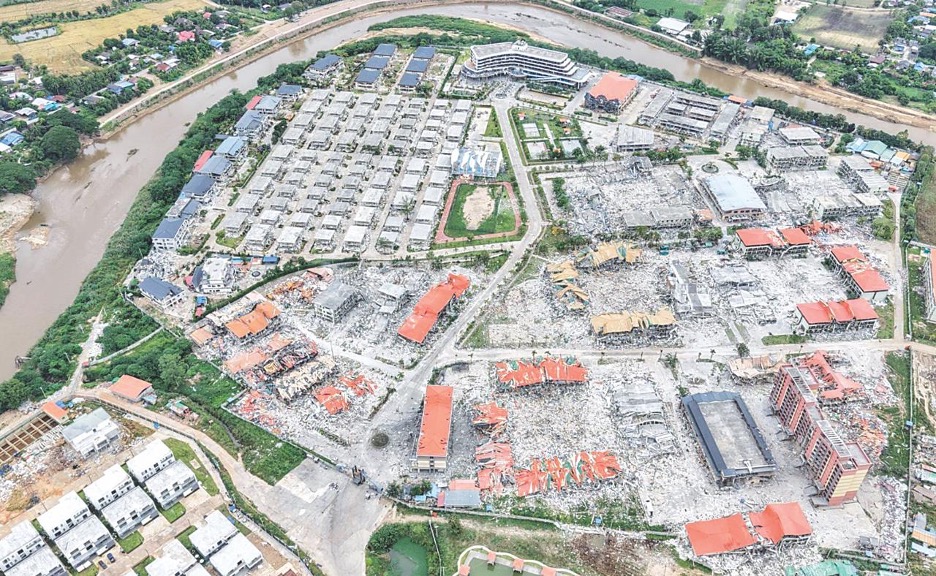
The Myanmar junta on Oct. 19 said it raided the KK Park scam hub—which has been operating under the protection of its Border Guard Force (BGF)—seizing computers and Starlink internet receivers, but claimed it found no evidence of criminal activities. The BGF is under the command of the regime.
On Oct. 21, the BGF and another junta-affiliated armed militia group, the Democratic Karen Benevolent Army (DKBA), evacuated the kingpins of the scam operations from KK Park. The following day the BGF opened the gates, allowing several thousand scam workers—including foreign nationals from over two dozen countries—to flee.
Since Oct. 23, with the reported approval of the BGF, the junta has been dynamiting buildings at the scam hub, but locals and international experts say the demolitions are a staged public relations stunt designed to deflect growing international pressure.
On Nov. 12, the US announced the formation of the Scam Center Strike Force to crack down on scam operations in Southeast Asia, including those in Myanmar under the protection of the junta, the BGF and the DKBA.
As part of the mission, the US imposed sanctions against DKBA leaders while deploying Federal Bureau of Investigation agents to Thailand to combat scam networks, and seizing websites used by scam compounds in Myanmar.
Following the US, the BGF—which has, along with its leaders, already been sanctioned by the US and other Western countries—on Monday vowed via Thai media to launch a “final war” against another notorious scam hub, Shwe Kokko in Karen State’s Myawaddy Township. The announcement prompted thousands of scam workers, mostly Chinese, to flee the scam city in advance.
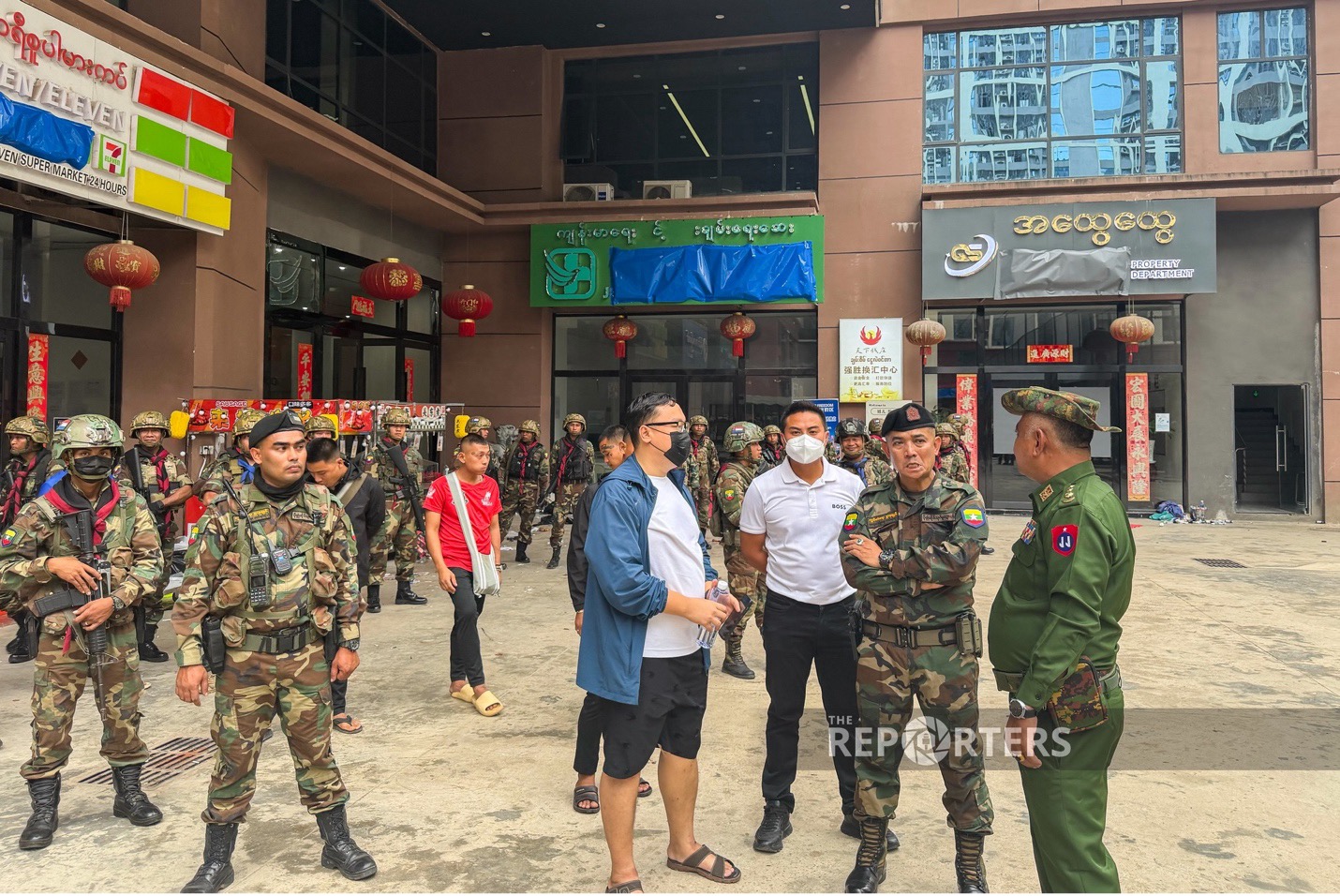
Local sources close to the BGF told The Irrawaddy the armed militia also evacuated the kingpins of the scam operations in advance in vehicles.
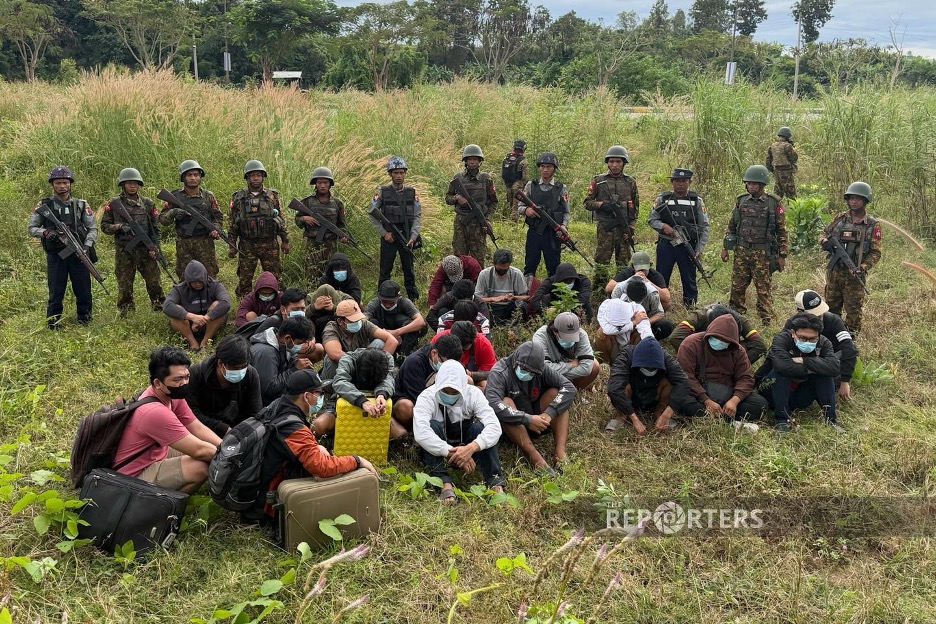
The following day, the BGF and regime forces jointly raided Shwe Kokko, arresting hundreds of scam workers, mostly Chinese nationals, along with large numbers of computers and mobile phones.
The regime announced on Friday that so far 1,016 foreign nationals from 19 countries have been arrested during the raids on Shwe Kokko.
The United States Institute of Peace (USIP) said in April last year that the BGF, led by Saw Chit Thu, Mote Thone and Saw Tin Win, had supported Chinese crime groups by providing electricity and internet sourced from Thailand.
They have profited from major scam hubs in Myawaddy, including Shwe Kokko, Jinxin, Hengsheng, Dongfanghui, KK Park, Huanya and the Dongmei Zone, it said.
According to the USIP, both the regime and the BGF benefit financially from their collaboration in these scam operations. The BGF reportedly hands over around 50 percent of its annual earnings—about US$192 million from the Shwe Kokko project alone—to the regime.
Speaking to The Irrawaddy on Tuesday, Jason G. Tower, a senior expert with the Global Initiative Against Transnational Organized Crime, said the new action plan by the US had pushed China to increase pressure on the Myanmar regime to deal with the problem. He said Beijing is worried that the greater US involvement will expose its failures in addressing the harm that the China-linked scam syndicates are now inflicting on the world.
China is also worried that deeper US involvement could undermine its efforts to advance its global security initiative around the scam issue, Tower added.
Regarding the recent joint raid on Shwe Kokko, Tower said, “The military and its BGF remain highly dependent on scam activity, and are banking on Beijing responding favorably to a couple of PR stunts on this issue.”
After facing the fresh action by the US, the junta-allied DKBA also announced that it will eliminate the scam operations under its control within two months.