Deputy Myanmar junta chief Soe Win visited Nawnghkio town on Monday, one week after the regime recaptured the town from the ethnic Ta’ang National Liberation Army (TNLA).
His trip marked the first visit to northern Shan State by a top military commander since the launch of anti-regime Operation 1027 in 2023, which dealt a serious blow to the military regime.
The TNLA and its allies captured Nawnghkio, around one hour’s drive from Pyin Oo Lwin—which is home to the Myanmar military’s elite academies—as part of Operation 1027 in July last year. It took around one year for the regime to retake the town.

Nawnghkio is strategically located at the junction of northern and southern Shan, on the border with Mandalay Region. It sits along a key trade route with China that links Mandalay to Muse on the border and serves as a logistics lifeline for the junta.
During his visit, Soe Win lavished praise on regime troops, commending their achievements in combat. However, analysts point out that the regime owes its regained foothold in northern Shan less to battlefield success than to Chinese intervention.
China’s push to reopen the China-Myanmar border trade route—and to see its envisioned China-Myanmar Economic Corridor become a reality—played a decisive role, they said.
At one point last year, an ally of the TNLA, the Myanmar National Democratic Alliance Army (MNDAA), threatened the junta’s control as far south as Pyin Oo Lwin and Mandalay city after capturing the northern Shan State capital Lashio in August. However, following Chinese Foreign Minister Wang Yi’s visit to Naypyitaw shortly after, the MNDAA reversed course and halted its offensive. It handed Lashio back to the regime in April this year.
Notably, towns under the MNDAA’s control—including Hseni, Kunlong and Chinshwehaw—have been spared regime airstrikes. In stark contrast, TNLA-held towns like Nawnghkio, Kyaukme, Hsipaw and Mogoke have been subjected to near-daily indiscriminate aerial bombing, as the TNLA has refused to halt its offensive operations.
Having reclaimed Nawnghkio, the regime is pressing toward Kyaukme, another TNLA-controlled town on the China-Myanmar trade route.
On Monday, Soe Win personally awarded battlefield promotions to troops who took part in the Nawnghkio offensive.
The regime now has its sights set on Kyaukme and Hsipaw as it seeks to reopen the border trade routes with China through Muse and Chinshwehaw. The latter is controlled by the MNDAA, while Muse is jointly controlled by the Brotherhood Alliance of ethnic armies comprising the MNDAA, TNLA and Arakan Army. China is expected to continue to apply pressure on the TNLA to cede the two towns.
There have been reports that the MNDAA would soon hand over Hseni to the regime. Hseni lies close to Lashio.
Before Nawnghkio, the regime retook towns such as Moebye and Pekon in southern Shan State on the border with Karenni State. Yet Soe Win has not visited them or handed out any awards to troops there—highlighting the junta’s strategic focus on border trade hubs in northern Shan.
During his November visit to China, junta chief Min Aung Hlaing promised to begin construction of the planned Muse-Mandalay-Kyaukphyu railway project where possible.
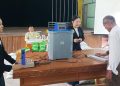
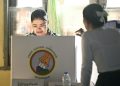
The regime recently began training officials in northern Shan to use electronic voting machines, prompting speculation that it may try to expand its territorial control in Shan State in the next few months ahead of its planned December election.
While in Nawnghkio, Soe Win twice publicly declared that the regime intends to hold elections in December, and told junta employees to issue national IDs and household registration documents to ensure eligible voters can cast ballots.
If the regime successfully conducts elections and installs a military-aligned government, Beijing appears poised to continue its partnership with the new administration.
Despite having retaken strategic towns like Lashio and Nawnghkio, junta boss Min Aung Hlaing has yet to visit either location personally.