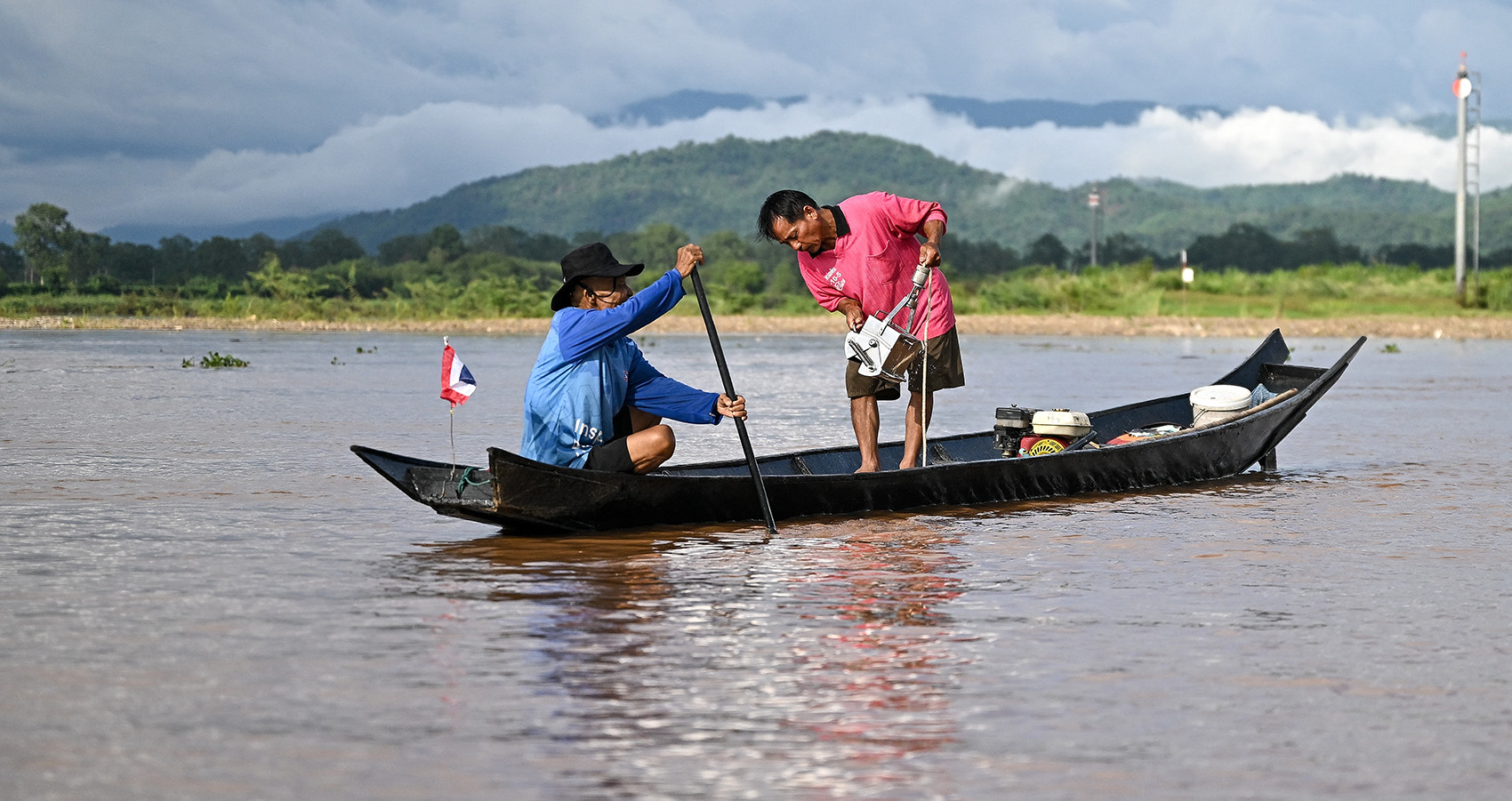
A Thai Senate committee has warned of worsening arsenic and heavy metal contamination in the Kok River in Chiang Rai from mines in Myanmar’s Shan State.
The committee sounded the alarm after severe contamination levels of both were detected in the river, traced to mining operations in Shan State. It described this as a cross-border environmental crisis with serious economic and health consequences.
The Senate Committee on Political Development, Public Participation, Human Rights, Liberties, and Consumer Protection, led by Chairman Noraseth Prachayakorn, released its findings after a field inspection in Chiang Rai from Sept 19–21.



Noraseth said pollutants from mines in Shan State flow downstream through the Sai and Ruak rivers into the Kok River and eventually to the Mekong.
Thailand and Myanmar’s differing water quality standards complicate cooperation, with the former capping arsenic levels at 0.01 mg/l and the latter allowing levels up to 0.05 mg/l—five times higher.
“This makes resolution difficult and requires multiple diplomatic mechanisms,” he noted.
The committee recommended urgent measures, including a pilot project to build sediment-trapping weirs in irrigation canals, establishing a central water testing laboratory at Mae Fah Luang University, and improving public risk communication with simple guides on water standards produced jointly by local agencies.
Longer-term strategies include developing backup raw water sources such as the Mae Suai and Mae Kham reservoirs to supply drinking water in at-risk areas, forming a national task force chaired by the prime minister or deputy prime minister to coordinate agencies, and adopting proactive diplomacy. The latter would invoke UN business and human rights principles to pressure mineral supply chains into taking responsibility.
Committee member Maneerat Khemawong said the issue must be elevated to a national priority, as it affects both Thailand’s interests and regional security.
Meanwhile, Senator Pornchai Witthayalertphan highlighted persistent problems with those seeking Thai nationality and the legal status of ethnic people in Chiang Rai.
He said many applicants from ethnic minorities face delays in having their nationality processed due to insufficient evidence, understaffed offices or a lack of equipment.
He urged the government to expedite the process so these groups receive their rights fairly and promptly.
This article first appeared in the Bangkok Post.