• Burmese
Saturday, January 10, 2026
No Result
View All Result
NEWSLETTER
The Irrawaddy
19 °c
Yangon
  • Home
  • News
    • Burma
    • Politics
    • World
    • Asia
    • Myanmar’s Crisis & the World
    • Ethnic Issues
    • War Against the Junta
    • Junta Cronies
    • Conflicts In Numbers
    • Junta Watch
    • Fact Check
    • Investigation
    • Myanmar-China Watch
    • Obituaries
  • Politics
  • Business
  • Opinion
    • Commentary
    • Guest Column
    • Analysis
    • Editorial
    • Stories That Shaped Us
    • Letters
  • Junta Watch
  • Ethnic Issues
  • War Against the Junta
  • In Person
    • Interview
    • Profile
  • Books
  • Donation
  • Home
  • News
    • Burma
    • Politics
    • World
    • Asia
    • Myanmar’s Crisis & the World
    • Ethnic Issues
    • War Against the Junta
    • Junta Cronies
    • Conflicts In Numbers
    • Junta Watch
    • Fact Check
    • Investigation
    • Myanmar-China Watch
    • Obituaries
  • Politics
  • Business
  • Opinion
    • Commentary
    • Guest Column
    • Analysis
    • Editorial
    • Stories That Shaped Us
    • Letters
  • Junta Watch
  • Ethnic Issues
  • War Against the Junta
  • In Person
    • Interview
    • Profile
  • Books
  • Donation
No Result
View All Result
The Irrawaddy
No Result
View All Result
Home Business

Low Labor Cost Ranks Burma among Top Countries for Investment

William Boot by William Boot
February 6, 2015
in Uncategorized
Reading Time: 3 mins read
0 0
A A
Low Labor Cost Ranks Burma among Top Countries for Investment

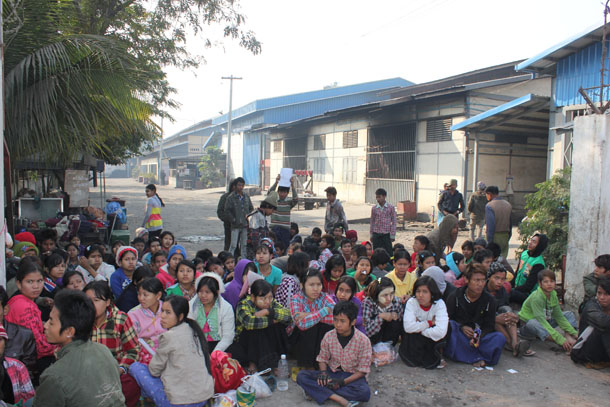
Workers protesting at Thazin Biscuit Factory in Mandalay in January 2014. (Photo: Zarni Mann / The Irrawaddy)|The Blind Tiger bar. (Photo: Steve Tickner / The Irrawaddy)

7.5k
VIEWS
Share on FacebookShare on Twitter

Burma has been named one of the five best countries in the world for cheap labor, making it much more attractive for manufacturing investment than neighbors China and Thailand.

“Businesses with supply chains and operations in [Burma], Bangladesh and Cambodia are benefiting from the world’s lowest labor costs,” a study by analysts Verisk Maplecroft said.

The business risk assessors’ Labor Costs Index measured a combination of wages, employment regulations, social security contributions and labor productivity to assess the cost-competitiveness of workforces in 172 countries.
RelatedPosts

Myanmar Junta Moves to Criminalize Opposition to China-Backed Megaprojects

Myanmar Junta Moves to Criminalize Opposition to China-Backed Megaprojects

December 23, 2025
1.1k
Junta Sets Up Committee to Expedite China-Backed Muse-Mandalay Railway

Junta Sets Up Committee to Expedite China-Backed Muse-Mandalay Railway

December 1, 2025
1.4k
Junta Creates Body to Fast-Track China’s BRI Projects in Myanmar

Junta Creates Body to Fast-Track China’s BRI Projects in Myanmar

November 7, 2025
2.1k

Burma is ranked in the top five best places in the world for low labor costs by the index, which places China at 64th due to its rising wages.

Thailand is ranked 93rd in the index, where the higher the number the better the ranking in terms of labor competitiveness.

“China…has seen costs in the labor market rise rapidly in line with the country’s phenomenal economic progress. By contrast, key sourcing destinations that are increasingly replacing Chinese manufacturers in global supply chains perform very well in the index with [Burma] (ranked 171), Bangladesh (170) and Cambodia (169) all ranked among the five lowest-cost economies,” Verisk Maplecroft said.

Burma’s ranking is beaten only by the small east African country of Djibouti. The 10 highest labor-cost countries in the study are all in Europe.

However, the attractiveness for investors in setting up factories in Burma, Bangladesh and Cambodia is tempered by the business reputational risk factors of “poor working conditions and high levels of child labor and trafficking,” said Verisk Maplecroft.

The Verisk Maplecroft study said companies need to be alert to the risks associated with operating in or sourcing from low-cost locations.

“While [Burma], Bangladesh and Cambodia present low labor costs, each is rated as ‘extreme risk’ by Verisk Maplecroft for health and safety, working conditions, child labor and human trafficking. Countries with low levels of socioeconomic development and inadequate environmental protections present a host of additional risks and indirect costs to business, including brand damage, investor alienation, and potential lawsuits.”

The average wage in Burma, Bangladesh and Cambodia is less than US$100 per month compared with US$450 per month in China, the International Labor Organization said.

“To a large extent there is a ‘necessary evil’ in this,” economist and long-time Burma analyst Sean Turnell told The Irrawaddy. “There is as yet no other avenue toward genuinely transformational industrial development than the traditional labor-intensive, low productivity, first step. Overwhelmingly this comes in the form of the clothing and textile industry, of course.”

Verisk Maplecroft’s senior human rights analyst, John Thompson, told The Irrawaddy that Burma’s lack of a minimum wage rate for most industries makes foreign investors “vulnerable to accusations of exploitative labor practices.”

The lowest paid workers in Burma earn only 1,700-2,000 kyat per day (US$1.70-US$2.04).

“[Burma] continues to pose some of the highest labor risks in the world,” Thompson told The Irrawaddy. “As a result of generally poor working conditions, severe deficiencies in workplace inspections, and anti-union discrimination, reputational risks abound for companies sourcing from or operating in the country.

“While the country has shown improvement in labor and human rights protections since 2011, important questions remain regarding [Burma’s] ability to maintain its upwards trajectory. The next three years will be a critical period in terms of solidifying nascent reforms, much of which will give a clearer picture of the country’s long-term trajectory,” Thompson said.

Turnell, a professor at Australia’s Macquarie University, added: “A labor-rights adhering [Burma] has considerable comparative advantages, especially in the production of rights-sensitive consumer goods that appeal to richer consumers, mostly but not exclusively, in the United States and the West.

“Good labor practices need not be more costly. They often greatly enhance labor productivity, while ensuring against unrest.”

Your Thoughts …
Tags: InvestmentLabor Issues
William Boot

William Boot

Similar Picks:

General Close to Myanmar Junta Boss Placed Under House Arrest, Interrogated for Corruption
Burma

General Close to Myanmar Junta Boss Placed Under House Arrest, Interrogated for Corruption

by The Irrawaddy
September 14, 2023
28.9k

The arrest of ‘kickback king’ Lt-Gen Moe Myint Tun, once seen as a possible successor to Min Aung Hlaing, comes...

Read moreDetails
Myanmar Junta Arrests Thai Condo Buyers, Realtors as Currency Crashes
Business

Myanmar Junta Arrests Thai Condo Buyers, Realtors as Currency Crashes

by The Irrawaddy
June 4, 2024
28k

Monday’s arrests follow reports that Myanmar has become one of Thailand’s most lucrative markets for selling condos since the 2021...

Read moreDetails
Planeload of Cronies Accompany Myanmar Junta Boss on Russia Trip
Business

Planeload of Cronies Accompany Myanmar Junta Boss on Russia Trip

by Hein Htoo Zan
March 7, 2025
12.5k

Regime-linked businessmen are set to cash in on deals flowing from the 10 agreements signed between Russia and the Myanmar...

Read moreDetails
Myanmar’s Youth Flee—and They Aren’t Looking Back
Commentary

Myanmar’s Youth Flee—and They Aren’t Looking Back

by Aung Zaw
February 23, 2024
8.5k

In Thailand and farther afield, they join the wealthy and the educated who have already put down roots and invested...

Read moreDetails
Tracking the Business Empire of Myanmar Regime Stalwart Moe Aung and His Siblings
Investigation

Tracking the Business Empire of Myanmar Regime Stalwart Moe Aung and His Siblings

by Aung Thit
September 4, 2023
7.3k

In the second of a two-part series, The Irrawaddy’s Investigation Desk examines more of the vast business interests of the children of...

Read moreDetails
With Proposed Security Gambit, Beijing Decides ‘Enough Is Enough’ in Myanmar
Analysis

With Proposed Security Gambit, Beijing Decides ‘Enough Is Enough’ in Myanmar

by The Irrawaddy
November 21, 2024
5k

China’s establishment of a joint venture security company with the junta to safeguard BRI projects in Myanmar shows it no...

Read moreDetails
Load More
Next Post
Shell Inks Contract to Explore 3 Offshore Oil and Gas Blocks

Shell Inks Contract to Explore 3 Offshore Oil and Gas Blocks

Photo of the Week (Feb 6

Photo of the Week (Feb 6, 2015)

No Result
View All Result

Recommended

Myanmar in 2026: Military Dictatorship in Traditional Burmese Jackets

Myanmar in 2026: Military Dictatorship in Traditional Burmese Jackets

1 day ago
636
China’s Water Diversion Megaproject: A Growing Threat to Neighbors

China’s Water Diversion Megaproject: A Growing Threat to Neighbors

3 days ago
543

Most Read

  • Myanmar Junta Commander Killed in Arakan Army Ambush

    Myanmar Junta Commander Killed in Arakan Army Ambush

    shares
    Share 0 Tweet 0
  • Myanmar Junta Suffers Heavy Losses in Bago Days Before Election

    shares
    Share 0 Tweet 0
  • Myanmar Military Boss Stuffs Senior Posts With Loyalists Mid-Election

    shares
    Share 0 Tweet 0
  • Myanmar in 2026: Military Dictatorship in Traditional Burmese Jackets

    shares
    Share 0 Tweet 0
  • China Steps Into Great-Power Trap With Myanmar Intervention

    shares
    Share 0 Tweet 0

Newsletter

Get The Irrawaddy’s latest news, analyses and opinion pieces on Myanmar in your inbox.

Subscribe here for daily updates.

Contents

  • News
  • Politics
  • War Against the Junta
  • Myanmar’s Crisis & the World
  • Conflicts In Numbers
  • Junta Crony
  • Ethnic Issues
  • Asia
  • World
  • Business
  • Economy
  • Election 2020
  • Elections in History
  • Cartoons
  • Features
  • Opinion
  • Editorial
  • Commentary
  • Guest Column
  • Analysis
  • Letters
  • In Person
  • Interview
  • Profile
  • Dateline
  • Specials
  • Myanmar Diary
  • Women & Gender
  • Places in History
  • On This Day
  • From the Archive
  • Myanmar & COVID-19
  • Intelligence
  • Myanmar-China Watch
  • Lifestyle
  • Travel
  • Food
  • Fashion & Design
  • Videos
  • Photos
  • Photo Essay
  • Donation

About The Irrawaddy

Founded in 1993 by a group of Myanmar journalists living in exile in Thailand, The Irrawaddy is a leading source of reliable news, information, and analysis on Burma/Myanmar and the Southeast Asian region. From its inception, The Irrawaddy has been an independent news media group, unaffiliated with any political party, organization or government. We believe that media must be free and independent and we strive to preserve press freedom.

  • Copyright
  • Code of Ethics
  • Privacy Policy
  • Team
  • About Us
  • Careers
  • Contact
  • Burmese

© 2023 Irrawaddy Publishing Group. All Rights Reserved

Welcome Back!

Login to your account below

Forgotten Password?

Retrieve your password

Please enter your username or email address to reset your password.

Log In
No Result
View All Result
  • Home
  • News
    • Burma
    • Politics
    • World
    • Asia
    • Myanmar’s Crisis & the World
    • Ethnic Issues
    • War Against the Junta
    • Junta Cronies
    • Conflicts In Numbers
    • Junta Watch
    • Fact Check
    • Investigation
    • Myanmar-China Watch
    • Obituaries
  • Politics
  • Opinion
    • Commentary
    • Guest Column
    • Analysis
    • Editorial
    • Stories That Shaped Us
    • Letters
  • Ethnic Issues
  • War Against the Junta
  • In Person
    • Interview
    • Profile
  • Business
    • Economy
    • Business Roundup
  • Books
  • Donation

© 2023 Irrawaddy Publishing Group. All Rights Reserved

This website uses cookies. By continuing to use this website you are giving consent to cookies being used. Visit our Privacy and Cookie Policy.