As Myanmar’s military regime ramps up ground and air assaults to expand control in Kayah (Karenni) State, displaced civilians are facing worsening food shortages, soaring prices, and the collapse of livelihoods, local aid groups report.
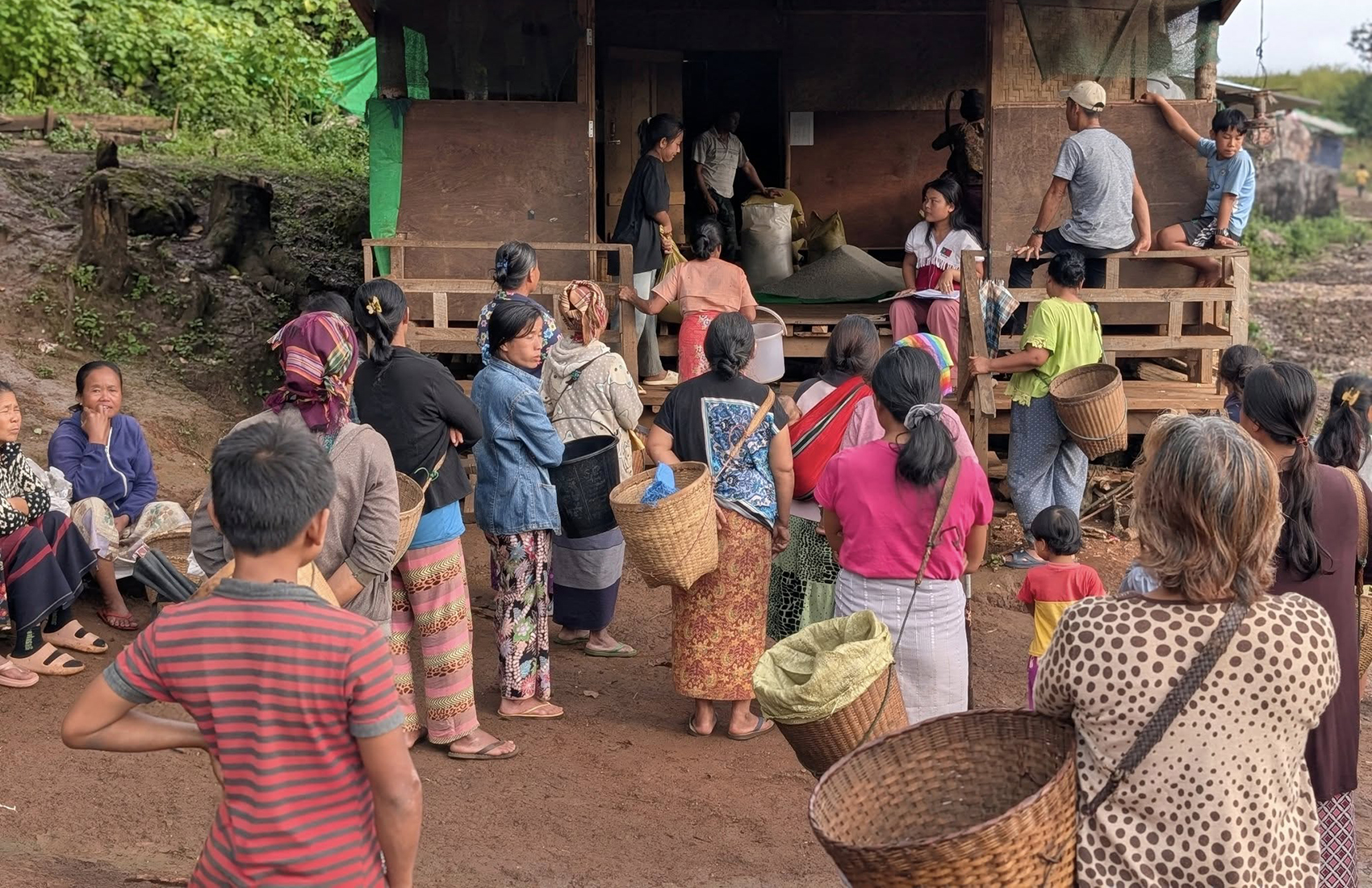
Displaced families say the four years of conflict since the 2021 coup have brought hardship, but conditions have deteriorated sharply in the past few months. Rice shortages are now so severe that many displacement camps can no longer provide two daily meals of congee, aid workers said.
“They are down to two, sometimes less,” said Ko Sai from Jobs for Kayah, a local relief group.



“Previously, when one camp ran out of food, donors and groups like ours could step in. Now, with donations drying up, there are fewer organizations left to help.”
The situation is dire in western Demoso Township, where displacement camps are appealing for emergency food aid. Jobs for Kayah said it once supported around 10 camps per month but can now provide regular supplies to only two.
Food prices in Karenni State have tripled and even quadrupled since the military blocked key trade routes, including the Loikaw-Hsihseng and Loikaw-Pekon roads. The regime has also restricted the flow of goods from Thailand and other areas bordering the state.
Traders must now rely solely on the Karenni-Taungoo route, but multiple checkpoints manned by the military, ethnic armed groups, and resistance forces collect tolls, driving up costs for displaced families.
The Karenni Human Rights Group (KnHRG) warned in a recent report that the regime is deliberately targeting food supplies and income sources, leaving civilians at risk of famine.
A displaced woman in Shadaw Township was quoted in the report as saying: “We have no home, no shelter. Even feeding our children is a struggle. Even when they fall sick, all I can give them is boiled jackfruit seeds.”
In the report, a resistance fighter worker recounted how a displaced mother of four in Demoso—who makes a living by foraging for forest vegetables and selling them at market— asked for leftover chicken bones from an eatery, meant for dogs, so she could make soup for her children who hadn’t eaten meat for several months.
The Interim Executive Council of Karenni State estimates that more than 45,000 across Pekon, Loikaw, Moebye, Demoso and other Karenni townships have been displaced by the junta offensive since June. The state now hosts over 470 camps sheltering roughly 15,000 people, while many other IDPs are taking refuge in villages or forests.
“In just the past two months, we’ve lost more territory to military offensives,” said U Banyar, secretary of the Karenni Interim Executive Council (IEC), the local resistance administration. “We estimate that at least 250,000 people have been displaced in our state [since 2021].”
The junta onslaught has also ravaged Karenni farmland. Thousands of acres of rice, corn, and beans have been destroyed or abandoned. U Banyar said 50,000-60,000 acres of paddy could not be planted this season due to fighting and extreme weather, raising fears of even greater food shortages by year-end and into 2026.
The IEC estimates that annual humanitarian needs for food, shelter, health, and education in Karenni total US$ 12-15 million, but current support from international NGOs, religious groups, and Myanmar diaspora communities covers only about $6 million. Local groups are urging both domestic and international donors to step up before the humanitarian crisis worsens.