• Burmese
Tuesday, January 13, 2026
No Result
View All Result
NEWSLETTER
The Irrawaddy
31 °c
Yangon
  • Home
  • News
    • Burma
    • Politics
    • World
    • Asia
    • Myanmar’s Crisis & the World
    • Ethnic Issues
    • War Against the Junta
    • Junta Cronies
    • Conflicts In Numbers
    • Junta Watch
    • Fact Check
    • Investigation
    • Myanmar-China Watch
    • Obituaries
  • Politics
  • Business
  • Opinion
    • Commentary
    • Guest Column
    • Analysis
    • Editorial
    • Stories That Shaped Us
    • Letters
  • Junta Watch
  • Ethnic Issues
  • War Against the Junta
  • In Person
    • Interview
    • Profile
  • Books
  • Donation
  • Home
  • News
    • Burma
    • Politics
    • World
    • Asia
    • Myanmar’s Crisis & the World
    • Ethnic Issues
    • War Against the Junta
    • Junta Cronies
    • Conflicts In Numbers
    • Junta Watch
    • Fact Check
    • Investigation
    • Myanmar-China Watch
    • Obituaries
  • Politics
  • Business
  • Opinion
    • Commentary
    • Guest Column
    • Analysis
    • Editorial
    • Stories That Shaped Us
    • Letters
  • Junta Watch
  • Ethnic Issues
  • War Against the Junta
  • In Person
    • Interview
    • Profile
  • Books
  • Donation
No Result
View All Result
The Irrawaddy
No Result
View All Result
Home Opinion Guest Column

The Hidden Dangers of Switching from US Dollars to Chinese Yuan 

Rishan Sen by Rishan Sen
November 28, 2025
in Guest Column
Reading Time: 3 mins read
0 0
A A
The Hidden Dangers of Switching from US Dollars to Chinese Yuan 

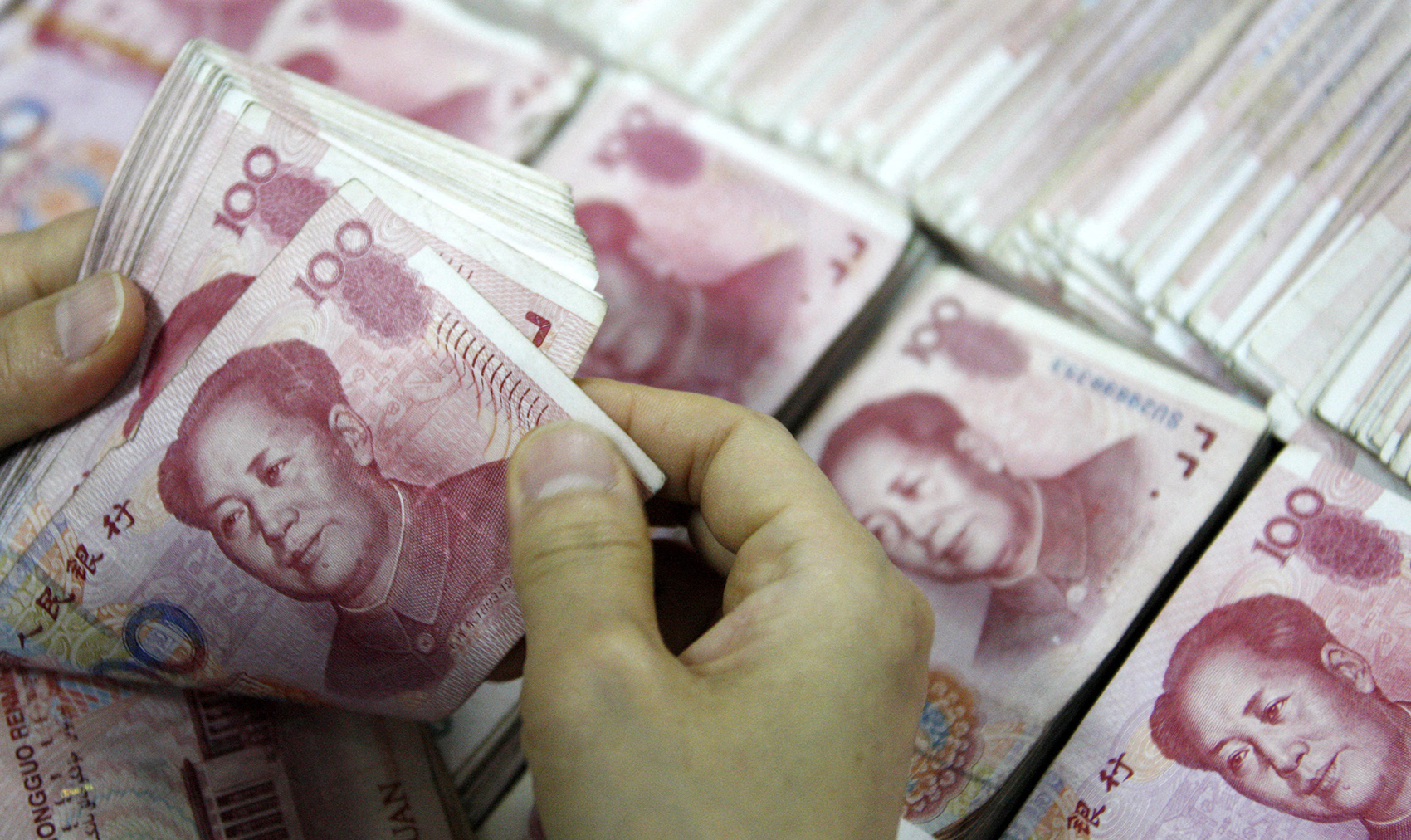
Chinese 100 yuan notes are being counted at a bank in Huaibei, Anhui province. / AFP

1.6k
VIEWS
Share on FacebookShare on Twitter

Kenya and Indonesia have implemented multifaceted debt management strategies to address external financing challenges and reduce reliance on specific creditors, including diversifying funding sources and focusing on fiscal consolidation and domestic markets. The sustainability of these actions is a subject of ongoing analysis and depends heavily on transparent governance and effective implementation of reforms.

This October, Kenya converted three dollar-denominated loans from China’s Export-Import Bank, tied to its US$5 billion standard-gauge railway, into Chinese yuan. The country’s finance minister said this decision would save about $215 million annually in interest payments. Earlier in January, the Bank Indonesia and the People’s Bank of China renewed their bilateral currency swap arrangement for another five years, allowing exchanges up to 400 billion yuan. Indonesia’s central bank said the arrangement would support bilateral trade settlement in local currencies and contribute to financial stability.

Analysts pointed out that by mid-2025 about 68 percent of Kenya’s external debt was still denominated in US dollars. This meant that the country remained heavily exposed to currency and interest rate volatility even after converting the railway loans. Facing a high risk of debt distress, Kenya has pursued a strategy to manage its debt burden and smooth its maturity profile.


RelatedPosts

Myanmar Junta Keeps Pushing Revival of China-Backed Hydropower Project

Myanmar Junta Keeps Pushing Revival of China-Backed Hydropower Project

January 12, 2026
416
‘Sever the Chain’: Scam Tycoons in China’s Crosshairs

‘Sever the Chain’: Scam Tycoons in China’s Crosshairs

January 9, 2026
478
Accused Scam Boss Chen Zhi Arrested in Cambodia, Extradited to China: Phnom Penh

Accused Scam Boss Chen Zhi Arrested in Cambodia, Extradited to China: Phnom Penh

January 8, 2026
371

Structural risk

These developments were presented as signs of pragmatic financial management by all stakeholders. Kenya’s government explained that converting the railway loans into yuan would reduce pressure on its fiscal accounts. Indonesia’s central bank said the expanded swap line would deepen monetary cooperation with China and offer additional liquidity tools. At first glance these arguments appeared reasonable, especially for governments seeking quick ways to manage external pressures.

But the logic seems to break down once the structure of national balance sheets is examined. Kenya continues to earn most of its foreign exchange in dollars and shillings, while its reserves hold only a limited amount of liquid yuan assets. In other wirds, the country shifted its repayment currency without shifting the currency of its earnings. Any shock that reduced export revenues or tightened access to yuan liquidity would place the government in a difficult position. It would need to draw down other reserves to service obligations that now sit in a less liquid currency.

Indonesia faced a different set of concerns, but they led to a similar strategic dilemma. The expanded swap line offered the central bank a larger pool of yuan liquidity, yet it also deepened the country’s operational reliance on a currency that is not fully convertible and remains tied to China’s policy decisions. A swap line of this size could help Indonesia manage temporary volatility; it could not replace the stability that came from diversified reserves and broad creditor engagement. The tool therefore provided short-term relief while introducing long-term dependence.

A more serious issue sits beneath these practical concerns. Both countries moved closer to a position where a single major creditor would hold increasing influence over their financing environment. China already occupied a dominant role as a lender in several parts of the developing world. Once debts are linked to the yuan and supported by Chinese swap lines, the borrower’s freedom to negotiate on purely economic terms become narrower. Restructuring talks, project renegotiations, and even procurement decisions could easily become entangled with larger political questions.

This concentration of exposure is often underestimated. It is easy to focus on the immediate savings and ignore the cumulative strategic weight of these arrangements. Yet over time, the dependence is no longer simply about the size of the debt but about the currency in which it is held, the channels through which liquidity can be accessed, and the political conditions that shape these channels.

These currency conversions and swap agreements, then, may in the short term appear to offer quick solutions for governments facing fiscal stress. They lower interest payments and create the impression of greater flexibility in external financing. But the bigger picture is less reassuring: these decisions have now created new currency mismatches and increased creditor concentration, and have tied national balance sheets to a financial system that lacks transparency and full convertibility.

If policymakers wish to use yuan tools responsibly, they need to build larger yuan reserves, maintain clarity in the terms of their swap agreements, and avoid allowing China to become the sole anchor of their external financing. Without these safeguards the recent actions taken by Kenya and Indonesia appear frankly reckless.

Rishan Sen is a researcher focused on Chinese foreign policy and its strategic footprint across Asia.

Your Thoughts …
Tags: ChinaCurrency SwapdebtIndonesiaKenyaLoan ConversionUS dollarYuan
Rishan Sen

Rishan Sen

Rishan Sen is a researcher focused on Chinese foreign policy and its strategic footprint across Asia.

Similar Picks:

Exodus: Tens of Thousands Flee as Myanmar Junta Troops Face Last Stand in Kokang
Burma

Exodus: Tens of Thousands Flee as Myanmar Junta Troops Face Last Stand in Kokang

by Hein Htoo Zan
November 28, 2023
99.8k

Myanmar National Democratic Alliance Army troops are opening roads and pathways through forests for people to flee Kokang’s capital as...

Read moreDetails
Drone Attack at Myanmar-China Border Gate Causes Over $14m in Losses
Business

Drone Attack at Myanmar-China Border Gate Causes Over $14m in Losses

by The Irrawaddy
November 27, 2023
39.3k

Jin San Jiao is latest northern Shan State trade hub in crosshairs of ethnic Brotherhood Alliance.

Read moreDetails
Brotherhood Alliance Marching Towards Capital of Myanmar’s Kokang Region
Burma

Brotherhood Alliance Marching Towards Capital of Myanmar’s Kokang Region

by The Irrawaddy
November 25, 2023
31.1k

Chinese embassy urges citizens to flee Laukkai Town as ethnic armies prepare to drive Myanmar junta troops from Kokang’s capital.

Read moreDetails
Junta Battalion Controlling Myanmar-China Trade Route Surrenders to KIA 
Burma

Junta Battalion Controlling Myanmar-China Trade Route Surrenders to KIA 

by Saw Reh
January 26, 2024
22.8k

Kachin Independence Army seizes another base in northern Shan State, cutting off regime troops in the border trade town of...

Read moreDetails
Has China Lost Control of Ethnic Armies in Myanmar’s War-Torn Borderland?
Guest Column

Has China Lost Control of Ethnic Armies in Myanmar’s War-Torn Borderland?

by Bertil Lintner
November 6, 2023
21.5k

The Brotherhood Alliance’s offensive against the junta in northern Shan has shut down trade and resource access, but Beijing still...

Read moreDetails
Myanmar Regime Raises the White Flag in Kokang Zone on China Border in Shan State
War Against the Junta

Myanmar Regime Raises the White Flag in Kokang Zone on China Border in Shan State

by The Irrawaddy
January 5, 2024
20.6k

Surrender of headquarters in Laukkai town brings the Brotherhood Alliance another step closer to its goal of ridding northern Shan...

Read moreDetails
Load More
Next Post
Myanmar Junta Troops Pushing Into Mandalay’s Singu

Myanmar Junta Troops Pushing Into Mandalay’s Singu

China ‘Told Kachin Rebels Not to Disrupt Handover of Mongmit to Junta’

China ‘Told Kachin Rebels Not to Disrupt Handover of Mongmit to Junta’

No Result
View All Result

Recommended

China Steps Into Great-Power Trap With Myanmar Intervention

China Steps Into Great-Power Trap With Myanmar Intervention

5 days ago
930
Myanmar in 2026: Military Dictatorship in Traditional Burmese Jackets

Myanmar in 2026: Military Dictatorship in Traditional Burmese Jackets

5 days ago
925

Most Read

  • Myanmar Junta Election Inspector Killed in Magwe Ambush

    Myanmar Junta Election Inspector Killed in Magwe Ambush

    shares
    Share 0 Tweet 0
  • Myanmar Junta Keeps Pushing Revival of China-Backed Hydropower Project

    shares
    Share 0 Tweet 0
  • Rohingya ‘targeted for destruction’ by Myanmar, ICJ hears

    shares
    Share 0 Tweet 0
  • Low Turnout, Intimidation and Attacks Mark Phase 2 of Myanmar Junta’s Election

    shares
    Share 0 Tweet 0
  • Thailand’s Political Trajectory in 2026

    shares
    Share 0 Tweet 0

Newsletter

Get The Irrawaddy’s latest news, analyses and opinion pieces on Myanmar in your inbox.

Subscribe here for daily updates.

Contents

  • News
  • Politics
  • War Against the Junta
  • Myanmar’s Crisis & the World
  • Conflicts In Numbers
  • Junta Crony
  • Ethnic Issues
  • Asia
  • World
  • Business
  • Economy
  • Election 2020
  • Elections in History
  • Cartoons
  • Features
  • Opinion
  • Editorial
  • Commentary
  • Guest Column
  • Analysis
  • Letters
  • In Person
  • Interview
  • Profile
  • Dateline
  • Specials
  • Myanmar Diary
  • Women & Gender
  • Places in History
  • On This Day
  • From the Archive
  • Myanmar & COVID-19
  • Intelligence
  • Myanmar-China Watch
  • Lifestyle
  • Travel
  • Food
  • Fashion & Design
  • Videos
  • Photos
  • Photo Essay
  • Donation

About The Irrawaddy

Founded in 1993 by a group of Myanmar journalists living in exile in Thailand, The Irrawaddy is a leading source of reliable news, information, and analysis on Burma/Myanmar and the Southeast Asian region. From its inception, The Irrawaddy has been an independent news media group, unaffiliated with any political party, organization or government. We believe that media must be free and independent and we strive to preserve press freedom.

  • Copyright
  • Code of Ethics
  • Privacy Policy
  • Team
  • About Us
  • Careers
  • Contact
  • Burmese

© 2023 Irrawaddy Publishing Group. All Rights Reserved

Welcome Back!

Login to your account below

Forgotten Password?

Retrieve your password

Please enter your username or email address to reset your password.

Log In
No Result
View All Result
  • Home
  • News
    • Burma
    • Politics
    • World
    • Asia
    • Myanmar’s Crisis & the World
    • Ethnic Issues
    • War Against the Junta
    • Junta Cronies
    • Conflicts In Numbers
    • Junta Watch
    • Fact Check
    • Investigation
    • Myanmar-China Watch
    • Obituaries
  • Politics
  • Opinion
    • Commentary
    • Guest Column
    • Analysis
    • Editorial
    • Stories That Shaped Us
    • Letters
  • Ethnic Issues
  • War Against the Junta
  • In Person
    • Interview
    • Profile
  • Business
    • Economy
    • Business Roundup
  • Books
  • Donation

© 2023 Irrawaddy Publishing Group. All Rights Reserved

This website uses cookies. By continuing to use this website you are giving consent to cookies being used. Visit our Privacy and Cookie Policy.