A region on the rise
For decades, the Northeast region of India was seen as peripheral, geographically remote, infrastructurally underdeveloped, and often bypassed by mainstream economic developments.
In the last decade, and particularly between 2023 and 2025, this scenario has shifted decisively. Now the Northeastern states of India, namely Arunachal Pradesh, Assam, Manipur, Meghalaya, Mizoram, Nagaland, Tripura and Sikkim, are scripting a story of transformation.
The combined state gross domestic products (GSDP) of these states has grown more than 7 percent in the post-COVID years. With massive investments in connectivity, energy, digital infrastructure, social services and tourism, the region is being repositioned as a gateway to Southeast Asia under New Delhi’s Act East Policy. It is no longer a story of isolation but of integration, aspiration and opportunity.



Roads open new opportunities
Highways and bridges are the lifelines of progress, and in the Northeast of India, their expansion has been unprecedented. Between 2014 and 2024, nearly 10,000 km of National Highways were constructed. Another 5,000 km are under construction. These roads are arteries of trade, travel and opportunity. Projects like the Bogibeel Bridge across the Brahmaputra River have already transformed logistics, while the under-construction Dhubri-Phulbari Bridge, at 19.3 km, will be India’s longest river bridge when completed in 2028.
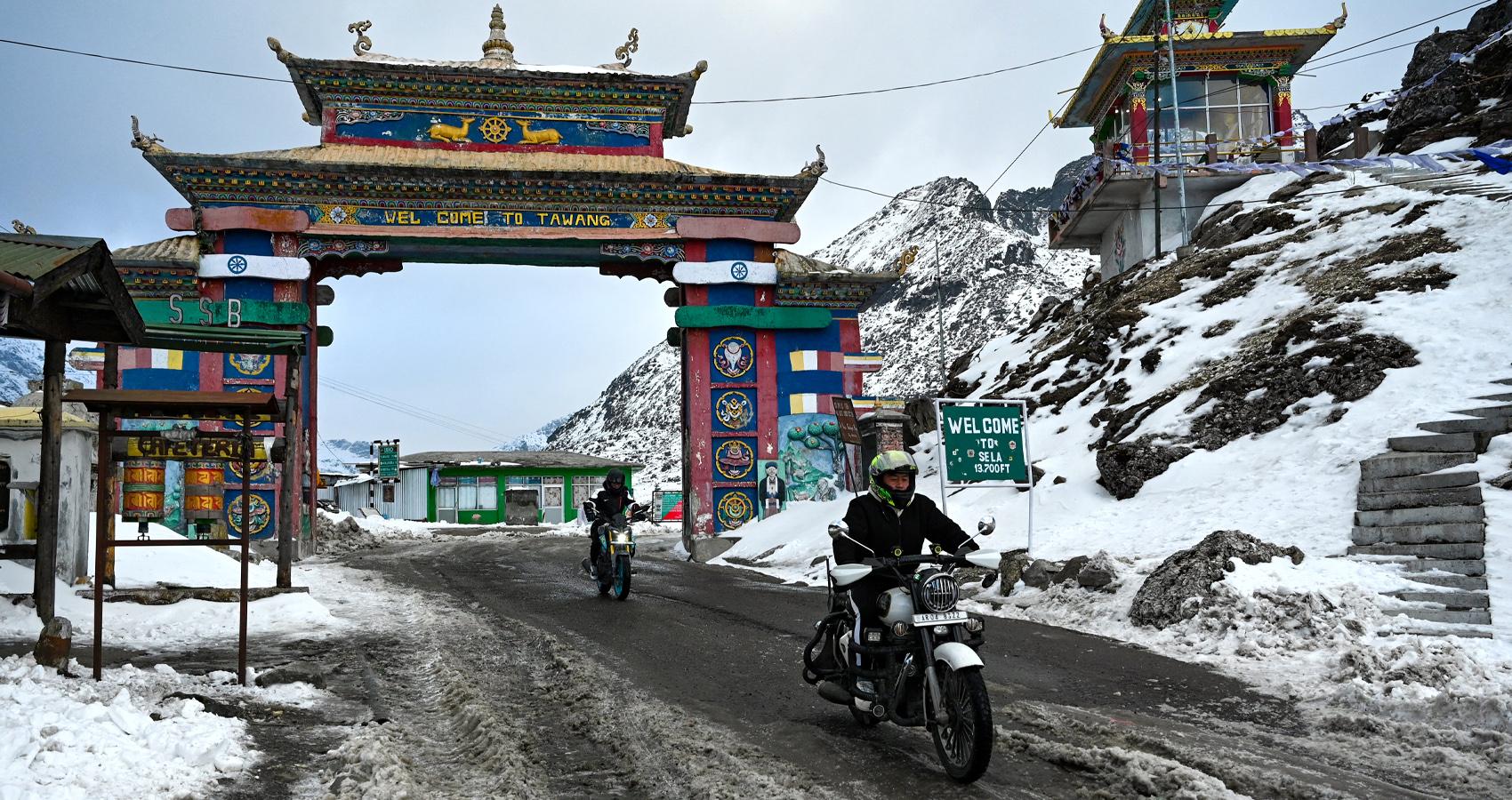
In Arunachal Pradesh, the ambitious Arunachal Frontier Highway, along with the Sela and Nechiphu tunnels, is opening up border districts to all-weather connectivity and improving strategic mobility. In 2024 alone, US$325 million was invested to build new roads, while the government announced an integrated plan to connect all Northeastern capitals with highways and industrial hubs by 2029. These projects ensure that by the end of this decade, even the most remote corners will be accessible by road.
Railways charting new routes
Railways, once absent in several Northeastern states, are now redefining accessibility. Mizoram received its first passenger train since India’s independence, while Arunachal Pradesh, Manipur and Nagaland have been added to the railway map.
The Bairabi-Sairang line to Aizawl has slashed bulk transport costs by almost 40 percent, allowing local farmers to access bigger markets at competitive rates. As of March 2024, 18 railway projects worth about $8.4 billion, covering 1,368 km, are under development, with 313 km already commissioned at a cost of $4.6 billion. The vision extends beyond today—plans are underway to ensure that by 2029, all provincial capitals, including Imphal, Kohima and Gangtok, are integrated into the national railway grid.
For the first time, the Northeast is not at the edge of the map but firmly on track to become an integrated transport hub.
Air travel takes off
Air connectivity has been another game changer. In 2013, the region had only nine airports; by 2023, the number had increased to 17. The UDAN scheme (a government scheme to improve air connectivity) has supported 194 fixed-wing and helicopter routes in the region, making flying affordable for ordinary citizens. Ten new greenfield airports have come up in Arunachal Pradesh, Nagaland, Mizoram and Assam, dramatically improving accessibility.
With these developments, distances that once took days of arduous road travel can now be covered in a matter of hours. The increase in airports and routes is directly boosting tourism, trade and people-to-people connectivity. Flight frequency has increased significantly since 2023, and business travelers now find the region far more accessible, adding momentum to investment prospects.
Rivers reclaim their role
The mighty Brahmaputra and Barak rivers are reclaiming their historic role as arteries of trade and travel. Roll-on, roll-off ferry services have been introduced, while the number of Indo-Bangladesh protocol routes has expanded from 8 to 10, improving bilateral trade.
Investments under the Sagarmala initiative (an initiative of the government to use rivers for inland transportation) have made 20 waterways operational in the Northeast, compared to just one in 2014. A multi-modal logistics park worth $78.9 million is being developed at Jogighopa in Assam, combining road, rail and river transport. Along with Guwahati’s upcoming floating terminals and tourist jetties, these projects are expected to make the Brahmaputra a hub for both commerce and leisure. The Eastern Waterways Connectivity Transport Grid, connecting 5,000 km of navigable waterways, will ultimately link the Northeast with the rest of India in an affordable and eco-friendly way.
Electricity fuels dreams
Reliable electricity has long been a challenge in the region, but the picture is changing. Under a scheme, more than 2.6 million households have been electrified. The North Eastern Region Power System Improvement Project has strengthened transmission in six states, ensuring stable supply to villages and towns. In August 2024, the government sanctioned a $470-million hydroelectric plan aimed at adding 15,000 MW of capacity by 2031-32. With abundant river systems, the region is on course to become an energy-surplus zone. Hydropower projects not only promise to meet local demand, but also open up prospects for exporting power to neighboring countries like Bangladesh and Myanmar, strengthening the Northeast’s role in regional energy trade.
Bridging the digital divide
The digital revolution has reached even the remotest corners of the Northeast. BharatNet (a project of the government to improve digital and mobile connectivity) and 4G saturation projects have ensured internet access in villages that were previously cut off. Between 2018 and 2023, more than $73 million was invested in telecom infrastructure. Nearly all inhabited villages are now connected to broadband, enabling e-learning, telemedicine, digital payments, and e-governance. This connectivity is not just about convenience—it is creating new avenues for start-ups, IT-enabled services, and digital entrepreneurship. Youth in major cities are launching businesses that cater to both local and national markets. The digital divide, once a barrier, is rapidly closing.
New paradigms in investments, industry
The region is no longer just a recipient of subsidies—it is emerging as a destination for investments. In 2024, Tata Group, one of the major business houses of India with a global presence, announced a $3.9-billion semiconductor facility in Assam, projected to generate 15,000 direct jobs and 13,000 indirect jobs. This marks a watershed moment in bringing high-tech manufacturing to the region. Government schemes are supporting this momentum. By March 2025, 974 industrial units were registered under NESIDS, with $114.0 million deployed in development packages. The Uttar Poorva Transformative Industrialization Scheme (UNNATI), launched in 2024 with a budget of $1.4 billion, facilitated the registration of 56 new industrial units. The most striking demonstration of investor confidence came at the Rising Northeast Investors Summit held in May 2025, which attracted proposals worth $48.8 billion from more than 80 countries. This scale of global engagement reflects a new narrative: the Northeast as India’s next frontier of industrial growth.
Northeastern India beckons global tourists
Tourism, the Northeast’s natural strength, has flourished in recent years. In 2014, the region received 7 million domestic visitors. By 2023, that number had soared to over 12.5 million lakh. Improved connectivity, government promotion through government schemes and rising awareness of the region’s unique culture have all contributed. The region has also gained global recognition. Assam was listed fourth in The New York Times’ “52 Places to Go in 2025,” highlighting its natural and cultural attractions. The Brahmaputra Festival, launched in 2024, brought together music, crafts, ecological awareness and tribal exchanges, showcasing the cultural vibrancy of the region. In February 2025, Manipur hosted the second North East India Film Festival, screening 28 films that captured the region’s diverse stories. From Kaziranga’s wildlife to Sikkim’s adventure tourism, from Nagaland’s Hornbill Festival to Meghalaya’s living root bridges, the Northeast is no longer a hidden gem but a growing magnet for domestic and international travelers.
Societal progress, rural empowerment
Agriculture and tribal enterprise remain vital pillars of the Northeast’s development. The North Eastern Regional Agricultural Marketing Corporation (NERAMAC) has doubled its product range from 38 to 78 items in recent years, spanning organic teas to sumac berry powder. The Van Dhan Vikas initiative has empowered 330,000 lakh tribal gatherers through more than 19,000 self-help groups. Meanwhile, 434 Farmer Producer Companies support over 200,000 farmers, covering 173,000 hectares of farmland.
Education is also seeing greater investment. Over the past decade, more than $2.3 billion has been deployed for new schools, skill centers and higher education facilities. Since 2017, 126 externally aided projects worth $15.29 billion have been sanctioned, ensuring that education and training match the region’s developmental aspirations.
Envisioning 2030 and beyond
By 2030, the Northeast is projected to be a fully integrated multimodal hub, linking India with Southeast Asia through highways, railways, waterways and air routes. Its hydroelectric potential could make it an energy exporter, while its cultural and natural diversity could establish it as a global tourism hotspot. With semiconductor manufacturing, agro-processing clusters, bamboo-based industries and IT start-ups, the region could diversify its economic base. Supported by strong digital connectivity and a young population, the Northeast is poised to become a vital contributor to India’s ambition of becoming a developed economy by 2047, as envisioned in the government’s Viksit Bharat initiative.
Northeast India is no longer a forgotten corner; it is fast becoming a frontier of growth. From highways to hydropower, from semiconductor plants to film festivals, from rural cooperatives to investor summits, the region is brimming with signs of transformation. The years 2023, 2024 and 2025 have added fresh momentum, bringing record investments, international recognition and social improvements that were once unimaginable. The Northeast is building not only infrastructure and industry, but also aspirations and confidence. Its steady strides are shaping a future where this culturally rich and strategically located region is at the heart of India’s development and its bridge to Southeast Asia.
Highlighted at the 60th UNHRC
The rapid pace of development and the multiplier effects of such development on the youth and society of the region were highlighted by India Water Foundation, an NGO working at the grassroots level in Northeast India at the ongoing 60th UNHRC session in Geneva, by way of an official side event and a vibrant poster exhibition at the iconic Broken Chair.
At the side event, the speakers highlighted the Northeast region of India as a living model of sustainable growth, balancing infrastructure, ecological conservation and human development. Prominent speakers like Mikiko Tanaka from UN ESCAP underscored the importance of cross-border connectivity and trade in the development of Northeast India. Participants reaffirmed Northeast India’s strategic role as a gateway to Association of Southeast Asian Nations and BIMSTEC economies, and as a global example of inclusive, sustainable and climate-resilient development pathways.
Dr. SP Sharma is chief economist at the NEO Economists think tank. Formerly chief economist & DSG at PHDCCI, he has advised national and global institutions.