As Myanmar this year marks the 37th anniversary of the 1988 Democracy Uprising, it finds itself in the midst of another historic struggle—the Spring Revolution, now well into its fifth year since the military coup of 2021. Both movements were born out of people’s yearning for freedom and democracy. Both inspired mass participation across generations, across the country. Yet, one remained a suppressed uprising while the other has evolved into a full-fledged revolution.
What made the difference?
Let’s revisit the origins and trajectories of both movements—and the contrasting political landscapes that shaped them.
1988: Ready to explode

To understand the context of the 1988 uprising, visualize Myanmar like a stick of dynamite—its fuse waiting to be lit.
After 26 years of General Ne Win’s authoritarian rule, the country was suffering under a repressive socialist regime that had shut itself off from the world. Once called the “Rice Bowl of Asia,” Myanmar had become one of the poorest nations, crippled by isolationist policies, mismanagement and authoritarianism.
Public frustration had reached a boiling point. Daily life was marked by scarcity, censorship and hopelessness. The people had lost not only their livelihoods, but their dignity.
Then came the spark.
On March 13, 1988, student Ko Phone Maw was shot dead by riot police. His death lit the fuse. The public, long simmering with resentment, erupted into mass protests that culminated on August 8 in the historic “8-8-88” uprising.
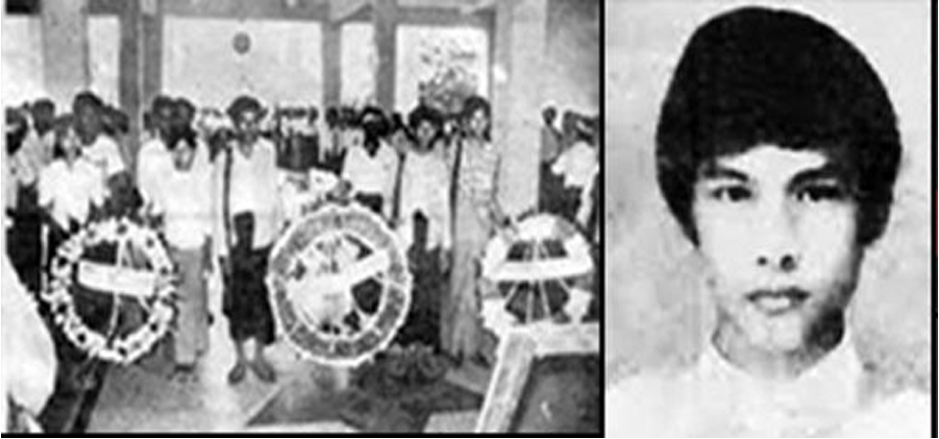
This was not a country slowly unraveling—it was a country violently detonating.
Just one month and 10 days later, on September 18, the military reasserted itself, seizing control and forming the State Law and Order Restoration Council (SLORC). Ne Win stepped aside, handing power to his loyal generals, but the regime continued.
In short, the 1988 coup was a response to the mass uprising. The regime fell back on violence, killing over 3,000 protestors, imprisoning thousands more and crushing the movement with brute force.
2021: Hopes shattered
Now, imagine a completely different scene. A country not on the brink—but cautiously moving forward.
In early 2021, Myanmar was entering a new chapter. The people had just voted overwhelmingly in favor of the incumbent civilian government, eager for it to begin a second democratic term. Despite the constraints imposed on the government by the undemocratic, military-drafted 2008 constitution, the country was relatively stable. The people had hope—hope that democracy would continue to progress, and that the economy would develop in its wake, however slowly.
February 1, 2021, was supposed to be a milestone in this progress—the opening of parliament and the beginning of renewed democratic governance.
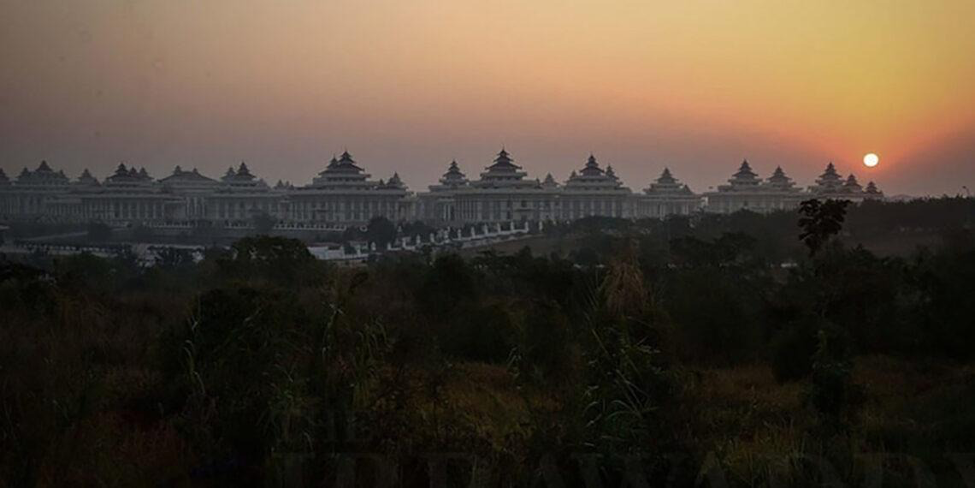
But before dawn, that hope was shattered.
The military staged a coup, arresting elected leaders and seizing power. Overnight, everything changed. The country, which had been moving toward the light, was dragged violently back into darkness.
Unlike 1988, this wasn’t a buildup toward an explosion—this was a betrayal that ignited the people.
This time, the coup caused the uprising.
The difference—a mass uprising leading to a coup in 1988, versus a coup triggering a mass uprising in 2021—is not just chronological. It represents a profound reversal of historical momentum.

New political landscape
There’s another key distinction: the 1988 movement, though monumental, never reached the level of a revolution. The 2021 movement has.
In the aftermath of the ’88 crackdown, Myanmar’s political landscape shifted. The military regime promised a move toward multi-party democracy and, under pressure, held elections in 1990. More than 230 parties—some comprised of seasoned politicians, some launched by new faces—were registered. Former Prime Minister U Nu, emerging politician Daw Aung San Suu Kyi, ex-generals, ethnic leaders and even students all formed political parties. Contesting the election became the primary channel of resistance, creating what was known as the “urban politics” movement. The purpose was to defeat the National Union Party (NUP), a successor to the military-backed Burma Socialist Programme Party (BSPP), and to form a democratic government.
Internationally, communism hadn’t yet collapsed in the Soviet Union or the rest of Eastern Europe. The Cold War was not yet over. Indeed Myanmar’s ’88 Uprising can be seen as heralding those developments by overthrowing a socialist regime and forcing a move from a one-party to a multi-party political system.
The National League for Democracy (NLD) won a landslide victory in the 1990 election. Ethnic-based parties including the Shan Nationalities League for Democracy and the Arakan League for Democracy also gained significant support in their states. In short, the old establishment, represented by the NUP, seemed to have been defeated.

The military, however, refused to honor the results, arresting MPs-elect and retaining power. Still, the election result became a critical milestone. Recognized by the international community, it provided a tool with which to pressure the junta. That was the most significant achievement of the ’88 uprising—a landmark electoral victory denied but never forgotten.
At the same time, two other paths of resistance emerged: the armed struggle (AS) led by students who fled to border areas and joined forces with ethnic armed organizations, and the underground student unions that operated covertly in cities. They published anti-regime publications, staged flash protests and organized civic education under constant threat of arrest.
While many believed these three resistance paths—political parties, armed students, and underground networks—could reinforce one another, no such synergy ever materialized. The military’s divide-and-rule tactics worked.
Why armed struggle failed
The students’ AS never developed into a full-fledged revolution. There are several reasons for this.
First, the ethnic armed organizations that hosted these student fighters along the borders were reluctant to fully commit to the students’ war against the junta. Second, the harsh conditions of jungle life and internal challenges led many students to return home when the junta offered amnesties. Others left Myanmar entirely, seeking political asylum in third countries.

The final blow was the ceasefire strategy orchestrated by the then junta. Between 1989 and the early 2000s, at least 17 ethnic armed organizations and their political wings—including the Kachin Independence Army, United Wa State Army, Myanmar National Democratic Alliance Army, New Mon State Party and Karenni National Progressive Party—signed separate ceasefire deals with the junta, often in exchange for economic privileges and local autonomy. This diluted the anti-military front.
Strategically, it was a calculated move. At that time, the generals faced two main threats: political parties in the cities and armed groups in the borderlands. After neutralizing the ethnic armed resistance through ceasefires, they isolated the urban political movements and crushed them one by one.
This divide-and-conquer strategy worked. The resistance fractured. And the revolution never came.
2021: Different fire, different fight
The 2021 uprising, by contrast, has transformed into something far more powerful and unified. Two key differences laid the foundation.
First, the people had just cast their votes in a free and fair election. To their fury, their elected government had been stolen from them in plain sight by the military coup.
Second, the coup occurred not at a moment of political chaos, but at a time of democratic expectation and national stability.

That’s why the public response was so explosive and uncompromising. People were not just protesting; they were revolting. Having faced the junta’s brutal crackdown, young people across the country—urban youth, ethnic minorities, workers, professionals—joined together to launch a people’s revolution. Ethnic armed groups did not just provide military training; they offered leadership and active military support.
The National Unity Government (NUG) was formed and openly called for armed revolution against the junta. It began supporting People’s Defense Forces (PDFs), helping to align political goals with military strategy. This level of coordination was never achieved in the era following the 1988 Uprising.
The result? By 2023 and 2024, revolutionary forces had achieved unprecedented military gains. Territories were seized, junta commanders killed and jet fighters downed. The military’s morale was shaken.

The people, too, played a crucial role—not just by fighting, but by funding. Digital platforms allowed for widespread crowdfunding, decentralized support and online organizing. In 1988, there were no mobile phones or internet—in fact, landlines barely functioned. In 2021, technology became a weapon of the people.
From uprising to revolution
Why do people today reject the electoral path offered by the junta, while many embraced it after 1988? Because the contexts are fundamentally different.
In 1988, there was no elected government; the electoral path was a new window. The military-controlled transition toward a multi-party system felt like the only path forward. Today, with the junta having nullified the 2020 election results, any new election it holds will be seen as a farce. This is because those parties willing to participate in junta-organized elections are clearly trying to rewrite history. Parties that register under the junta’s post-coup system are viewed as collaborators.
This time, people are determined not to be fooled again. Remember what protesters chanted in 2021: “In ’21, don’t repeat what you did in ’88.”

The people have learned. And they remember.
The 1988 uprising did not fail. But it did not succeed either. It gave birth to a generation of fighters, thinkers and organizers. It brought democracy close—but not close enough. And it taught bitter lessons about how far the military would go to hold onto power.
Based on those lessons, the Spring Revolution has reached a new level—thanks to new tools, the participation of a new generation, and a new kind of spirit. This time, the people are not just marching. They are fighting. And they won’t stop.
’88 and ’21 arose from different conditions. We can’t expect the results to be the same.
Watch this story on The Irrawaddy’s Opinion Talk.