The junta’s renewed offensives have led to the recapture of territory it had lost to resistance forces. The military should not be underestimated, but while its propaganda machine has hailed overwhelming battlefield victories over the past few months, the map tells a different story.
In reality the gains remain limited, and the following list should help observers better understand what has actually happened in each region. (The list is based on my own research and data from Burma News International–Myanmar Peace Monitor and the People’s Spring news outlet.)
Kachin
In Kachin State, the Kachin Independence Army (KIA) has seized one district capital, five townships, two sub-townships, and five towns since December 2023.

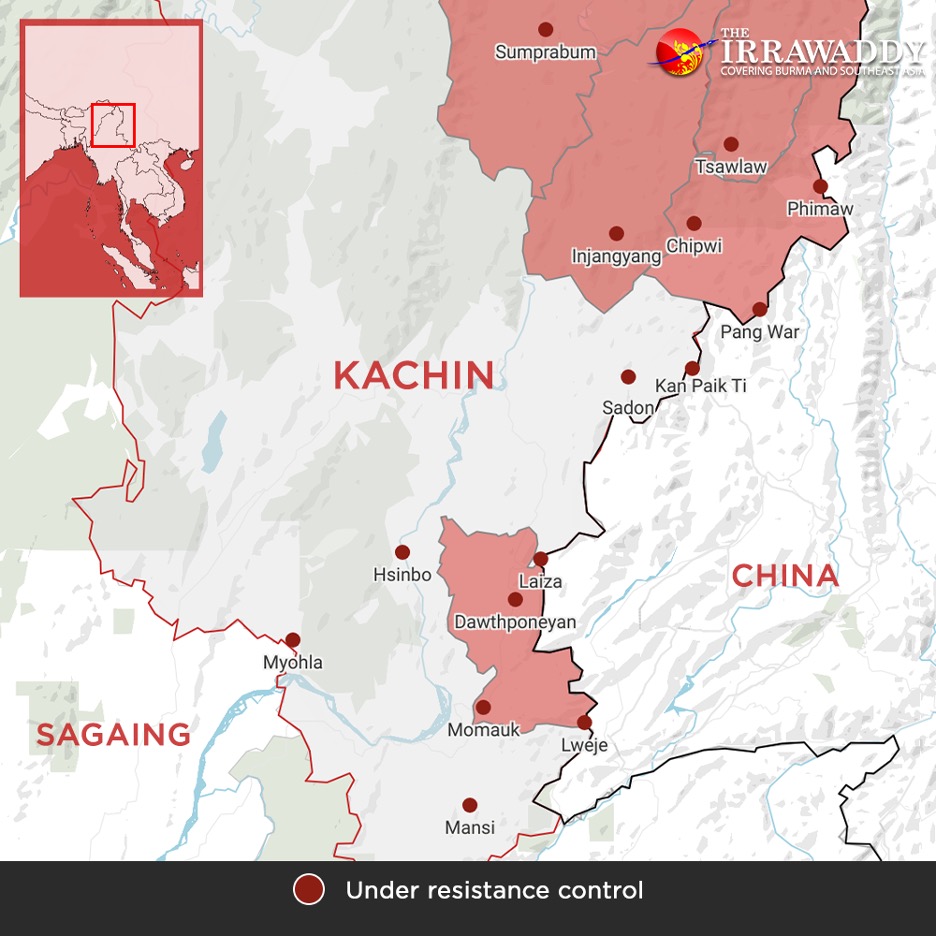
Fighting remains intense in Bhamo and Hpakant, but they had not yet been counted among the captured areas in the first place. Crucially, none of the administrative centers under KIA control have yet been retaken by junta forces.
Chin
Since July 2021, Chin resistance groups have captured three district capitals, two townships, one sub-township, and eight towns.
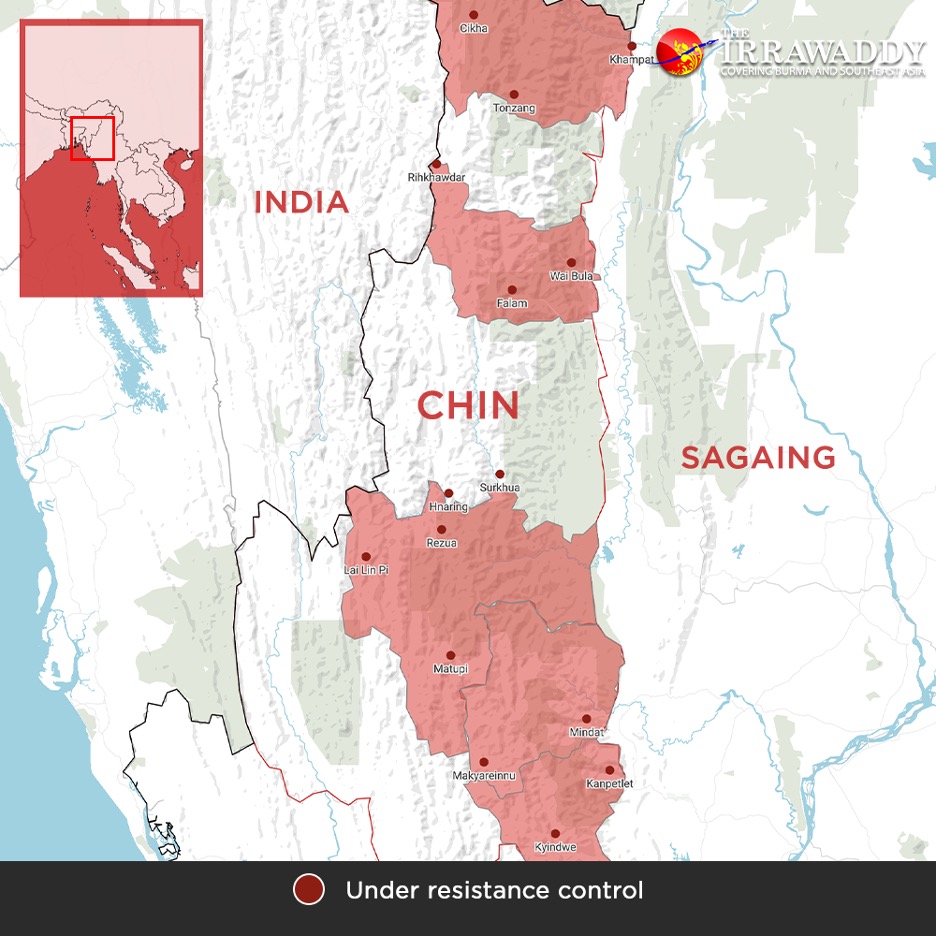
A junta counteroffensive in northern Chin earlier this year collapsed, and none of these administrative centers have been lost to the military regime.
Rakhine
The Arakan Army (AA) made the most dramatic gains, capturing six district-level towns, 10 townships, two sub-townships, and eight towns across Rakhine State and neighboring Chin State’s Paletwa since January 2024.
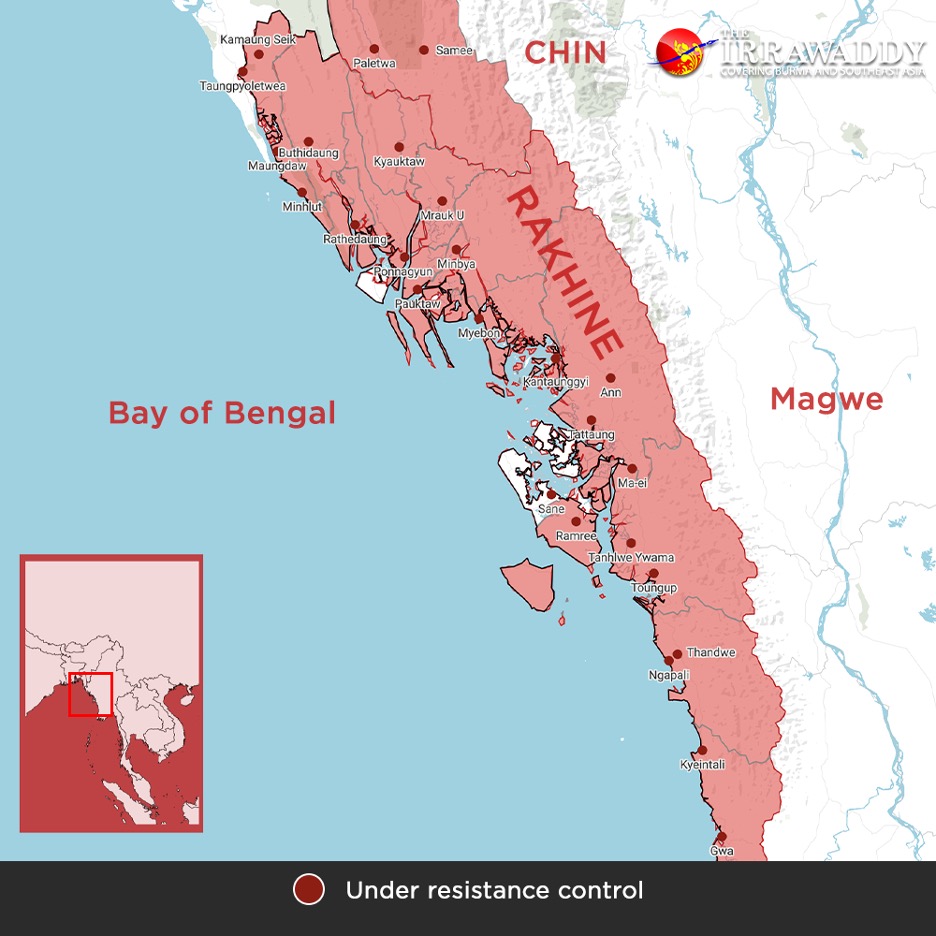
Despite heavy offensives along the mountain roads through the Rakhine Yoma linking Rakhine with Magwe and Ayeyarwady regions, the junta has failed to recapture a single town.
Karen
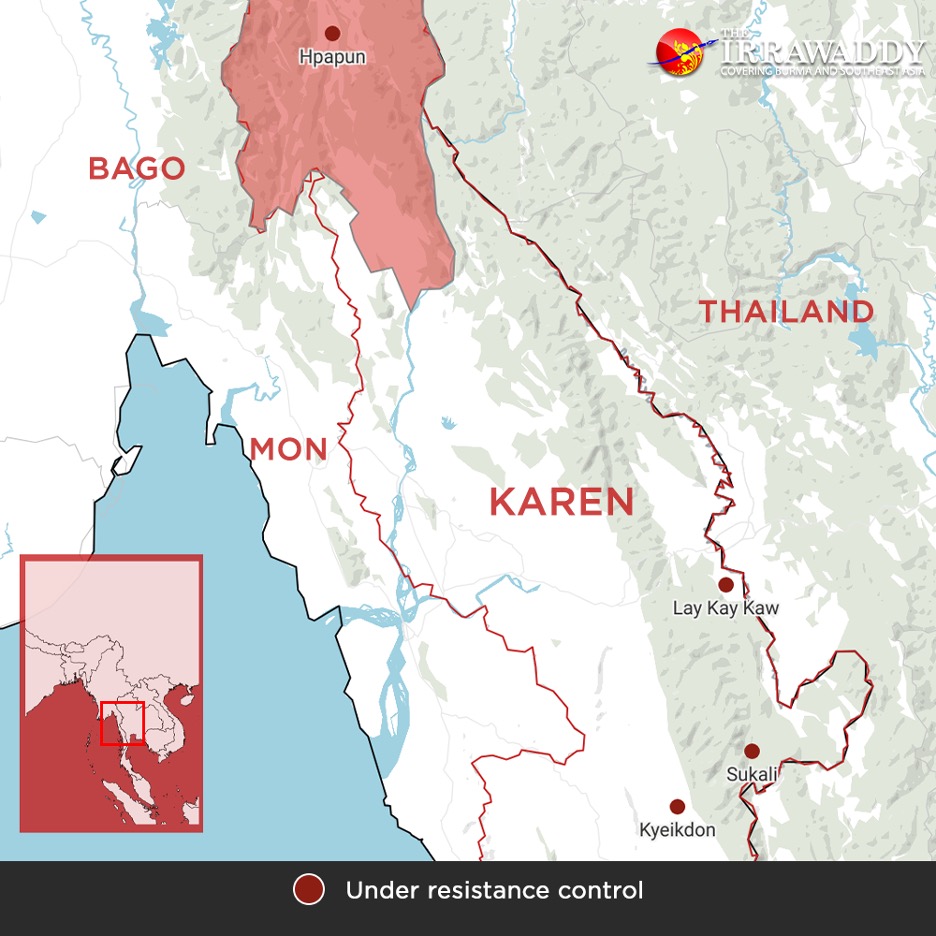
In Karen State, resistance forces captured one district capital, two sub-townships, and one town since March 2024. Although the military has launched counteroffensives this year, none of them have so far been lost.
Karenni
Karenni (Kayah) State saw six towns fall to resistance forces since June 2023, but by mid-2025 the junta had reclaimed Mobye and Nan Mae Khon, leaving only four under Karenni control.
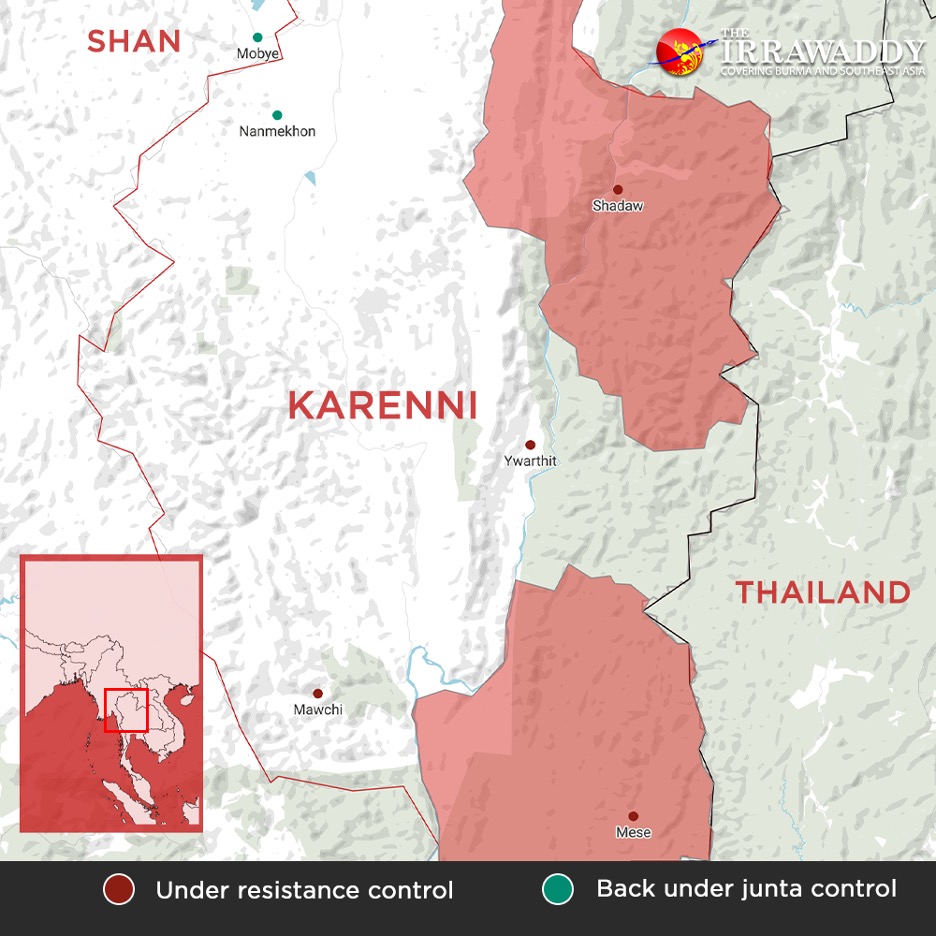
Located on the southern border of Shan State, Mobye is a strategic gateway to Karenni State with a direct route linking it to Karenni state capital Loikaw.
Northern Shan
The most complex picture presents in northern Shan State, where the Brotherhood Alliance and Kachin Independence Army (KIA) launched sweeping offensives in late 2023. Together they seized 25 towns. The Myanmar National Democratic Alliance Army (MNDAA) took 12, though two of them—Hopang and Pan Lon (not to be confused with Panglong town in southern Shan State)—were later handed to the United Wa State Army (UWSA).
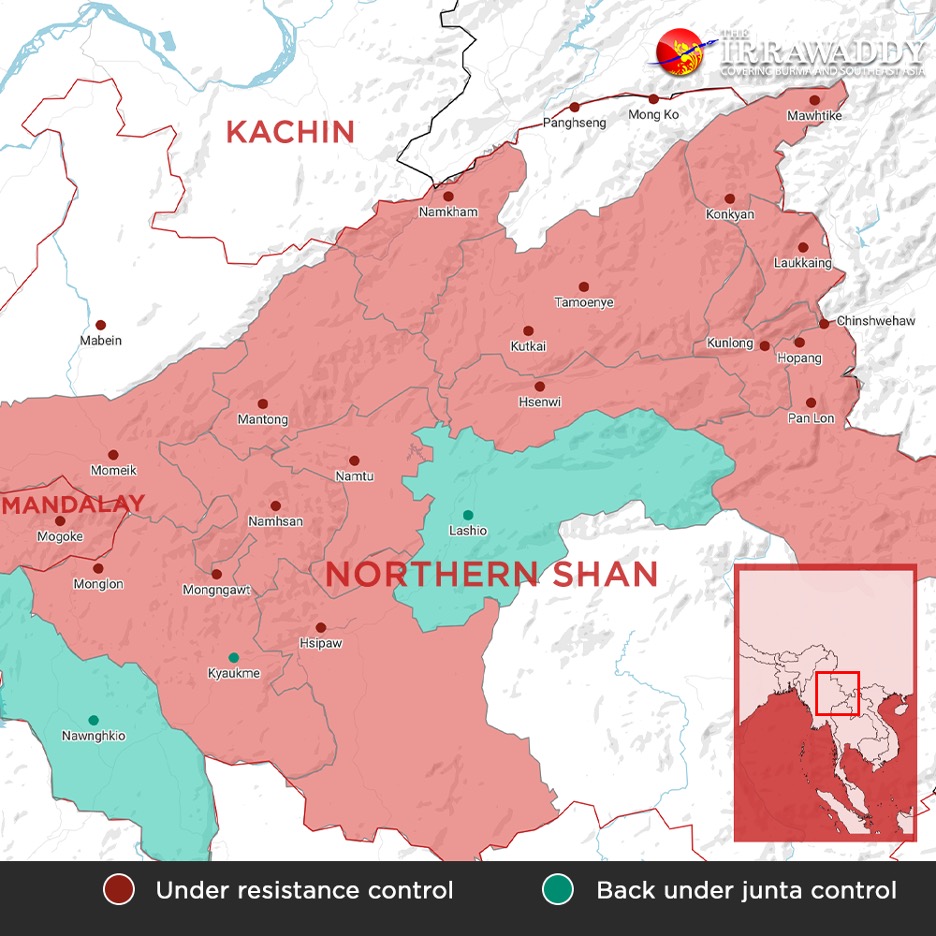
The Ta’ang National Liberation Army (TNLA) captured 12 towns, eleven in Shan and one in Mandalay Region, while the KIA seized one in Mabein Township in northern Shan. Kutkai is divided between MNDAA and TNLA control.
But under intense Chinese pressure, the MNDAA handed back the state capital Lashio to the junta in April 2025, and the regime has reclaimed Nawnghkio and Kyaukme from the TNLA since July.
But that means five district capitals and 12 townships remain under resistance control.
Sagaing and Mandalay
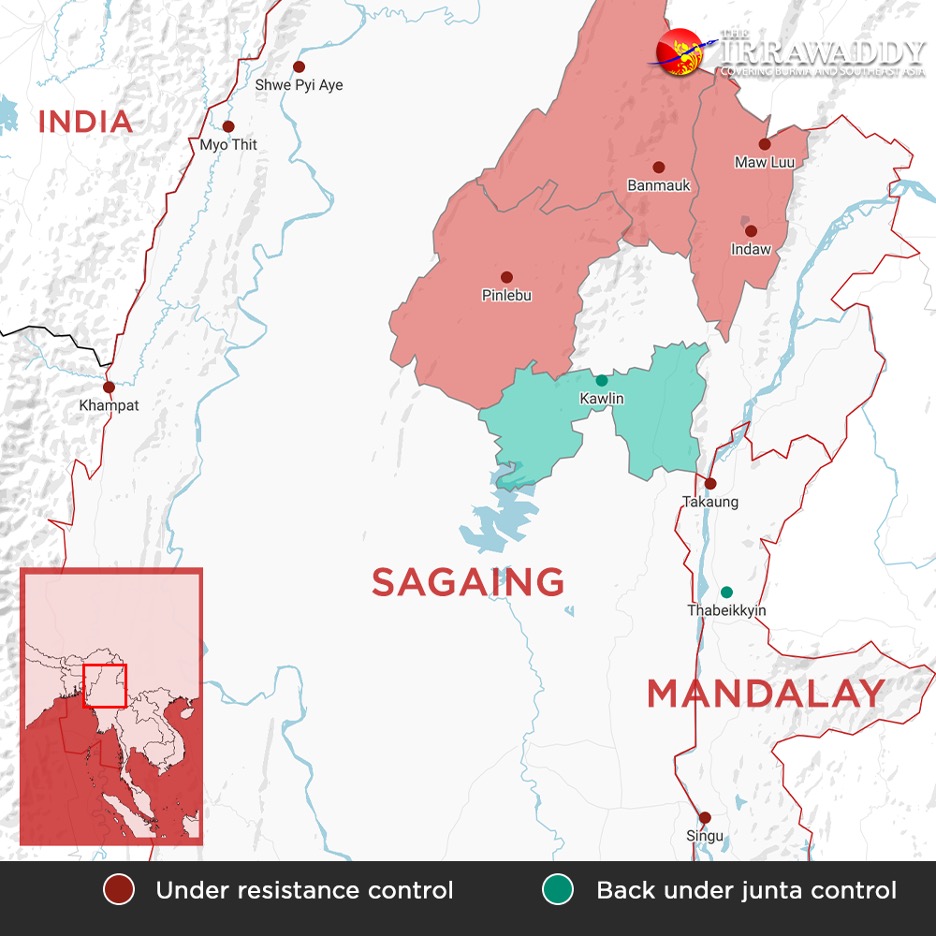
In Sagaing and Mandalay, People’s Defense Forces have captured two district capitals, four townships, two sub-townships, and three towns, but the junta has managed to claw back some ground: Kawlin was retaken in February 2024, and Thabeikkyin fell into military hands in July 2025.
The national picture
Nationwide, resistance forces managed to seize 19 district capitals, 34 townships, 15 sub-townships, and 31 towns. Of these, only three, in Chin State, were easily captured by the resistance when the regime abandoned them, but the rest were seized in heavy combat.
Since then the regime has clawed back four district capitals and three other towns.
Rebels relinquished some towns in northern Shan, Mandalay, Sagaing, and Karenni, but in Kachin, Chin, Karen, and Rakhine states none have been lost to the regime.
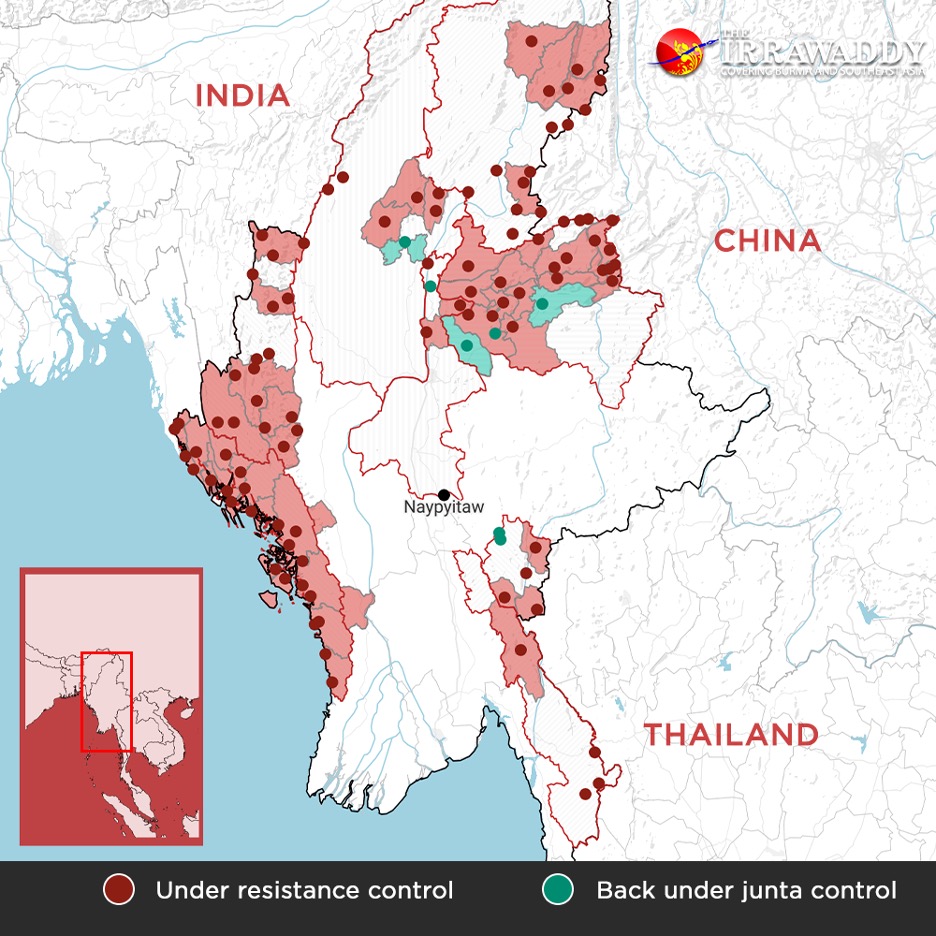
There are also four towns that resistance forces briefly captured from December 2023 through 2024 only to withdraw after a few days. The attempt to capture Loikaw failed outright, and resistance forces continue to press offensives in Kachin’s Bhamo, Karenni’s Hpaswang, and Karen’s Wawlay Myaing, while the junta is mounting an assault on Lay Kay Kaw in Karen State and preparing for further operations in northern Shan.
Junta limits
Although Chinese backing has given the junta some breathing space, it has only managed to retake seven towns, while resistance groups captured another three this year—Falam, Indaw, and Banmauk—while continuing to fight for control of Bhamo, Hpasawng, and Wawlay Myaing.
In other words, although the military continues to replenish its ranks with new conscripts at a frantic rate, it lacks the strength to mount nationwide offensives. Its current focus is on Lay Kay Kaw and Papun in Karen State and another push in northern Shan. In Mandalay, the priority appears to be securing the city’s perimeter rather than retaking towns already lost. The prospect of reclaiming most of the seized towns in the near future remains remote.
Resistance momentum
Meanwhile, resistance forces have not only held their ground but expanded their control. In 2025, they added Falam, Indaw, and Banmauk to their tally. This undercuts the narrative that the junta is steadily regaining territory.
Claims that the military is “taking back town after town,” or that the TNLA is “defeated” because it lost two towns, are misleading. Such assessments reflect the influence of junta propaganda rather than the battlefield reality.
But it is clear that resistance forces must continue to refine their strategies—choosing terrain carefully, combining defensive and mobile tactics, and strengthening their organizational structures.
Across the country, the junta remains vulnerable in many areas, and military assessments must reflect these realities. The enemy should neither be overestimated nor underestimated. Some towns may be lost, and some areas may become contested, but in others, resistance forces will continue to defend their ground effectively and even launch new offensives.
Aye Chan Hsu is a political and military affairs analyst