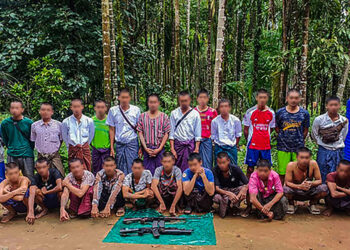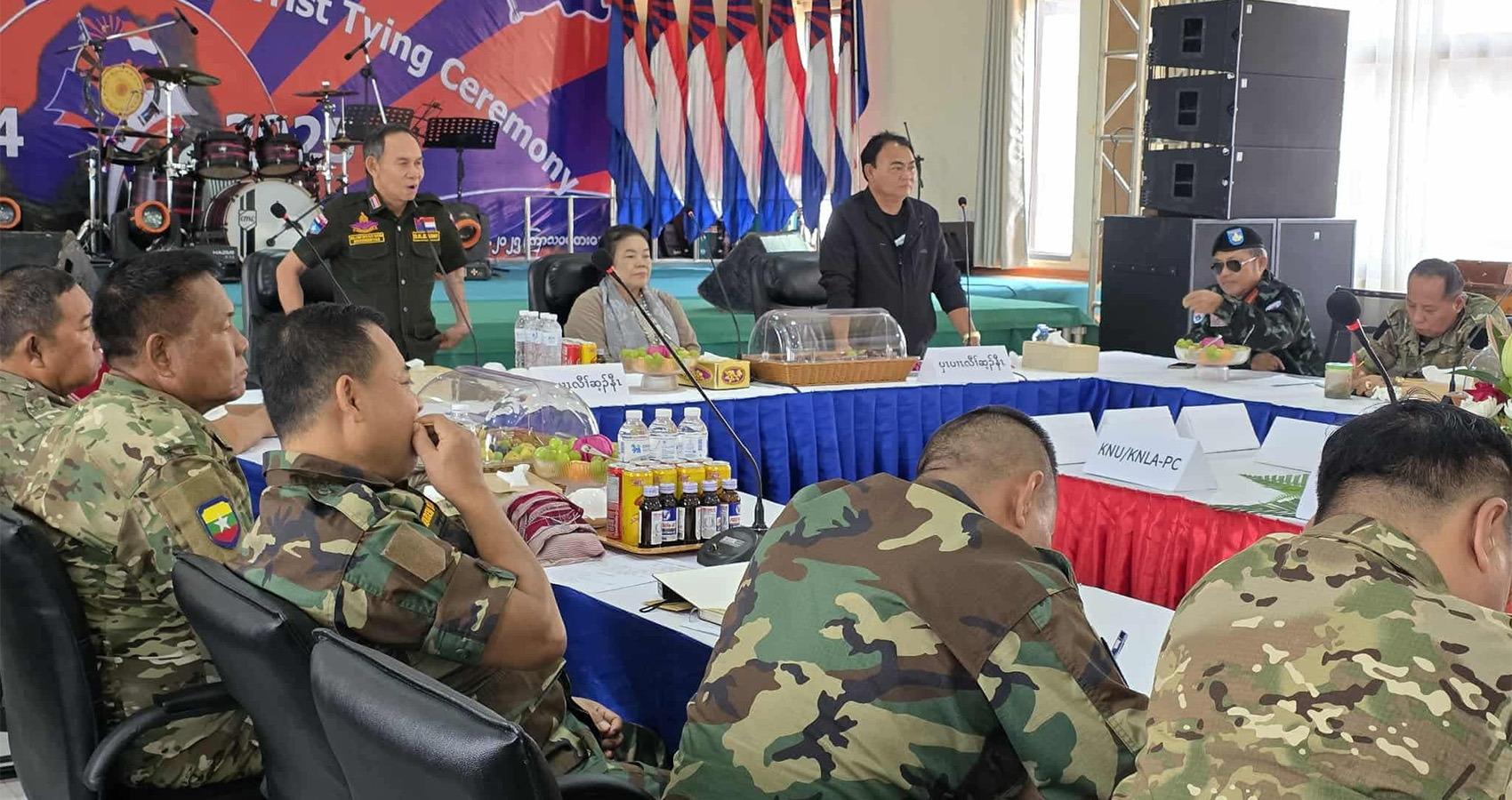
The three junta-aligned Karen ethnic armed groups—the Democratic Karen Benevolent Army (DKBA), Border Guard Force (BGF/KNA) and KNU/KNLA Peace Council— announced on Sunday they would cooperate to ensure security for the junta’s December election.
The KNU/KNLA Peace Council (KPC) broke away from the Karen National Union, Myanmar’s oldest armed ethnic organization, in 2007.
In a joint statement, the groups expressed confidence that a government elected via the junta’s vote would bring peace and development in Karen state and across the whole country.

The statement followed talks at BGF/KNA headquarters in Thetkatay village, about 30 kilometers north of Myawaddy on the Thai border. In attendance were BGF/KNA leader Saw Chit Thu, DKBA military chief Saw Satee and Dr. Naw Kapaw Htoo, Vice-Chair of the Karen Peace Council. Also present was Saw Shwe Maung, former chair of the Karen National Union (KNU)’s Doopalya District.
“The meeting was organized by the BGF/KNA to discuss peace among the three Karen armed groups,” KPC spokesperson Colonel Saw Kyaw Nyunt, who was also present, told the Irrawaddy. “The host decided which organizations to invite.”
He said that the junta’s election plan was also discussed, with the aim of seeking a political solution to reduce civilian suffering amid expanding armed conflict.
He added that Sunday’s talks marked the first meeting between the three groups in two years, but were not connected to the Karen armed group reunification committee.
Formed in 2013, the reunification committee includes the KNU, DKBA, KPC and BGF/KNA but has not met since early 2024.
The anti-regime Karen National Union said it was not invited to the meeting, “We received no invitation or prior information [about the meeting],” KNU spokesperson Padoh Saw Taw Nee told the Irrawaddy.
Earlier this month, the BGF/KNA and DKBA issued statements supporting the junta’s December-January election. Meanwhile the KPC remains a signatory of the Nationwide Ceasefire Agreement (NCA), which the KNU and other ethnic armed groups regard as nullified by the 2021 military takeover.
“Our political positions differ significantly, since they have announced support for the [junta’s] sham election,” said Saw Taw Nee. “Everyone wants peace, but a peace without justice and equality is totally unacceptable.”
While the KNU’s military wings—the KNLA and Karen National Defense Organization (KNDO)—are facing an intensifying junta counteroffensive, the BGF/KNA and DKBA have actively supported junta troops since early 2025.
The two junta allies reportedly helped the junta recapture key positions in Myawaddy, including the border trade zone of Thingyannyinaung and the area’s highest peak, Lat Khat Taung, while supporting efforts to retake Lay-Kay-Kaw, 14 km south of Myawaddy.
“They have likely been pressured or militarily threatened [by the regime] to support the election,” said a Karen political observer. “They want the fighting to stop to protect their economic interests.”
Saw Kyaw Lin, another Karen observer, said: “Personally, I have no confidence in any Karen armed group, no matter how much they talk about peace and democracy.”
The regime has scheduled the first phase of elections, covering 102 townships including Myawaddy, on December 28.
The KNU’s armed wings are fighting the regime not only in Karen and Mon states, but also in Bago and Tanintharyi regions. They have also attacked military targets in the regime’s administrative capital, Naypyitaw.
The DKBA split from the KNU in 1994 before some members rebadged to serve as the Karen Border Guard under the Myanmar military in 2009.
The KPC was founded in 2007 by the then-commander of KNU’s Brigade 7.