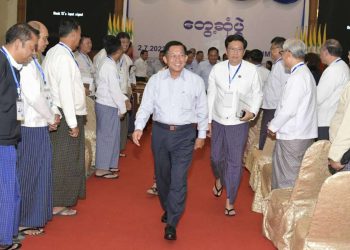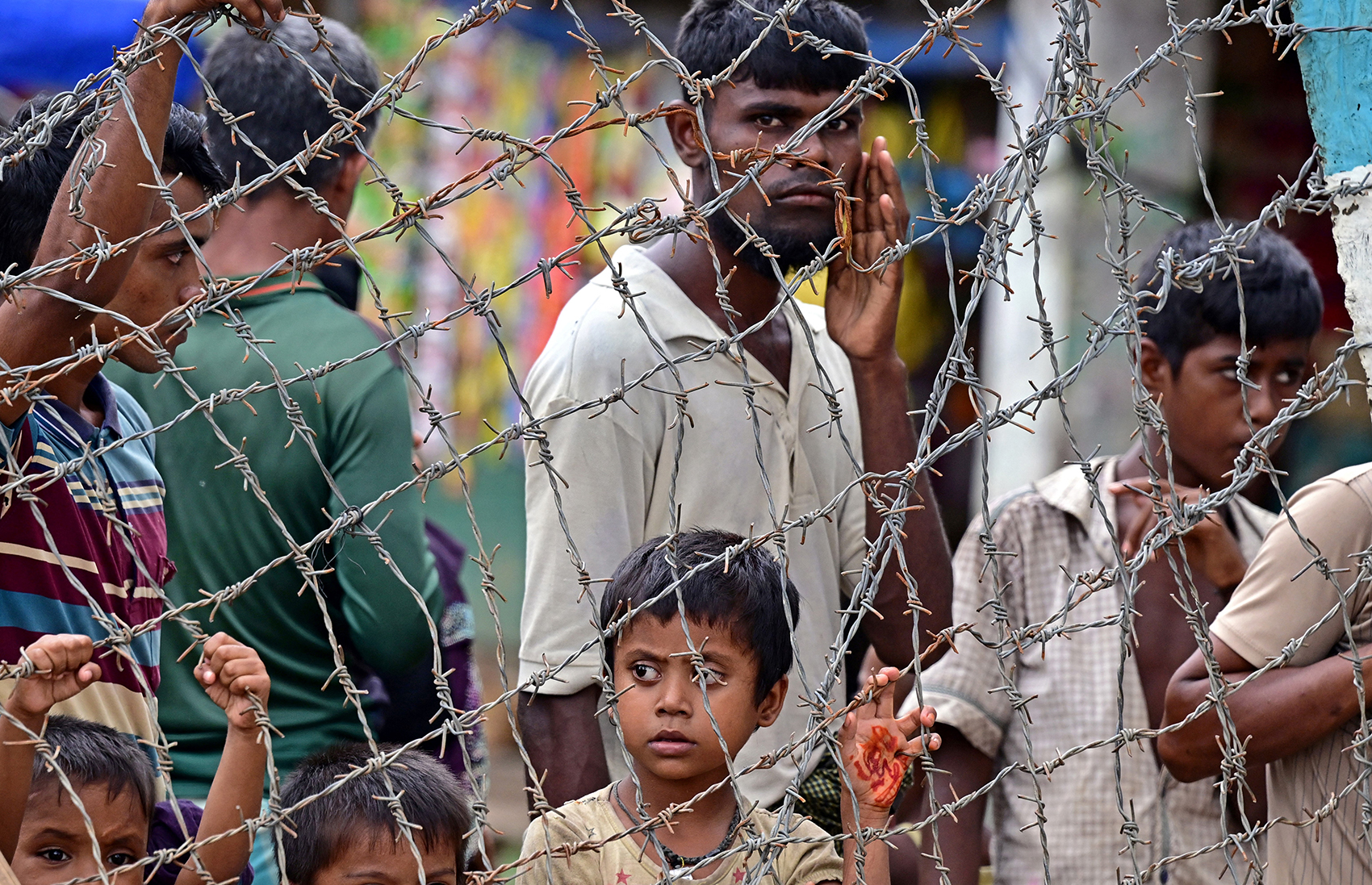
By invitation of Bangladesh’s Ministry of Foreign Affairs, several Myanmar media organizations including The Irrawaddy, DVB, Mizzima, and Myanmar Now were granted the opportunity to attend the Stakeholders’ Conference on the Rohingya Situation in Cox’s Bazar in Bangladesh in the last week of August. It coincided with the eighth anniversary of the Rohingya genocide and atrocities perpetrated by the Myanmar military, which included the systematic burning of entire villages and forced the mass exodus of nearly 700,000 Rohingya people to Bangladesh. The conference also served as a precursor to the upcoming UN conference scheduled for Sept. 10 in New York, which is expected to highlight the urgent humanitarian needs of Rohingya communities.
As the title of the conference suggests, a broad spectrum of stakeholders were present—representatives from the refugee camps, Rohingya activists, officials from UN agencies, diplomats from regional and international countries, as well as scholars and researchers working on the Rohingya issue.
The Irrawaddy’s executive editor Ye Ni attended the conference and visited a Rohingya refugee camps at the invitation of Bangladesh’s interim government.


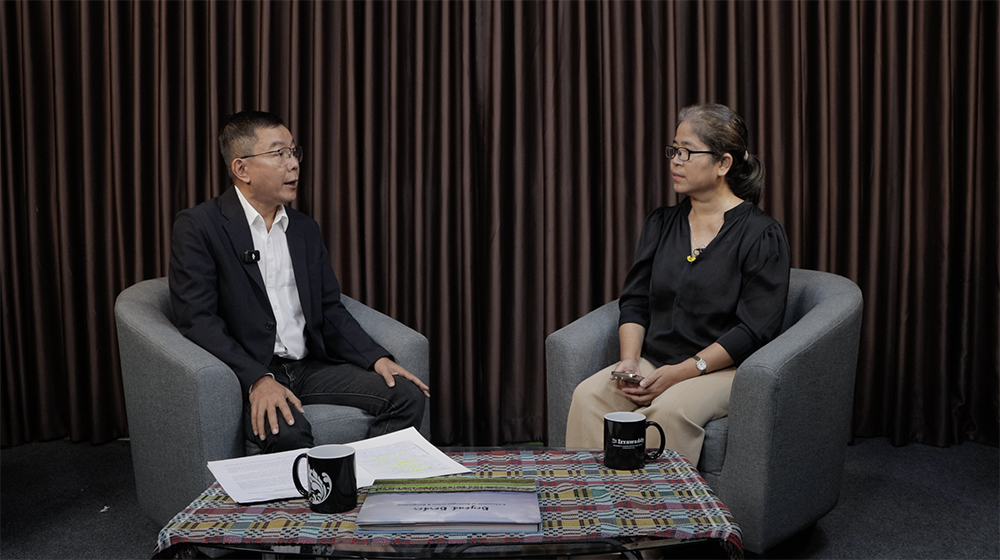
Here he talks to Dr. Mon Mon Myat, a peacebuilding scholar and lecturer at Payap University in Chiang Mai, who also participated in the conference and visited the camps.
Ye Ni: What was your overall assessment of the conference?
Mon Mon Myat: Since this was the first conference on the Rohingya situation organized by the more liberal interim government of Bangladesh, it was significant. We had the chance to listen to the voices of Rohingya groups and communities, which I would categorize into two. The first are the voices of activists working on Rohingya issues, most of whom are based in Western countries; and the second are the voices of those living in the refugee camps.
These have very different opinions and perspectives, and we were able to understand their hopes and dreams of homecoming as we talked with them in person. To be honest, this was my very first opportunity to meet Rohingya refugees in person since the exodus in 2017. It truly broadened my knowledge and opened my eyes. We heard about the vicious cycle of displacement endured by families and the older generations, as well as the struggles of young people who are growing up in refugee camps. I would say these were eye-opening meetings.
YN: The first evening, one representative from a refugee camp emphasized that the Arakan people and the Rohingya are not enemies, but some Rohingya activists who had come from Europe viewed the Arakan Army (AA) as being on the same level as the Myanmar military.
What was even more interesting was the presentation by Rohingya community members working together with the parallel National Unity Government (NUG) in Myanmar, who proposed ways to break the unending cycle of forced displacement and return. And in addition, there was the story of an elderly Rohingya man who had been displaced three times in his life. Could you share that story with us?
MMM: Some Rohingya refugees used to be teachers in Myanmar, others were farmers, and some were university graduates. Among them was an 88-year-old man who had been displaced three times. When I asked him if he wished to return home, he replied, “Don’t ask me whether I want to go back. I never wanted to live here—not for a single moment.” What struck me most was how passionately and fluently the Rohingya people spoke Burmese, and how warmly they greeted us. Before going there, I had some concerns about whether the Rohingya might resent us. But in reality, they welcomed us with kindness and openness, sharing their stories and experiences.
This elderly man, at 88 years old—a living witness of history—told us that he longs for the days back in the parliamentary era when Rohingya people enjoyed equal opportunities in Myanmar, when their identity was recognized, and when they could vote. He expressed his wish for those rights to be restored. These personal testimonies are living evidence for us.
At the same time, some Rohingya youths said their communities are being used by both sides. On the one hand, the junta exploits them for its own purposes; on the other hand, they are caught in ethnic conflict. The junta deliberately promotes narratives of ethnic conflict between the Arakan people and the Rohingya, and again it provides military training to Rohingya insurgents to fight Arakan people, and sends them to the frontlines of war, like hostages.
What these dialogues made me realize is that ignorance has existed between us for many years. This ignorance, and the lack of opportunities to engage in dialogue, have led to deep misunderstandings. Once we had a chance to talk, I felt those doubts and suspicions begin to fade away. This long-standing ignorance created distance and has contributed to conflicts between us. Perhaps, in their minds, the Rohingya feel that the Burmese people have ignored their plight. For us, we only came to learn about the history of Rohingya much later in life.
YN: Yes, I had the same worries, but when we started speaking Burmese, some of the refugees responded with joy, as if they had not spoken the language for a long time.
But one-sided perceptions still exist, with some framing all Burmese people as responsible for the atrocities. Even under the more liberal interim government of Bangladesh led by Mohammed Yunus, certain officials continue to hold such views. (Because of this, the Myanmar journalists’ requests to visit the refugee camps again in their capacity as reporters were suddenly denied.)
Yet when we visited the community radio station—established not only by young Rohingya refugees but also by young people from the host Bangladeshi community—we felt that those suspicions began to fade. Later, in Dhaka, we had the chance to engage with journalists from The Daily Star, and in those discussions I sensed that mutual understanding could be built through dialogue.
To summarize, the journey made me realize that reconciliation and bringing perspectives closer together requires collaboration and exchange of ideas between the free press, public service radio, and newspapers. Through educational and awareness-raising programs, I believe it is possible to overcome misunderstandings and build genuine mutual understanding between these two conflicting perceptions.
MMM: I completely agree. We must work to reduce this ignorance and learn to see everyone as part of humankind. When it comes to the Rohingya, neither Bangladesh nor Myanmar officially recognize them as an ethnic group. Because they live along the border, their communities extend into both Myanmar and Bangladesh. But that situation is not unique—there are also many ethnic people living along the Myanmar-Thai border, and Kachin people across the Myanmar-China border.
Because of ignorance, many of us came to see the Rohingya as “not our concern,” which created distance and division between us. And whenever we look at issues like this, we fall back on a perspective shaped by extreme nationalism—which has long been cultivated by the religious and political leaders of our country. But of course even Theravada Buddhism, which is practiced by most people in Myanmar, did not originate here but was brought into the country. So, if we can accept a whole religion, surely we can accept the idea of sharing with ethnic groups who came across the border.
For example, Thailand has recently issued citizen ID cards for over 500,000 hill tribe people who came from Myanmar. That is a welcome development. It is not about treating people based on where they came from, but accepting the fact that they are now residents who have long lived within these countries, so they should be recognized as citizens. Generous immigration policies by generous politicians!
There are also Myanmar diaspora communities in the U.S., the U.K., and many other countries around the world, so when it comes to the question of recognizing the citizenship of the Rohingya people, we must ask ourselves: how can we integrate them, and is it even possible to ignore this issue for much longer? If we truly want to reduce the distance between us and draw closer to one another, we need to think carefully about how to recognize and accept them as fellow human beings.
Ye Ni: What immediately comes to mind is the issue of repatriation, which was also highlighted in the Cox’s Bazar conference statement as one of the priorities of the Bangladeshi government. But as they themselves admitted during the conference, under the current circumstances, safe repatriation of some 1.2 million people is nearly impossible.
The ongoing civil war is one major obstacle. Another challenge is the question of who will receive them. Under normal government-to-government protocols, it would be the Myanmar junta. But that is impossible because most of Rakhine State is now under the control of the Arakan Army. Therefore, if repatriation is to take place, there must first be serious bilateral dialogue between representatives of the Rohingya refugees and the AA. I raised this point when we met with journalists in Bangladesh.
So repatriation cannot easily be realized at this moment. Another pressing issue at the conference was funding. Humanitarian aid has already been cut by more than half of the amount required. Without sufficient long-term funding, the burden on the Bangladeshi government will only grow heavier. Here I would also point to the Thai example. When international funding for refugee camps in Thailand declined, the Thai government responded by opening the camps and allowing refugees to find paid employment. Officials from Thailand’s Ministry of Foreign Affairs mentioned this at the conference. With that in mind, how would you address the question of repatriation?
MMM: There are two characteristics in repatriation that you mentioned earlier: safety and dignity. Any return or homecoming must ensure both. At present, this is impossible. The ongoing civil war in Myanmar along with intensified airstrikes makes it clear that safe and dignified repatriation cannot be guaranteed.
I would like to draw on the closing keynote speech of a Bangladeshi politician. He reminded the government that refugees are not confined to a single country, citing the example of nearly 10 million Bangladeshi refugees who fled to India in the 1970s due to war who have still not been repatriated. He urged the government to seek pragmatic solutions instead of pursuing unrealistic demands while repatriation remains unfeasible. As both a lawyer and a scholar of human rights, he stressed that repatriation should only take place once safety can be ensured. He highlighted this as a key issue for Bangladesh’s incoming government to consider: a wise and far-sighted perspective.
The plight of war refugees is not confined to Bangladesh. Thailand, too, hosts a large number. According to IOM and UNHCR reports, even without formal refugee status, irregular mass movements continue on a daily basis. In 2024 alone, 1.4 million people from Myanmar crossed into Thailand. How heartbreaking it is to see our people seek refuge in neighboring countries because of conflict.
That is why I would like to urge governments not to treat people merely as statistics for political or financial purposes, but to see them as human beings with faces, stories, and rights. Take one example: under Thein Sein’s government, the Rohingya were once given white cards to vote, but they later had them revoked again—a clear case of numbers being manipulated for politics. Similarly, in human trafficking and refugee funding reports, figures are sometimes exaggerated to secure more resources. Such practices dehumanize people.
Do not think of them as numbers. See them as human beings. Consider not only safe and dignified repatriation, but also their right to livelihood and mobility as human beings. This is about acknowledging the existence and rights of people whose humanity has too often been ignored. That is my message to all governments and agencies.