• Burmese
Monday, January 12, 2026
No Result
View All Result
NEWSLETTER
The Irrawaddy
22 °c
Yangon
  • Home
  • News
    • Burma
    • Politics
    • World
    • Asia
    • Myanmar’s Crisis & the World
    • Ethnic Issues
    • War Against the Junta
    • Junta Cronies
    • Conflicts In Numbers
    • Junta Watch
    • Fact Check
    • Investigation
    • Myanmar-China Watch
    • Obituaries
  • Politics
  • Business
  • Opinion
    • Commentary
    • Guest Column
    • Analysis
    • Editorial
    • Stories That Shaped Us
    • Letters
  • Junta Watch
  • Ethnic Issues
  • War Against the Junta
  • In Person
    • Interview
    • Profile
  • Books
  • Donation
  • Home
  • News
    • Burma
    • Politics
    • World
    • Asia
    • Myanmar’s Crisis & the World
    • Ethnic Issues
    • War Against the Junta
    • Junta Cronies
    • Conflicts In Numbers
    • Junta Watch
    • Fact Check
    • Investigation
    • Myanmar-China Watch
    • Obituaries
  • Politics
  • Business
  • Opinion
    • Commentary
    • Guest Column
    • Analysis
    • Editorial
    • Stories That Shaped Us
    • Letters
  • Junta Watch
  • Ethnic Issues
  • War Against the Junta
  • In Person
    • Interview
    • Profile
  • Books
  • Donation
No Result
View All Result
The Irrawaddy
No Result
View All Result
Home Opinion Guest Column

Southeast Asia Caught in the US-China Rift

Thitinan Pongsudhirak by Thitinan Pongsudhirak
October 6, 2025
in Guest Column
Reading Time: 5 mins read
0 0
A A
Southeast Asia Caught in the US-China Rift

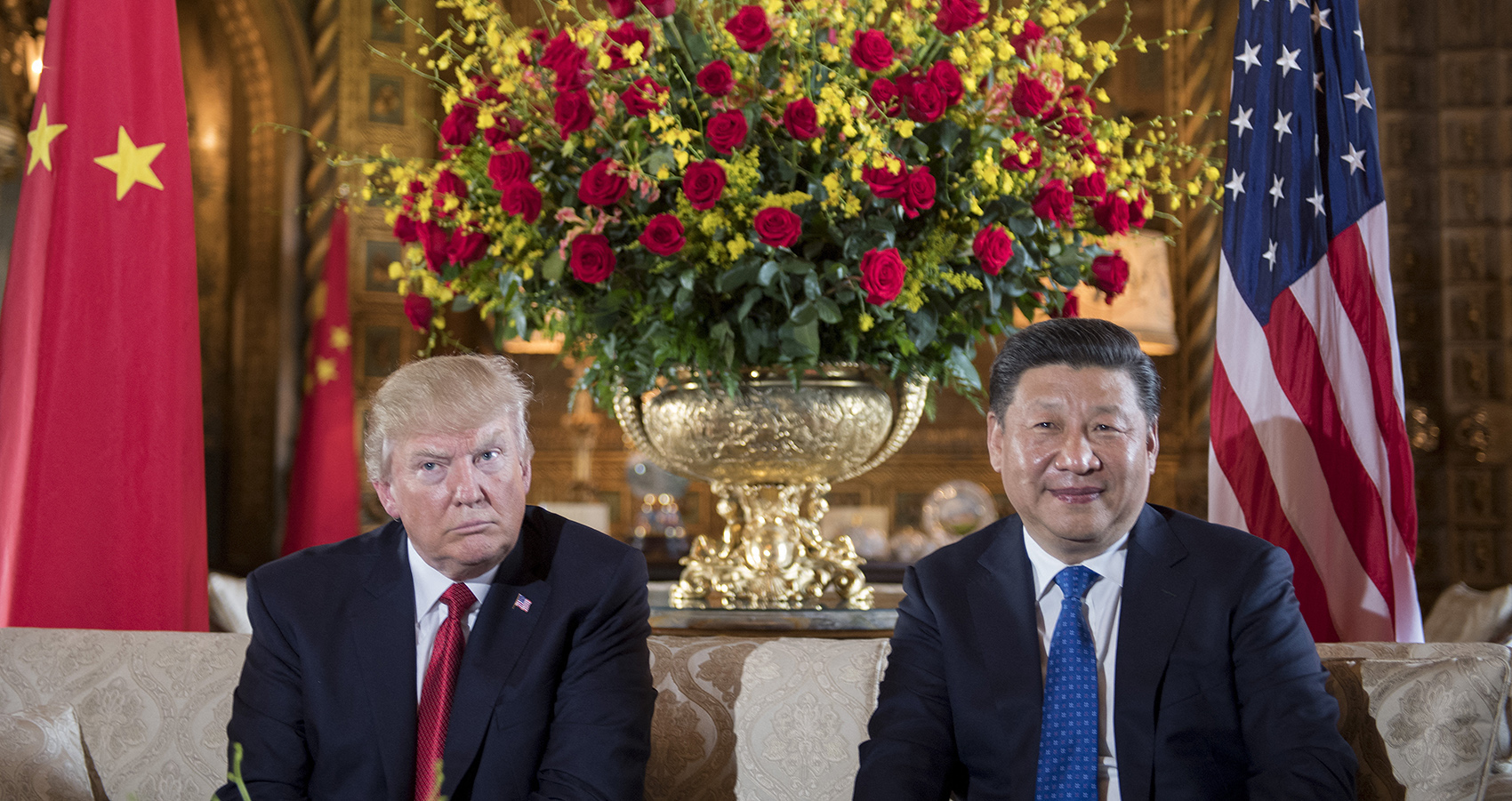
US President Donald Trump (left) sits with Chinese President Xi Jinping during a bilateral meeting at the Mar-a-Lago estate in West Palm Beach, Florida, on April 6, 2017. / AFP

847
VIEWS
Share on FacebookShare on Twitter

The rivalry between the United States and China has become the defining contest of the 21st century. Barely two decades ago, Washington and Beijing were partners in prosperity. America’s support for China’s entry into the World Trade Organization in 2001 epitomized the high-water mark of engagement, reflecting the belief that economic integration would lead to greater political cooperation. Today, that partnership has morphed into suspicion and confrontation. Relations between the United States and China have deteriorated so swiftly that many observers now describe them as locked in a “new Cold War”. The more pressing question, however, is not whether this analogy holds, but whether confrontation can be managed short of outright conflict.

China’s economic ascent was initially encouraged, even celebrated, by the US and its allies. In the 1990s and early 2000s, Beijing was seen as a responsible stakeholder, integrating into global supply chains, attracting foreign investment, and lifting hundreds of millions out of poverty. For a time, it seemed the promise of globalization was being realized. But confidence gave way to concern as China began to flex its newfound power more openly.

The 2008 Beijing Olympics symbolized China’s national revival and confidence both at home and abroad. Four years later, Beijing’s construction of artificial islands and militarization of the South China Sea unsettled the Southeast Asia region and signaled a bolder strategic posture. President Xi Jinping’s rise to power appears to be the decisive turning point. Within his first year, he launched the Belt and Road Initiative, a sprawling infrastructure and investment drive that revived both overland and maritime Silk Roads as platforms of influence.


RelatedPosts

US Announces Aid to Bolster Thailand, Cambodia Truce

US Announces Aid to Bolster Thailand, Cambodia Truce

January 10, 2026
295
‘Sever the Chain’: Scam Tycoons in China’s Crosshairs

‘Sever the Chain’: Scam Tycoons in China’s Crosshairs

January 9, 2026
419
Myanmar in 2026: Military Dictatorship in Traditional Burmese Jackets

Myanmar in 2026: Military Dictatorship in Traditional Burmese Jackets

January 8, 2026
821

The US was initially slow to react. President Barack Obama’s “pivot to Asia” promised to rebalance American strategy, but implementation lagged. Even when the Permanent Court of Arbitration ruled overwhelmingly in 2016 against China’s maritime claims, Beijing ignored the verdict without meaningful consequence. It was Donald Trump’s first presidency that marked the sharp break.

In his first term, Trump’s imposition of tariffs and restrictions on advanced technology started a trade and tech war. His moves reflected a deeper political transformation in the US, as decades of skepticism toward globalization and free trade moved from the margins to the mainstream. “America First” nationalism, once a fringe doctrine, became the organizing principle of US foreign and economic policy. By his second term, Trump could declare sweeping tariffs not as a sudden departure but as the logical culmination of a longstanding geostrategic campaign.

At home, the Trumpian movement emphasizes nativism and tighter immigration controls. Abroad, it questions the value of the post-war order that Washington itself built. That order had allowed US allies in Europe and Asia to prosper under American security guarantees and open markets. But it also produced China’s meteoric rise, enabling Beijing to become a peer competitor. Washington’s resentment is now driving a more unilateral, protectionist and confrontational strategy.

Yet the Cold War analogy only partly fits. The struggle between the US and the Soviet Union was waged between two systems that were fundamentally separate, with little economic interdependence. The Soviet bloc’s command economy could not keep pace with the dynamism of capitalism and collapsed under its own inefficiencies. China is a different kind of challenger.

Since Deng Xiaoping’s reforms, Beijing has combined one-party authoritarian rule with state-directed capitalism. The results were staggering: three decades of near double-digit growth, a manufacturing revolution, and the emergence of global Chinese firms in sectors from telecommunications to electric vehicles. Unlike the Soviet Union, China has embedded itself deeply in the global economy, making complete decoupling with the US impractical.

Instead, US companies and others in Europe now pursue “de-risking”—a selective disentangling of supply chains in strategic sectors such as semiconductors, critical minerals and artificial intelligence, while leaving other forms of economic integration intact. For many countries, this balancing act reflects necessity. China is both a formidable rival and an indispensable trading partner. The world is therefore entering neither a full globalization nor a full decoupling, but something in between.

At the heart of the contest is not just power but narrative. The US sees itself as the rightful guarantor of global order, the natural product of its “manifest destiny”—a belief in primacy that stretches back to the early 19th century. China, meanwhile, sees itself as reclaiming the greatness of its own through a “manifest resurgence”, Xi’s vision of “national rejuvenation” after two centuries of humiliation and subjugation.

Both narratives carry entitlement and inevitability. The US will not cede its top position without a fight, whereas China this time will not be denied its rightful place. Each side views the other with suspicion. Washington believes Beijing has gained unfair advantages by copying technology and bending rules, while Beijing believes the US will seek to block its rise no matter what.

Such mistrust extends to public opinion. Polls show large majorities in both societies view the other unfavorably, even without direct personal contact. Even if leaders reached a pragmatic bargain, nationalist sentiment on both sides would undercut it.

Yet a full-blown military conflict and a nuclear Armageddon remain unlikely between the two sides, as deterrence is still working. But the specter of a limited conventional war is not implausible. Taiwan remains the most combustible flashpoint, not only for its symbolism in Chinese nationalism but also for its central role in the global semiconductor industry. The South China Sea is another arena of danger, where US treaty obligations to the Philippines could transform a skirmish into a full-blooded crisis. In such volatile settings, accidents or miscalculations could escalate quickly.

For Southeast Asia, the stakes could not be higher. A US-China “grand bargain” that carves up spheres of influence would reduce regional autonomy. An outright conflict would devastate trade-dependent economies and destabilize security. The most realistic hope is a managed rivalry that is tense, competitive and sometimes confrontational, but short of open war.

History’s warnings are sobering. Great-power clashes have repeatedly drawn smaller states into unavoidable choice and conflict. Yet history also points to alternatives. Europe, once the world’s most war-prone continent, has transformed itself into a zone of economic integration and relative peace, despite facing Russian aggression on its doorstep. As the European Union remains cohesive, its success shows that conflict is not inevitable and that cooperative frameworks can endure. The EU’s example demonstrates that cycles of conflict can be broken if states commit to cooperation, restraint and shared rules and institutions.

The US-China contest is fundamentally about whose vision of global order will prevail. Will it be the US’s commitment to preserving its primacy or China’s determination to restore its centrality. Both sides feel entitled, both are unwilling to yield, and both are shaping the choices of other nations for decades to come. For Southeast Asia and much of the wider world, the challenge is to avoid being trampled as these giants collide. For Washington and Beijing, the task is to find a way to compete without catastrophe.

Thitinan Pongsudhirak is senior fellow at the Institute of Security and International Studies at Chulalongkorn University.

This article was first published by the Bangkok Post.

Your Thoughts …
Tags: ChinaDefenseEconomyGeopoliticsHistorySoutheast AsiaUS
Thitinan Pongsudhirak

Thitinan Pongsudhirak

Thitinan Pongsudhirak, PhD, on leave from Chulalongkorn University’s Faculty of Political Science, is a visiting professor at the London School of Economics. 

Similar Picks:

Exodus: Tens of Thousands Flee as Myanmar Junta Troops Face Last Stand in Kokang
Burma

Exodus: Tens of Thousands Flee as Myanmar Junta Troops Face Last Stand in Kokang

by Hein Htoo Zan
November 28, 2023
99.8k

Myanmar National Democratic Alliance Army troops are opening roads and pathways through forests for people to flee Kokang’s capital as...

Read moreDetails
Drone Attack at Myanmar-China Border Gate Causes Over $14m in Losses
Business

Drone Attack at Myanmar-China Border Gate Causes Over $14m in Losses

by The Irrawaddy
November 27, 2023
39.3k

Jin San Jiao is latest northern Shan State trade hub in crosshairs of ethnic Brotherhood Alliance.

Read moreDetails
Brotherhood Alliance Marching Towards Capital of Myanmar’s Kokang Region
Burma

Brotherhood Alliance Marching Towards Capital of Myanmar’s Kokang Region

by The Irrawaddy
November 25, 2023
31.1k

Chinese embassy urges citizens to flee Laukkai Town as ethnic armies prepare to drive Myanmar junta troops from Kokang’s capital.

Read moreDetails
General Close to Myanmar Junta Boss Placed Under House Arrest, Interrogated for Corruption
Burma

General Close to Myanmar Junta Boss Placed Under House Arrest, Interrogated for Corruption

by The Irrawaddy
September 14, 2023
28.9k

The arrest of ‘kickback king’ Lt-Gen Moe Myint Tun, once seen as a possible successor to Min Aung Hlaing, comes...

Read moreDetails
Junta Battalion Controlling Myanmar-China Trade Route Surrenders to KIA 
Burma

Junta Battalion Controlling Myanmar-China Trade Route Surrenders to KIA 

by Saw Reh
January 26, 2024
22.8k

Kachin Independence Army seizes another base in northern Shan State, cutting off regime troops in the border trade town of...

Read moreDetails
Has China Lost Control of Ethnic Armies in Myanmar’s War-Torn Borderland?
Guest Column

Has China Lost Control of Ethnic Armies in Myanmar’s War-Torn Borderland?

by Bertil Lintner
November 6, 2023
21.5k

The Brotherhood Alliance’s offensive against the junta in northern Shan has shut down trade and resource access, but Beijing still...

Read moreDetails
Load More
Next Post
Buddhist Monk Accused of Kidnapping Men for Myanmar Military Service

Buddhist Monk Accused of Kidnapping Men for Myanmar Military Service

Myanmar Junta Crushes Election Criticism With Wave of Arrests

Myanmar Junta Crushes Election Criticism With Wave of Arrests

No Result
View All Result

Recommended

Myanmar in 2026: Military Dictatorship in Traditional Burmese Jackets

Myanmar in 2026: Military Dictatorship in Traditional Burmese Jackets

3 days ago
821
Envoy’s Visit to Naypyitaw Undermines ASEAN Itself

Envoy’s Visit to Naypyitaw Undermines ASEAN Itself

2 days ago
746

Most Read

  • Myanmar Junta Election Official Killed as Blasts Rock Bago Region

    Myanmar Junta Election Official Killed as Blasts Rock Bago Region

    shares
    Share 0 Tweet 0
  • Low Turnout, Intimidation and Attacks Mark Phase 2 of Myanmar Junta’s Election

    shares
    Share 0 Tweet 0
  • Polls Open in Second Phase of Myanmar Junta-run Election

    shares
    Share 0 Tweet 0
  • Looking Ahead to 2026: What Lies Ahead for Myanmar

    shares
    Share 0 Tweet 0
  • Live Updates: Junta’s Election Phase Two

    shares
    Share 0 Tweet 0

Newsletter

Get The Irrawaddy’s latest news, analyses and opinion pieces on Myanmar in your inbox.

Subscribe here for daily updates.

Contents

  • News
  • Politics
  • War Against the Junta
  • Myanmar’s Crisis & the World
  • Conflicts In Numbers
  • Junta Crony
  • Ethnic Issues
  • Asia
  • World
  • Business
  • Economy
  • Election 2020
  • Elections in History
  • Cartoons
  • Features
  • Opinion
  • Editorial
  • Commentary
  • Guest Column
  • Analysis
  • Letters
  • In Person
  • Interview
  • Profile
  • Dateline
  • Specials
  • Myanmar Diary
  • Women & Gender
  • Places in History
  • On This Day
  • From the Archive
  • Myanmar & COVID-19
  • Intelligence
  • Myanmar-China Watch
  • Lifestyle
  • Travel
  • Food
  • Fashion & Design
  • Videos
  • Photos
  • Photo Essay
  • Donation

About The Irrawaddy

Founded in 1993 by a group of Myanmar journalists living in exile in Thailand, The Irrawaddy is a leading source of reliable news, information, and analysis on Burma/Myanmar and the Southeast Asian region. From its inception, The Irrawaddy has been an independent news media group, unaffiliated with any political party, organization or government. We believe that media must be free and independent and we strive to preserve press freedom.

  • Copyright
  • Code of Ethics
  • Privacy Policy
  • Team
  • About Us
  • Careers
  • Contact
  • Burmese

© 2023 Irrawaddy Publishing Group. All Rights Reserved

Welcome Back!

Login to your account below

Forgotten Password?

Retrieve your password

Please enter your username or email address to reset your password.

Log In
No Result
View All Result
  • Home
  • News
    • Burma
    • Politics
    • World
    • Asia
    • Myanmar’s Crisis & the World
    • Ethnic Issues
    • War Against the Junta
    • Junta Cronies
    • Conflicts In Numbers
    • Junta Watch
    • Fact Check
    • Investigation
    • Myanmar-China Watch
    • Obituaries
  • Politics
  • Opinion
    • Commentary
    • Guest Column
    • Analysis
    • Editorial
    • Stories That Shaped Us
    • Letters
  • Ethnic Issues
  • War Against the Junta
  • In Person
    • Interview
    • Profile
  • Business
    • Economy
    • Business Roundup
  • Books
  • Donation

© 2023 Irrawaddy Publishing Group. All Rights Reserved

This website uses cookies. By continuing to use this website you are giving consent to cookies being used. Visit our Privacy and Cookie Policy.