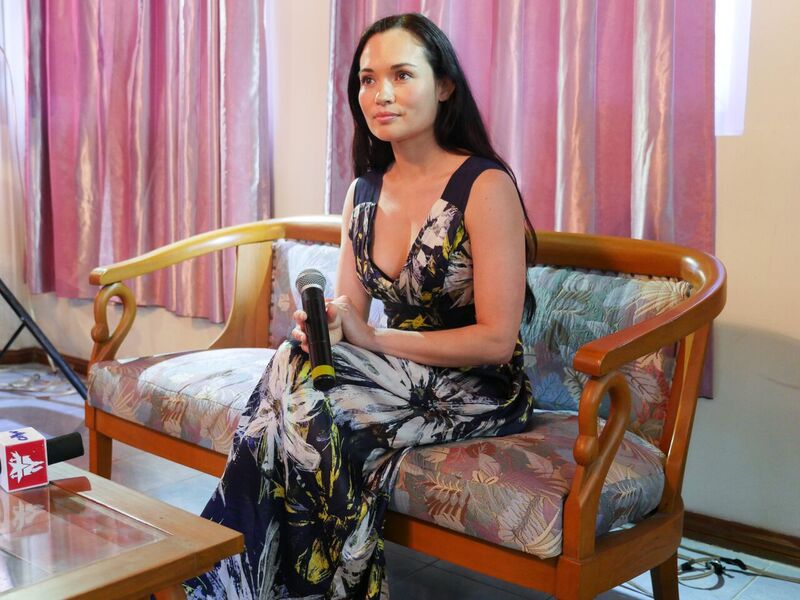
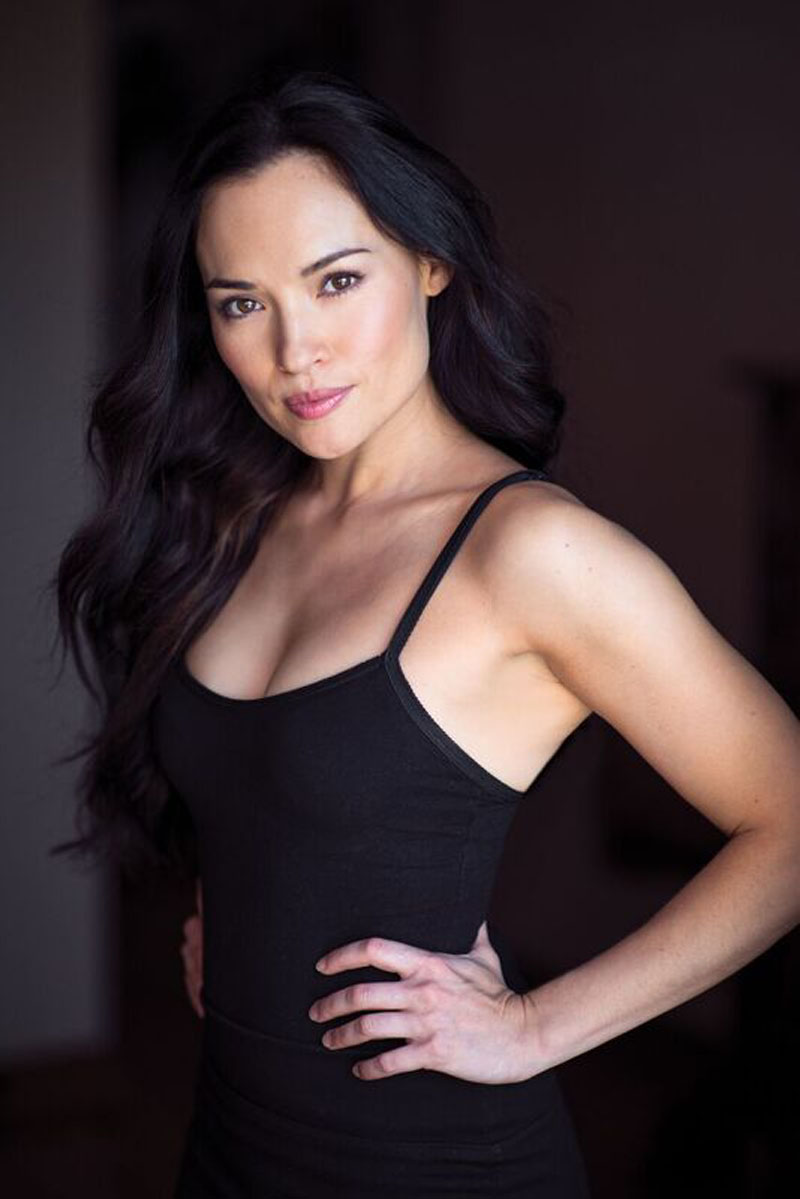
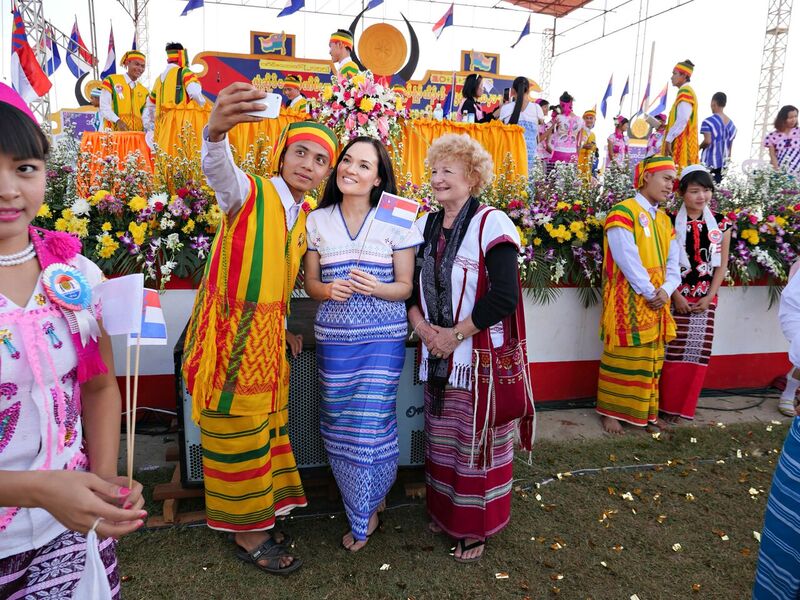
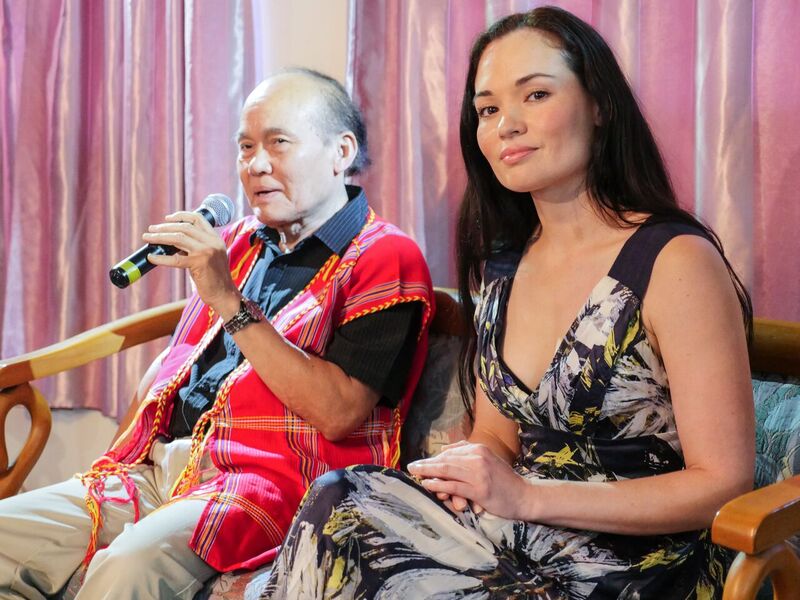
She may be of mixed background—born to a Scottish mom, an ethnic Karen father and raised in Sydney, Australia—but film actress Tasneem Roc retains a deep fondness for her Burmese roots. She paid a visit to her father’s hometown, Myaungmya, Irrawaddy Division, in early January and met with some of her relatives. The Irrawaddy recently spoke with Tasneem Roc about her career and her connection to Burma, particularly her ethnic Karen roots.
What were some of your impressions from your recent trip to Burma, your father’s home country?
That was my second visit to Burma, the last time being 16 years ago. I remember loving the country on my first visit with my family, and having a sense of familiarity, of feeling “at home,” even though it was my first visit. So much has changed since then, but my love of the country remains the same.


One of the most exciting and fulfilling things that happened during my trip was seeing my family. Some I hadn’t seen since my first visit, and others it was my first time meeting them, but I felt love for all of them. We were able to meet some relatives in Yangon and then travel to Myaungmya and my father’s village, where I met so many relatives for the first time and was able to experience life in their village.
The main reason I came to Burma was to visit family and accompany my parents as my dad revisited some significant locations from his childhood, such as the village where his parents are buried and other places from his early career, such as his teaching post at No. 1 High School in Hpa-an [the capital of Karen State].
Why did your visit gain more attention this time?
[Karen artists] also facilitated a photoshoot where I was photographed in some traditional Karen dresses. They also organized an event that allowed me to meet many Karen musicians and performers, which included a well-attended press conference, and then a dinner. All of this was totally unexpected, and an amazing experience.
Because of the media coverage and Facebook posts, it became more widely known that we were traveling in the country, and as a result changed the nature of our trip. I have had the opportunity to meet so many of my Karen brothers and sisters because they have approached me after seeing the posts on Facebook.
The final exciting and unexpected thing was having the opportunity to be present at the meetings my father had with Karen educational organizations and government bodies while we were in Mae Sot, Thailand, and being able to visit different Karen educational facilities both in Mae Sot, a refugee camp, and in Karen State.
Tell us about your family background, your father and his work in and connection to Burma and Karen affairs.
Both of my parents are educators. My father taught at the University of Technology Sydney for 20 years before moving on to teach at Sydney TAFE [technical and further education] for 18 years, where in the last eight years he was head teacher in information technology.
His main intention in visiting these Karen organizations was to report to the Australian Karen Organisation [AKO] about education in Karen State and in the refugee camps on the Thai-Burma border. This is because the AKO helps in the resettlement of Karen refugees and my father, as member, in particular wanted to see if there was a way to make integration into the Australian educational system smoother for young Karen in primary, secondary and tertiary education.
He also wants to highlight the great work in education taking place in the camps, even under difficult circumstances. Equally, he was investigating if and how Karen overseas can contribute to the education programs in Karen State and on the Thai-Burma border. I was helping my parents by documenting these meetings with video and photos, and feel incredibly privileged to have been present at these meetings, as it has allowed me to meet many important and influential decision-makers and has enabled me to appreciate the long history and the high level of education provided by these various Karen organizations and understand their current situation and challenges so much better.
Please tell us about your career as a television and film actress in Australia.
I started working as an actress after my first year of university, so I had to defer my studies to work full time. I told my father when I was a child that my dream when I grew up was to be a famous actress, but I was very shy as a teenager and never spoke of my dream again. In my first year at the University of Sydney, I got an acting agent whose job was to get me auditions. My first job was a small role on a popular Australian series at the time called Heartbreak High. After this small role the show auditioned me for a main role in their ensemble cast. This was an incredible experience for me, working alongside actors that I had watched on television.
How do you find your life as an actress, and how have you overcome challenges in your career?
I have been fortunate to work on some well-respected television shows and work with some of Australia’s best actors, directors and producers. Most of my experience is in television, and as time has gone on I have had roles in various films as well. One of the most challenging things I have faced is developing self-confidence and belief in myself, and persevering with my dream to be an actress, despite setbacks. I read a lot of motivational books, and books on positive thinking, most of which my father has passed on to me.
What are the key elements to becoming a successful celebrity?
When I look at some of the qualities of successful and famous actors and actresses I have worked with and admire, I notice that they are very personable and kind to everyone. They give time to everyone and seem to know everybody’s name on set. They are incredibly hardworking and knowledgeable about filmmaking and screenwriting, and they are passionate about their art. These are qualities that I hope to emulate.
How do you spend your free time?
I spend my free time with my boyfriend, cooking and eating, and on the weekends walking with him. If I have time, I like running in the local park and visiting the gym. I am also continuing to develop a documentary project about Karen culture and in particular the threats to Karen culture and if and how it is being preserved both within Burma and around the world. I am also developing a TV project with a good friend of mine. It is a supernatural thriller that we have been working on for a couple of years.
What is your favorite sport, and what’s your daily diet?
Four years ago I joined a gym in preparation for an acting role. I was really nervous and unfamiliar with the equipment, but my trainer Tom Hewett (now my boyfriend!) taught me how to train in the gym and wrote my programs, and now it is one of my favorite physical activities. I love getting stronger and more confident.
In terms of my daily diet, I am not really strict about it, but we all know to avoid heavily processed foods and too much sugar, so I try to eat more fresh vegetables and good quality meat, mostly with rice. I especially love when my mom or dad makes a good curry, and after the amazing food I have experienced in Burma, I am going to try my hand at recreating some of those dishes. There is one chicken dish I tasted in my father’s village I have been craving ever since I had it.
You may be aware that Burma has been ruled by military governments for decades and that there have been widespread human rights abuses in ethnic minority regions, including in Karen State, while those regimes have been in power. Seeing as how your father is ethnic Karen, do you feel any connection or proximity to these abuses?
I am absolutely aware of the human rights abuses the military government has perpetrated against the Karen and other ethnic minorities, and against the Burmese people as well. I am also aware that military offences are still being undertaken against ethnic minorities in some parts of Burma. One of the main reasons that my father was unable to return to Burma was because the military dictatorship took over in 1962, otherwise I would most likely have been born and brought up in Burma, not in Australia.
My father received a scholarship from Karen State, and went to Australia on the Columbo Plan, and studied at the University of Sydney. My parents were married in 1965, and my mother, who was born in Scotland before immigrating to Australia as a child, was quite prepared to make a life with my father in Burma, but the political climate was very bad, and my father was advised to stay in Australia.
Growing up, I remained informed about the situation in Burma, but felt unsure of how I could contribute to a solution. I grew up in a part of Sydney that was not close to other Karen or Burmese people.
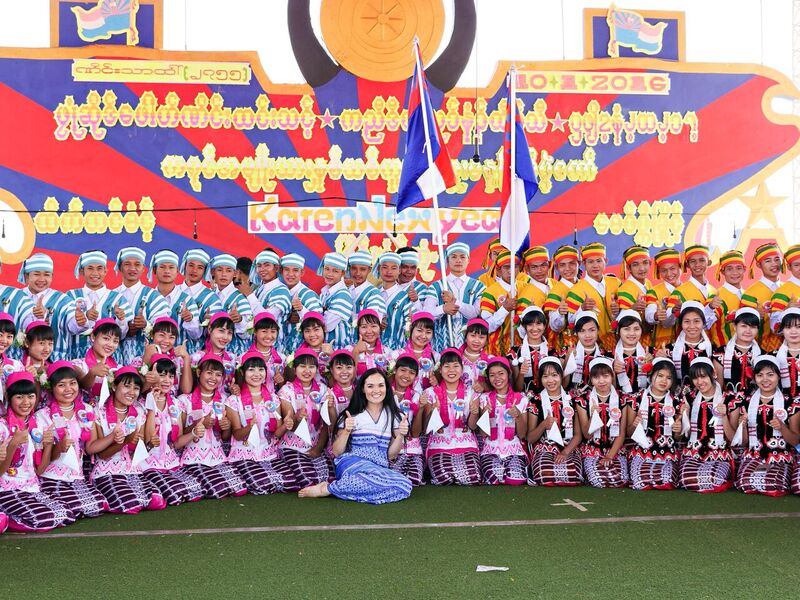
However, for the past ten years I have been lucky enough to be a speaker at the Sydney Karen New Year’s celebration and am grateful I have been able to contribute in this way to the community. A large portion of the Karen community in Sydney is refugees who have been resettled. Some of them have spent many years in refugee camps, some young children have been born in refugee camps. Looking into the audience at these events is a reminder about the severity of the situation in Burma.
Tell us about your expectations for and concerns about Burma’s emerging new political landscape.
Now is a very historic time for Burma and for the Karen and other ethnic minorities. I feel hopeful that the recent elections and new government provide the opportunity for the Karen people to peacefully negotiate for their education, health and judicial system to be recognized by the Burmese government. Whereas before it did not seem possible, I am hopeful that the Karen people will have the right to self-determination in a truly federal system. I am heartened by Aung San Suu Kyi’s statement for the Karen New Year, and her acknowledgement of the Karen on this internationally celebrated holiday indicates an awareness of ethnic concerns.
One of the main issues is the fact that the Burmese educational system is being implemented in Karen areas without consultation with the Karen, and that Karen children are not being taught their history, or their language. This is of great concern to the Karen people, who have their own well-established syllabus for primary, secondary and tertiary students, that has been independently assessed by international bodies as excellent.
Equally, the continued re-enforcement of Burmese military bases in Karen and other ethnic areas despite the recent ceasefire agreements is a source of concern.
The recent political developments have led to talk of “repatriation” or the return of refugees. But the question is raised, what are they returning to? The point was raised that there needs to be assurances of safety and security for both refugees and IDPs [internally displaced persons], and there needs to be a sufficient health and education infrastructure to support all people within Burma.
The recent ceasefire and subsequent peace talks have also changed the climate of international NGO funding. Tragically, we were told that many NGOs have moved their focus from the refugee community and borders to within Burma. It has been said that there is now donor fatigue and that refugee issues are not “sexy” anymore.
The result is that the funding to education and health initiatives taking place on the Thai-Burma border are being reduced, leaving these important initiatives in a very uncertain and precarious position. They are still trying to support an enormous refugee community, and while they have all been developing readiness and preparedness for the eventual return of refugees, they still desperately need the international funding in the interim.
Can you tell us if you have any plans to act or direct a movie on Burma in the future? And if so, what will the movie be about?
I would absolutely love to act within Burma, if that would be possible. I am interested in the possibility of an Australian Burmese co-production, either in film or television. I know that Saw Hackett [a Karen actor and director] is very keen to develop the Karen film industry, and I thoroughly support him in that.