• Burmese
Monday, January 12, 2026
No Result
View All Result
NEWSLETTER
The Irrawaddy
20 °c
Yangon
  • Home
  • News
    • Burma
    • Politics
    • World
    • Asia
    • Myanmar’s Crisis & the World
    • Ethnic Issues
    • War Against the Junta
    • Junta Cronies
    • Conflicts In Numbers
    • Junta Watch
    • Fact Check
    • Investigation
    • Myanmar-China Watch
    • Obituaries
  • Politics
  • Business
  • Opinion
    • Commentary
    • Guest Column
    • Analysis
    • Editorial
    • Stories That Shaped Us
    • Letters
  • Junta Watch
  • Ethnic Issues
  • War Against the Junta
  • In Person
    • Interview
    • Profile
  • Books
  • Donation
  • Home
  • News
    • Burma
    • Politics
    • World
    • Asia
    • Myanmar’s Crisis & the World
    • Ethnic Issues
    • War Against the Junta
    • Junta Cronies
    • Conflicts In Numbers
    • Junta Watch
    • Fact Check
    • Investigation
    • Myanmar-China Watch
    • Obituaries
  • Politics
  • Business
  • Opinion
    • Commentary
    • Guest Column
    • Analysis
    • Editorial
    • Stories That Shaped Us
    • Letters
  • Junta Watch
  • Ethnic Issues
  • War Against the Junta
  • In Person
    • Interview
    • Profile
  • Books
  • Donation
No Result
View All Result
The Irrawaddy
No Result
View All Result
Home Opinion Guest Column

Batman’s Butler Alfred on Colonialism: Does ‘Burning Down the Forest’ Work?

Tony Waters by Tony Waters
February 20, 2020
in Guest Column
Reading Time: 5 mins read
0 0
A A
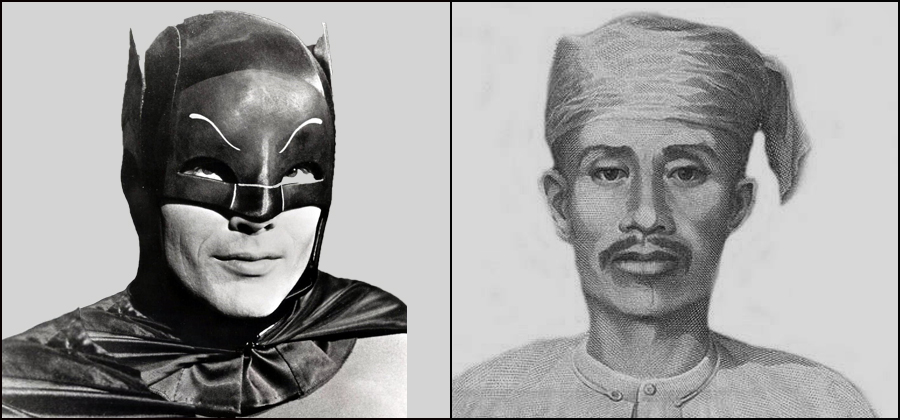
Saya San, a peasant leader who resisted colonial rule in British Burma (right), and Batman (left).

Saya San, a peasant leader who resisted colonial rule in British Burma (right), and Batman (left).

14.3k
VIEWS
Share on FacebookShare on Twitter

Colonial Burma has a strange hold on the Anglo-American imagination—it is a remote and exotic place where the British were not very successful in holding sway. British authority was routinely challenged by people in the forests of Burma who, the British felt, did not understand the beneficent “reason” inherent to their colonial project. From a British perspective the Burmese rebels and dacoits were unreasonable—they could not be bribed fairly and squarely with rubies, as the British expected.

The character Alfred Pennyworth, the butler of Batman’s alter ego Bruce Wayne, experienced colonial Burma as a policeman in the 1930s. In the American 2008 Batman film The Dark Knight, Alfred described British frustration with the inability of Burmese bandits to reason.

Alfred was perhaps a member of the police units called on to control the revolt of Burmese hero Saya San in 1930-1932. Such experience apparently provided Alfred the basis for offering Bruce Wayne advice about why The Joker, a charismatic criminal nihilist sowing chaos, was impossible to reason with. The problem is, as framed in the movie, what do you do when your enemy does not respond to the same fears and incentives as “civilized” people?
RelatedPosts

Indian Army Accused of Deadly Strike on Separatists in Myanmar

Indian Army Accused of Deadly Strike on Separatists in Myanmar

July 15, 2025
4.6k
Myanmar’s New Network Insurgency

Myanmar’s New Network Insurgency

November 1, 2024
5.4k
Food Shortage in Sagaing Rice Basket as Myanmar Junta Raids Force 50,000 to Flee 

Food Shortage in Sagaing Rice Basket as Myanmar Junta Raids Force 50,000 to Flee 

February 22, 2024
1.3k

Alfred presents to Batman/Bruce Wayne the same conundrum that bedevils the American military battling ISIS in the Middle East, or the Tatmadaw of the Myanmar military seeking to bend the Rohingya to their will. In their frustration, they come to believe that what their opponents want is not something logical, like money, and that their opponents are therefore incapable of reason.

Bruce Wayne: “I knew the mob wouldn’t go down without a fight, but this is different. [The Joker] crossed the line.”

Alfred Pennyworth: “You crossed the line first, sir. You squeezed them. You hammered them to the point of desperation. And, in their desperation, they turned to a man they didn’t fully understand.”

Bruce Wayne: “Criminals aren’t complicated, Alfred. Just have to figure out what he’s after.”

Alfred Pennyworth: “With respect, Master Wayne, perhaps this is a man that you don’t fully understand, either. A long time ago, I was in Burma. My friends and I were working for the local government. They were trying to buy the loyalty of tribal leaders by bribing them with precious stones. But their caravans were being raided in a forest north of Rangoon by a bandit. So we went looking for the stones. But, in six months, we never met anybody who traded with him. One day, I saw a child playing with a ruby the size of a tangerine. The bandit had been throwing them away.”

Bruce Wayne: “So why steal them?”

Alfred Pennyworth: “Well, because he thought it was good sport. Because some men aren’t looking for anything logical, like money. They can’t be bought, bullied, reasoned or negotiated with. Some men just want to watch the world burn.”

A few minutes later in the movie, Bruce Wayne asks Alfred what happened to the bandit in the forest:

Bruce Wayne: “The bandit, in the forest in Burma, did you catch him?”

Alfred Pennyworth: “Yes.”

Bruce Wayne: “How?”

Alfred Pennyworth: “We burned the forest down.”

Thomas Friedman used this exchange in a 2014 New York Times column. Friedman advocated intervention in Middle Eastern states that are “decent” as opposed to those facing ISIS and Boko Haram, who “Reason cannot touch… because rationalism never drove them.” Friedman recommends against “burning the forest down” to capture those who cannot be reasoned with and instead urges patience and containment, suggesting that it is best to wait until the virus of “barbarism burns itself out.” He points out that such groups cannot actually govern and the population will eventually seek an alternative.

Friedman’s view, however, is tough advice for both Batman and today’s militaries who still believe that triumphantly squeezing and hammering is the only way to exact compliance with “civilization.” The French used the tactic in their Algerian War (1954-1962) and the Americans in Vietnam (1962-1971) literally burned down Vietnam’s forests with the herbicide Agent Orange. The Tatmadaw’s “Four Cuts” campaigns after the 1970s used a similar “burn the forest down” strategy, employing cuts to basic services in areas occupied by the government’s enemies.

Indeed “burn the forest down” is still military doctrine for large powerful militaries frustrated with what they perceive as local intransigence, especially the rebels, bandits and nihilists who cannot be bribed with tangerine-sized rubies delivered by youthful Alfred Pennyworths, or suitcases of $100 bills delivered by CIA agents. But “burning the forest” operations are terribly violent in the short run and, while they result in short-term victories, such efforts can also fail in the long run. A few short years after hanging Saya San, the British were easily driven out of Burma, first by the Japanese and then by the Burma Independence Army of General Aung San.

Today in Myanmar, tactics of “burning the forest down” have been called “Clearance Operations” and led to the flight of 700,000 Rohingya to Bangladesh in 2017. Burning the forest down is used in war worldwide, in places like Palestine, Afghanistan, Syria, Iraq and Yemen, bombed or burned by superior militaries who assume rebels and a sullen population are easily subdued. In effect these militaries are casually assuming, as Bruce Wayne asserts, that “criminals are not complicated.”

But these strategies also still ignore the question about why “bandits” like Saya San tweaked the tail of the powerful British tiger in the first place. Assuming that they just “want to watch the world burn” ignores other motivations, like a desire to throw off the yoke of a tyrant and longings for self-determination.

Bribing bandits, burning forests and decapitating rebels brought some victories in British Burma for Alfred and his friends. But the British lost their war in Burma, as did the French in Algeria and Indochina, America in Vietnam and the Soviets in Afghanistan.

Friedman also takes Alfred’s reasoning a step further and describes how burning the forest has led to the creation of organizations like ISIS and Boko Haram. The same can be said of the Arakan Rohingya Salvation Army (ARSA), which launched coordinated attacks in Rakhine State in 2017. Such organizations are attractive to young nihilistic men who in desperation “just want to watch the world burn.”

As Alfred told Bruce Wayne, “You hammered them to the point of desperation. And, in their desperation, they turned to a man they didn’t fully understand.” This is perhaps the real lesson that Alfred should have drawn from his Burma experience. The powerful have the capacity to cross “the line” or to choose not to. But when they decide to squeeze and hammer a population to the point of desperation, the result may be more destructive than the problem they set out to resolve in the first place.

Tony Waters is Director of the Institute of Religion, Culture and Peace at Payap University in Chiang Mai, Thailand. He works with Burmese, Karen and other students in the university’s PhD program in Peacebuilding. He is also a professor of Sociology at California State University, Chico, and author of academic books and articles. He watched the Batman television show as a child. He can be reached at [email protected].

You may also like these stories:

Mobilizing Young, First-Time Voters Is an Investment in Myanmar’s Future

Ethnic Voters Face Disenfranchisement in Myanmar’s 2020 Election

Your Thoughts …
Tags: AnalysisBritish Burmaclearance operationsCommentaryFour CutsinsurgencySaya San
Tony Waters

Tony Waters

Tony Waters is a professor of sociology, currently at Leuphana University, Germany. Previously he taught at Payap University in Chiang Mai, Thailand, and California State University in Chico, the US. He is an occasional contributor to The Irrawaddy.

Similar Picks:

Echoes of 2017 Genocide as Myanmar Junta Imposes ‘Four Cuts’ on Rakhine
Analysis

Echoes of 2017 Genocide as Myanmar Junta Imposes ‘Four Cuts’ on Rakhine

by Ko Oo
November 23, 2023
7.3k

The regime has cut supplies to the civilian population after the Arakan Army opened a new front in the resistance...

Read moreDetails
Myanmar’s New Network Insurgency
Commentary

Myanmar’s New Network Insurgency

by David Scott Mathieson
November 1, 2024
5.4k

Insurgency in Myanmar has changed fundamentally since the 2021 coup toward a looser cooperative network of armed groups working together...

Read moreDetails
Indian Army Accused of Deadly Strike on Separatists in Myanmar
Burma

Indian Army Accused of Deadly Strike on Separatists in Myanmar

by Mary Khaing
July 15, 2025
4.6k

Three top commanders of Assamese militant group killed just weeks after Indian troops reportedly gunned down resistance fighters in Sagaing’s...

Read moreDetails
Trailblazing Account Captures Complexities of Northeast Myanmar’s UWSA
Books

Trailblazing Account Captures Complexities of Northeast Myanmar’s UWSA

by Bertil Lintner
June 8, 2023
6.7k

In a new book, Singaporean anthropologist Andrew Ong looks at life under the Wa Army and the nature of the...

Read moreDetails
Food Shortage in Sagaing Rice Basket as Myanmar Junta Raids Force 50,000 to Flee 
Burma

Food Shortage in Sagaing Rice Basket as Myanmar Junta Raids Force 50,000 to Flee 

by The Irrawaddy
February 22, 2024
1.3k

Regime troops and allied militia have escalated deadly attacks on villages in Shwebo District since ceasefire in neighboring Shan State...

Read moreDetails
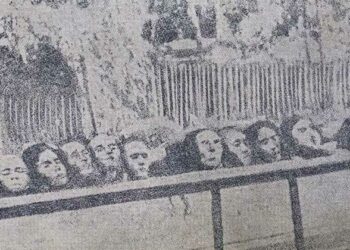
Decapitated heads on public display at a police station in Pyay, 1931.
On This Day

‘Cruelty of the British’

by The Irrawaddy
June 8, 2019
14.3k

On this day in 1931, the Burmese-language Thuriya newspaper published a photograph that stirred the nation and rippled to the...

Read moreDetails
Load More
Next Post
Bullet holes riddle the window of a police car after a Thai soldier went on a deadly shooting rampage in Nakhon Ratchasima, Thailand, on Feb. 9, 2020. / REUTERS

Tranquil Thailand's Gun Culture in Spotlight After Shooting Sprees

The logo of the FATF (Financial Action Task Force) is seen during a news conference at the OECD Headquarters in Paris. / REUTERS

Myanmar Reportedly Set to Be Placed on Global Money-Laundering Watchlist

No Result
View All Result

Recommended

Myanmar in 2026: Military Dictatorship in Traditional Burmese Jackets

Myanmar in 2026: Military Dictatorship in Traditional Burmese Jackets

3 days ago
827
Envoy’s Visit to Naypyitaw Undermines ASEAN Itself

Envoy’s Visit to Naypyitaw Undermines ASEAN Itself

3 days ago
751

Most Read

  • Low Turnout, Intimidation and Attacks Mark Phase 2 of Myanmar Junta’s Election

    Low Turnout, Intimidation and Attacks Mark Phase 2 of Myanmar Junta’s Election

    shares
    Share 0 Tweet 0
  • Myanmar Junta Election Official Killed as Blasts Rock Bago Region

    shares
    Share 0 Tweet 0
  • Polls Open in Second Phase of Myanmar Junta-run Election

    shares
    Share 0 Tweet 0
  • Live Updates: Junta’s Election Phase Two

    shares
    Share 0 Tweet 0
  • Myanmar Junta Suffers Heavy Losses in Bago Days Before Election

    shares
    Share 0 Tweet 0

Newsletter

Get The Irrawaddy’s latest news, analyses and opinion pieces on Myanmar in your inbox.

Subscribe here for daily updates.

Contents

  • News
  • Politics
  • War Against the Junta
  • Myanmar’s Crisis & the World
  • Conflicts In Numbers
  • Junta Crony
  • Ethnic Issues
  • Asia
  • World
  • Business
  • Economy
  • Election 2020
  • Elections in History
  • Cartoons
  • Features
  • Opinion
  • Editorial
  • Commentary
  • Guest Column
  • Analysis
  • Letters
  • In Person
  • Interview
  • Profile
  • Dateline
  • Specials
  • Myanmar Diary
  • Women & Gender
  • Places in History
  • On This Day
  • From the Archive
  • Myanmar & COVID-19
  • Intelligence
  • Myanmar-China Watch
  • Lifestyle
  • Travel
  • Food
  • Fashion & Design
  • Videos
  • Photos
  • Photo Essay
  • Donation

About The Irrawaddy

Founded in 1993 by a group of Myanmar journalists living in exile in Thailand, The Irrawaddy is a leading source of reliable news, information, and analysis on Burma/Myanmar and the Southeast Asian region. From its inception, The Irrawaddy has been an independent news media group, unaffiliated with any political party, organization or government. We believe that media must be free and independent and we strive to preserve press freedom.

  • Copyright
  • Code of Ethics
  • Privacy Policy
  • Team
  • About Us
  • Careers
  • Contact
  • Burmese

© 2023 Irrawaddy Publishing Group. All Rights Reserved

Welcome Back!

Login to your account below

Forgotten Password?

Retrieve your password

Please enter your username or email address to reset your password.

Log In
No Result
View All Result
  • Home
  • News
    • Burma
    • Politics
    • World
    • Asia
    • Myanmar’s Crisis & the World
    • Ethnic Issues
    • War Against the Junta
    • Junta Cronies
    • Conflicts In Numbers
    • Junta Watch
    • Fact Check
    • Investigation
    • Myanmar-China Watch
    • Obituaries
  • Politics
  • Opinion
    • Commentary
    • Guest Column
    • Analysis
    • Editorial
    • Stories That Shaped Us
    • Letters
  • Ethnic Issues
  • War Against the Junta
  • In Person
    • Interview
    • Profile
  • Business
    • Economy
    • Business Roundup
  • Books
  • Donation

© 2023 Irrawaddy Publishing Group. All Rights Reserved

This website uses cookies. By continuing to use this website you are giving consent to cookies being used. Visit our Privacy and Cookie Policy.