The Myanmar military-backed Union Solidarity and Development Party (USDP) won a sweeping majority in the second phase of the junta’s rigged election, with a number of prominent political figures losing to the regime-proxy party.
The second phase was held in 100 townships across 12 states and regions on Sunday, following the first phase on Dec. 28, 2025. The junta-organized election is widely seen as a sham after the junta jailed elected democracy leaders, including Daw Aung San Suu Kyi, and dissolved opposition parties, most importantly the National League for Democracy (NLD), the USDP’s main rival.
The NLD, led by jailed civilian leader Daw Aung San Suu Kyi, won landslide victories in general elections in 2015 and 2020.

U Hla Thein, a USDP spokesperson, claimed that the party won 80 percent of the constituencies in the second phase, just as it did in the first phase.
Candidates
Before the election, coup leader Senior General Min Aung Hlaing assigned many military officers and senior regime members to contest the election under the USDP banner.
Two prominent military officials running on the USDP ticket, Prime Minister Nyo Saw and former military adjutant-general Myo Zaw Thein, a USDP vice chair, won in Yangon’s Cocokyun Township and Bago’s Pauk Khaung Township, respectively.
Core USDP members, U Thein Tun Oo, the party’s spokesperson; Dr. Nandar Hla Myint, a former spokesperson; and U Khin Maung Soe, Yangon USDP chair, won in Mandalay’s Amarapura, Shan’s Kalaw and Yangon’s Hlegu, respectively, according to the USDP’s U Hla Thein.
Dwe Bu, an ethnic Kachin politician and a member of the junta’s central advisory body, also won a seat in Kachin’s Upper House, while U Ko Ko Lwin, the junta’s energy minister, won in Bago’s Padaung Township.

The USDP claimed it won 15 townships in Yangon, but an independent candidate, U Khin Hlaing, beat the party’s candidate in Kyimyindaing Township to claim a Lower House seat. U Khin Hlaing, a Yangon-based businessman, had unsuccessfully sought a parliamentary seat in several elections dating back to the 2010 vote. U Khin Hlaing’s victory comes as a public embarrassment for the USDP.

Daw Sandar Min, a former NLD lawmaker viewed by many as a turncoat, ran as an independent candidate in Yangon’s Latha Township and lost to the USDP’s candidate. She had planned to run for the National Democratic Force (NDF) led by Khin Maung Swe, a member of the junta’s central advisory body, but after the junta dissolved the NDF, she ran as an independent.
U Kyaw Kyaw Htwe, an 88 Generation student activist, ran for the People’s Party (PP), led by fellow student activist Ko Ko Gyi, in Kawhmu Township—the former constituency of Daw Aung San Suu Kyi—but lost in controversial circumstances to the USDP, his campaign manager, Daw Su Su Nway, told The Irrawaddy.
According to polling stations’ preliminary tallies, U Kyaw Kyaw Htwe received more than 17,000 votes, but the township electoral body announced the next day that the candidate received only around 12,000 votes, she said.
She asked the UEC for the polling results from every village in Kawhmu Township, but they refused, she added.
There were some incidents in Kawhmu in which voting machines broke down and some of the votes were automatically cast for the USDP, PP candidate U Kyaw Kyaw Htwe said in an interview with BBC Burmese.
Parties
A few ethnic parties won seats in the second phase of the election, but the USDP still holds a majority.
In Karen’s Hlaingbwe Township, the ethnic Karen National Democratic Party (KNDP) won all three seats.
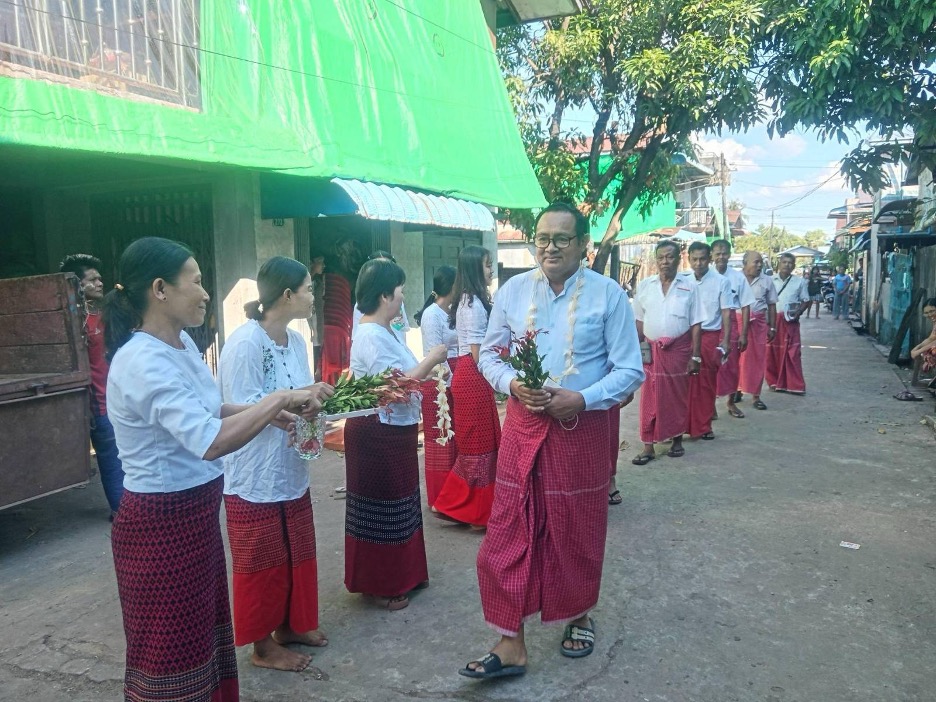
In Mon, the Mon Unity Party (MUP) won 10 seats in four townships—Mudon, Thanbyuzayat, Ye and Paung. In the first phase, the MUP alleged that advance-ballot manipulation by the USDP affected the results.
The Shan and Nationalities Development Party (SNDP) was among a group of parties that filed a complaint on Jan. 2 to junta boss Min Aung Hlaing alleging advance-vote manipulation by the USDP.
The ethnic party, which is competing nationwide, won six seats in three townships: Laihka, Mong Kung and Kunhing. It won just two seats in the first phase.
The National Unity Party (NUP), the successor to the notorious Burma Socialist Programme Party, which ruled the country under a one-party dictatorship from 1962 to 1988, won six seats in four townships—Yangon’s Kyimyindaing, Magwe’s Myothit, and Ayeyarwady’s Wakema and Myaungmya—as well as in Mon State.
The above results reflect preliminary counts as the junta’s Union Election Commission (UEC) has not yet released the official results for the second phase of the election, according to the parties.
Some parties and candidates who contested the first phase of the election have accused the USDP of advance-ballot manipulation, a scenario similar to what the country saw in the widely discredited 2010 poll.
The third phase of the election is scheduled for Jan. 25. The junta has vowed to hand over power to the elected government in March.