The military regime has launched a large-scale clearance operation across Pakokku District in Magwe Region, deploying four separate columns in an attempt to reassert control of the entire district ahead of the planned election.
Resistance sources report that offensives are coming from four directions: one column from Myitche village in Pakokku, another from southern Pauk Township, a third advancing from Yesagyo Township, and a fourth moving out from Myaing Township’s Industrial Zone No. 2.
Each column comprises at least 250 troops—a significant surge from previous operations, a member of the Pakokku People’s Defense Force (PDF) said.


“In the past, they came with 90 or 100 soldiers,” he said. “Now a single column has at least 250 troops, reinforced by conscripts. They are testing whether they can regain control of the territory.”
The sprawling district on the western bank of the Ayeyarwady River consists of Pakokku, Pauk, Myaing, Yesagyo, and Seikphyu townships.
The junta has admitted that voting cannot be held in Pauk, Myaing, and Yesagyo in the current circumstances. But resistance groups believe that the current offensive, which began in late October, is aimed at reclaiming the entire district to make the polls happen after all.
Ko Bo Bo Thant Zin of the local PDF alliance said: “The regime said voting can’t be held in certain townships in Pakokku in the first phase of the elections, but we believe they’re launching large-scale offensives to enable them in the second phase” planned for January.
The military is using airstrikes, paragliders, gyrocopters, suicide drones, and artillery to support ground troops before they attack, while resistance forces are responding with ambushes, sources said.
The regime has intensified offensives in the Bamar heartland and Rakhine State since troops were freed up by China-brokered ceasefires with rebels in northern Shan State.
In Pakkoku, the resistance is a motley group of battalions loyal to the parallel National Unity Government (NUG), township defense groups, the People’s Liberation Army (PLA), and the All Burma Students’ Democratic Front (ABSDF).
“When a junta column enters a township, all groups across the district coordinate to resist. We divide responsibilities and carry out missions together,” a resistance source explained.
Late last month, around 400 junta soldiers from the 99th Light Infantry Division gathered in Seikphyu Township’s Ordnance Factory (KaPaSa) 22 before combining with more than 100 junta-aligned Pyu Saw Htee militias to raid villages in southern Pauk.
On Nov. 5, resistance forces ambushed one of the columns, reportedly killing at least 10 soldiers and seizing weapons. But a junta column entered Pauk town on Nov. 12 and has since been raiding villages on the border with Myaing.
In Myaing, a 200-strong column from the 101st Light Infantry Division killed six civilians, including a monk, on Nov. 3 and 5. Six days later it abducted five villagers as human shields.
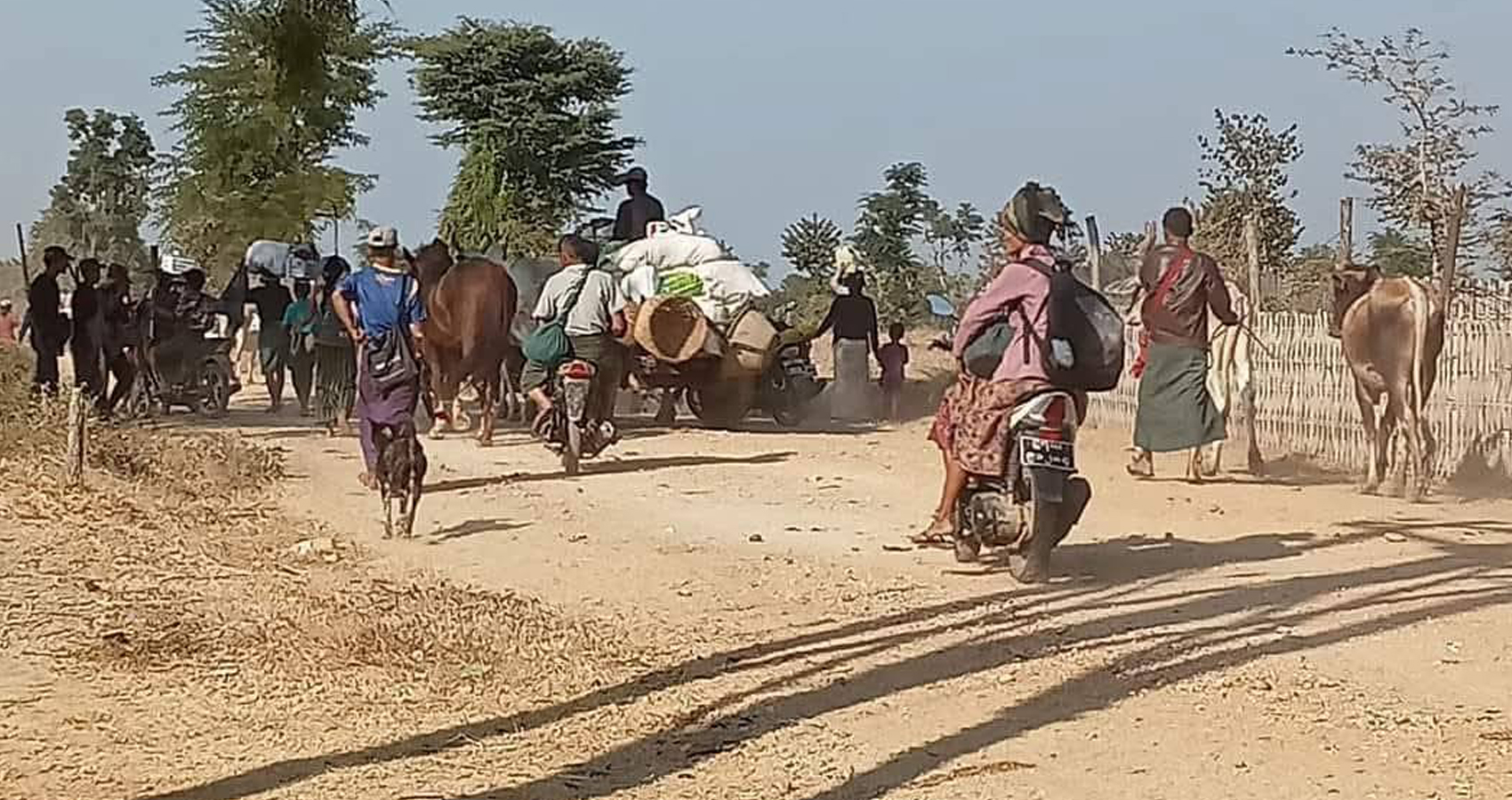
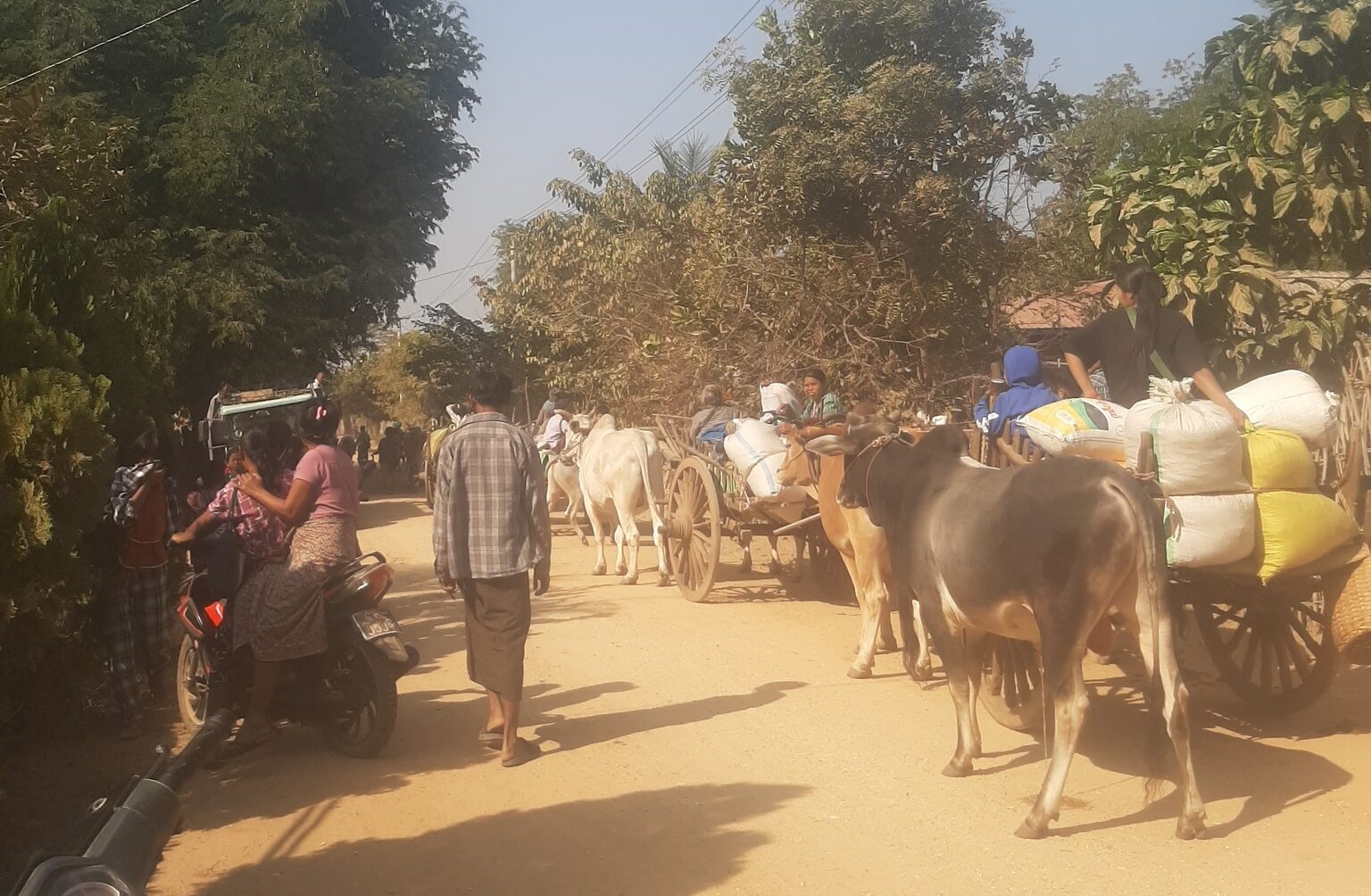
The offensives have displaced people from more than 60 villages, at least 30 of which were torched. “There are no formal displacement camps here,” a local volunteer said. “People flee when junta columns arrive, then return when the troops move on. This cycle repeats constantly.”
The regime is also reportedly targeting a resistance-held oil field in Pauk, forcing locals to flee.